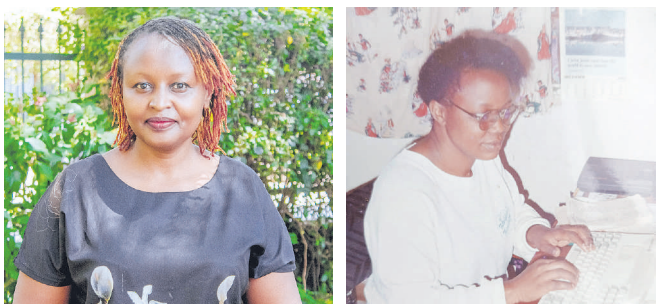
Ruth Gitu was only 18 when her world changed forever. On August 7, 1998, a
devastating bomb blast outside the US Embassy in Nairobi killed her mother and more than 200 others.
In that single moment, Ruth was thrust into adulthood,
becoming a parent to her five siblings.
Her mother
had recently graduated from KCITI College in Eastleigh and was on her way to
pick up her academic documents. She also had an appointment at the US Embassy.
But fate had other plans. Caught in traffic, in a bus just
metres from the epicenter of the explosion, Gitu's mother never made it out alive.
The
tragedy forced Gitu to drop out of school in Form 3, as education became a
secondary concern.
Her
priority became caring for her siblings and her widowed father.
Still
determined to finish her education, she later registered as a private candidate
and sat for her KCSE exams.
After
completing her education, Ruth immersed herself in community service, mentoring
young people in life skills and self-awareness. Yet, the pain of loss and
injustice continues to haunt her.
For the
past 27 years, she has fought tirelessly for justice for her mother and more than 4,000 victims and survivors of Kenya’s first major terrorist attack.
Every 7th
of August, Ruth meets with other survivors under the Consortium of August
7th Bomb Blast Victims, a network of 30 leaders representing different groups
affected by the tragedy.
They meet
for prayers, support and updates on their long and painful fight for justice.
Their
mission is simple but urgent: to secure recognition and compensation for
victims and survivors of the 1998 bomb blast.
“We have
never healed. Even the counselling we received was experimental. The country
did not know how to offer therapy for bomb blast victims. The counsellors were
scared, untrained. It didn’t help us,” Gitu said during an exclusive interview
with the Star.
Many
victims were left with lifelong physical and psychological scars.
They had
to pay for their own treatments, often exhausting their meagre earnings.
Children
dropped out of school. Survivors became unable to work due to trauma and
injury, were left to fend for themselves.
The consortium has stepped in to seek goodwill and support from various ministries.
It now
offers welfare support, including help during illness and bereavement.
Occasionally, they fundraise to pay school fees for children orphaned by the
blast.
“Victims
are dying without justice. We just recently had to raise money for
funeral expenses for one of the children who lost a parent in the attack," said
Kimathi,m chairperson of the consortium. “
Their
fight for justice has taken them to various government offices since 2013,
including the Office of the President, Ministry of Foreign Affairs and Diaspora
Affairs and the Head of Public Service.
But
progress has been painfully slow and many victims have died along the way.
Mike
Kittivo, who was in Cooperative House during the blast, says that while more than 200 people died that fateful day, many more have died since. This is due to neglect and untreated
health conditions caused by the blast.
“Our needs
span from healthcare to loss of livelihoods. It’s a complex web of suffering.
That’s why we came together, to form a united front," he says.
The group
has written to the international community, including the US government,
which has compensated only those who worked within the embassy.
Kenyan victims,
many of whom were civilians caught in nearby buildings, public transport or
walkways, have been left behind.
“We’ve
engaged the Ministries of Health, Interior and Diaspora Affairs. We’re seeking
a direct audience with the Head of State,” he said.
Survivors
have long been told that private citizens cannot sue the US government for
compensation. This legal barrier has left many feeling helpless.
While
they have pursued diplomatic channels, their efforts have often been met with
silence or deflection.
A flicker
of hope emerged when Caroline Muthoka, the consortium’s international coordinator, convinced Machakos Senator Agnes Kavindu to take the matter to the Kenyan Senate.
An ad-hoc committee was formed a resolution directing
the Kenyan government to send representatives to lobby the US Congress for
compensation was passed more than a year ago.
Yet, since
that resolution, no concrete action has followed.
The consortium’s patron, George Ngige, remains one of its most vocal advocates.
Alongside others, he now awaits a court ruling expected later this year, one that could
determine whether the Kenyan government will finally take responsibility and
offer support for the victims’ years of suffering.
A case that was graciously
taken by the only firm that listened to the US bomb blast victims, Kituo Cha
Sheria.
For the
survivors and the families of those lost, the journey has been long and
painful. And as time drags on, the old adage rings painfully true:
Justice
delayed is justice denied.

![[PHOTOS] Memorial service to honour victims of 1998 US Embassy bombing](https://cdn.radioafrica.digital/image/2025/02/600fe3d6-a3f1-4db4-a2de-64e28f48ceb5.jpg)