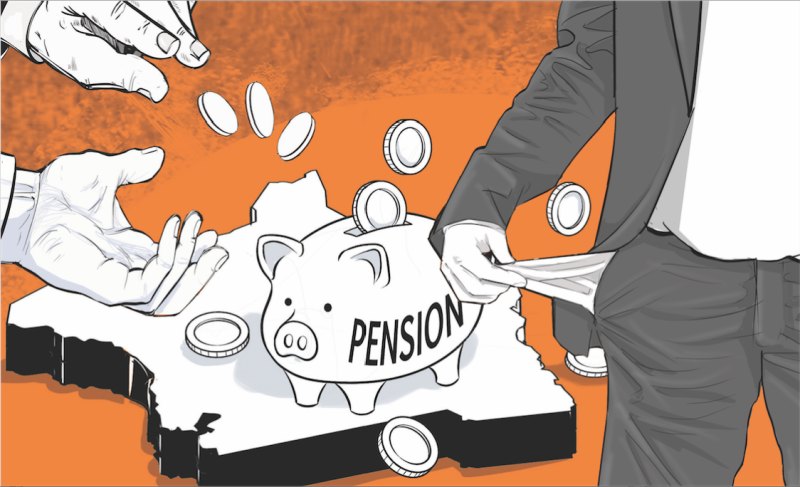
At the centre of the high-stakes row is the Judges’
Retirement Benefits Bill, 2025, that the SRC has declared unconstitutional,
untenable financially and an attempt to usurp its mandate.
The state-sponsored Bill seeks to provide for a lifetime
medical cover for judges, diplomatic passports, as well as hefty pension and
retirement perks.
The pensions, benefits and gratuities shall be drawn from the
Consolidated Fund, the Bill reads, further indicating that the same would be
increased over time.
Medical cover would be applicable to the retired judge and
their spouse on the same terms as enjoyed by serving judges.
It also provides that judges would be granted unrestricted
access to government VIP lounges at all airports in the country, usually a
preserve for the president and top state officials.
The judges and spouses would also be furnished with
diplomatic passports, benefits that would be extended to judges who attained
retirement age after August 2010.
Besides these, a judge who qualifies for pension would be
entitled to a monthly transport allowance equivalent to a seventh of their
basic salary at retirement.
The travel allowance would cover 10 years (120 months) and
would be paid as a lump sum upon the eligible judge’s retirement.
Even in death, the benefits would keep flowing—if the Bill
is approved—with the judges’ spouse set to receive 50 per cent of the pension
for five years.
Their children would pocket up to 100 per cent of the
pension if the judge and spouse(s) die. For judges with multiple spouses, the Bill
provides for an equal share of the spoils.
The Bill sponsored by the majority party seeks to create a
Judges' Retirement Benefits Fund where the contributions would be paid in and
benefits paid out.
Judges would pay 7.5 per cent of their monthly pay, while
the government would top up at 15 per cent of the pensionable emoluments.
But in a scathing memorandum to Parliament, the SRC warned
that the Bill’s provisions could trigger a Sh15 billion ripple effect across
the public sector, worsening the tight fiscal space.
“The ripple effect would be Sh15,017,387,628. If
implemented, it may trigger legitimate clamour for similar benefits by other
state officers,” the memo reads.
It argues that the benefits will be fully funded by the
government, as members are exempt from making contributions to fund the
benefits.
“This would result in a significant ripple effect across the
public sector, thereby exacerbating an already constrained fiscal space and
undermining efforts towards sustainable public compensation management.”
The commission is expected to appear before the Justice and
Legal Affairs Committee Thursday,
where it is expected to wage the war against judges.
In its six-page memorandum to MPs, addressed to the Clerk of
the National Assembly, the SRC accuses the Judiciary of attempting to bypass
constitutional safeguards.
SRC further argued that the judges are attempting to
legislate perks that were never subjected to the commission’s scrutiny.
“Judges of the superior courts are designated as state
officers. As such, SRC is the sole body mandated to set and regularly review
its remuneration and benefits, including retirement benefits,” SRC acting CEO
Margaret Njoka said.
She cited Article 230(4)(a) of the Constitution, which
designates the SRC as the sole arbiter of state officers’ remuneration,
including retirement benefits.
The commission has invoked a 2015 High Court ruling (Kenya
National Commission on Human Rights v Attorney General) to underscore that the
moves are illegal.
But the judges’ camp is digging in. Proponents of the Bill
argue that enhanced retirement packages are essential to shield the Judiciary
from executive interference.
“The Bill has been in development since the late 1990s and
marks a significant step towards realising the principles of the constitution
in respect to the judiciary,” Majority leader Kimani Ichung’wah said.
The pension as calculated in the Bill would translate to
annual payouts exceeding Sh1 million for senior judges after just a decade of
service.
Added to the proposed five per cent annual pension increase,
the payout would double the current rate under the Pensions Increase Act.
SRC holds that its calculations reveal the staggering cost
of these perks, adding that they have not been subjected to evaluation against
the principle of fiscal sustainability.
It projects that in one year alone, the post-retirement
medical and transport benefits would consume Sh1.7 billion.
“Such uncoordinated enhancement of benefits for one category
of state officers without comprehensive analysis of its implications for the
entire public sector wage framework contravenes the holistic approach of SRC’s
constitutional mandate.”
The memo also exposes glaring inconsistencies in the Bill.
While it lavishes defined benefits (fully funded by taxpayers) on current
judges, some section imposes a defined contribution scheme (with shared
funding) on future appointees.
The SRC calls this “discriminatory” and demands uniformity,
proposing a hybrid model where judges contribute 10 per cent of their salary,
matched by a 20 per cent government contribution.
The SRC wants the proposed perks for retired judges
scrapped, noting that some civil servants pay for their own post-retirement
medical schemes.
For years, judges have argued that their pensions—pegged to
the archaic Pensions Act (Cap. 189)—are inadequate compared to their
counterparts in regional judiciaries.
A retired High Court judge, who spoke anonymously, lamented,
“We spend decades dispensing justice, only to retire poor while politicians
loot billions.”
The SRC has raised technical objections about the Bill. It
faults the Bill for defining “pensionable emoluments” as basic salary plus
house allowance, contrary to its 2023 directive limiting it to basic pay.
SRC argued it had already established a group life cover for
the Judiciary, after months of protracted negotiations.
Judges who retired before August 2010 have been excluded
from the proposed benefits, a move likely to trigger grumbles from among the
affected lot.
SRC said the proposal was discriminatory and wants the
section deleted to await the commission’s policy on contributions to the
post-retirement medical scheme.
Pundits hold that by attempting to self-award perks, the
judiciary risks eroding the very checks and balances it exists to uphold.
It is not the first time judges and SRC are clashing over
perks, the most notable being in 2013 when the commission cut their travel and
medical allowances.
INSTANT ANALYSIS
As Parliament prepares to debate the Bill, the stakes
couldn’t be higher. The SRC has shown it is willing to fight, urging MPs to
either amend it to align with its recommendations or reject it outright. But
with the Judiciary’s allies in Parliament, the stage is set for a bruising
legislative war. For taxpayers already suffering the negative impact of the
austerity measures, additional wages may mean more taxes to boot.

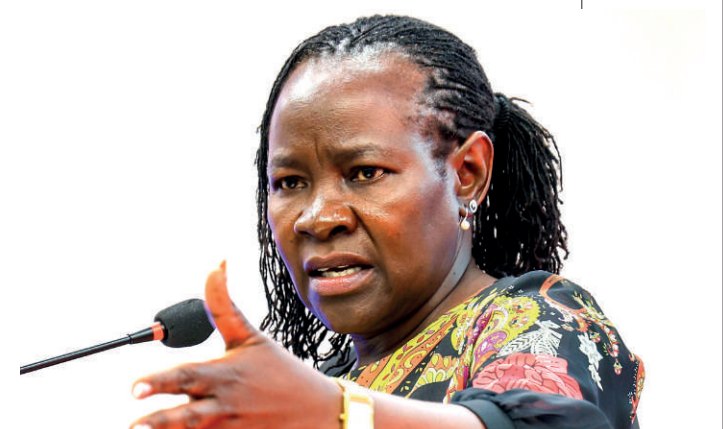
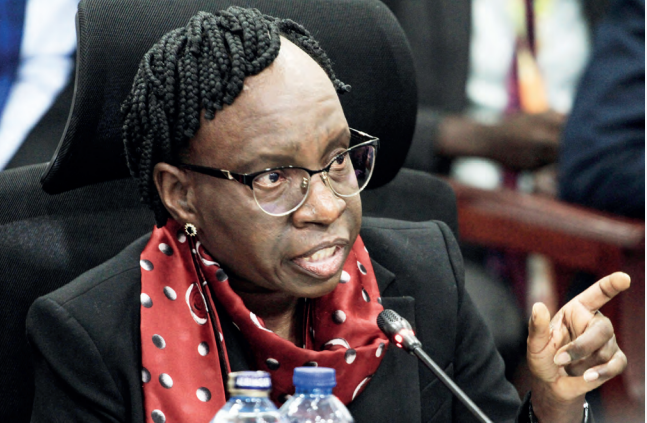
 Salaries and Remuneration Commission acting Secretary/ CEO Margaret Njoka /Handout