Kenya recently achieved a significant milestone as it became
the first sub-Saharan African nation designated as a Major Non-NATO Ally (MNNA)
by the United States.
The Major Non-NATO Ally designation is a unique
classification under US law and it signifies a deep strategic and security
partnership with the United States.
The designation demonstrates the United States' deep respect
and close relationship with the designated country.
This status, formalized on June 24, 2024, underscored a
deepening strategic partnership between Nairobi and Washington.
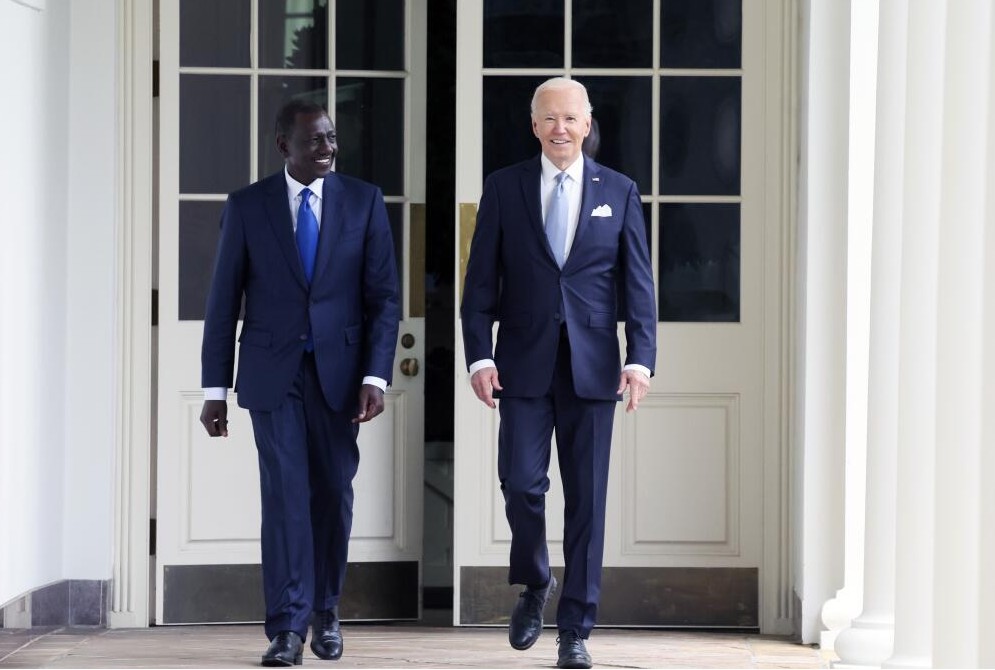
Former President Joe Biden had pledged the designation
during Kenyan President William Ruto's visit to Washington in May 2024,
describing it as ‘a fulfilment of years of collaboration.
Kenya's designation was a recognition of its years of
collaboration and its willingness to lead a multinational security mission in
Haiti.
Now, this pivotal partnership faces scrutiny with a US
Congressional review underway.
Senator Jim Risch, chairperson of the Senate Foreign Relations
Committee has introduced an amendment to the National Defense Authorization Act,
calling for an assessment of Kenya's MNNA status.
The current US Congressional review, spearheaded by Senator
Jim Risch, stems from multiple concerns.
A primary focus is on assessing whether American
intelligence and military support has been implicated in actions against
civilians. These include abductions, torture, or violence. This highlights a
critical human rights dimension to the US-Kenya partnership.
Another significant driver is Kenya's perceived global
alignments. Senator Risch's amendment specifically scrutinizes Kenya's
military, political, and financial relationships with China, Russia, and Iran.
The uncertainty surrounding Kenya's pledged deployment of
1,000 police officers to Haiti, a mission strongly backed by the US, is also a
factor in the congressional amendments.
“An assessment of relationship of Kenya with the United States
in countering violent extremism, achieving and maintaining peace and security
in Sub-Saharan Africa and in Haiti, as a United Nations peacekeeping troop
contributing country, and as an economic partner.
“A detailed description of the military and security relationship
of the Government of Kenya with the People's Republic of China, the Russian
Federation, and Iran, including any engagements, agreements, or joint
activities since June 24, 2024.”
These concerns underscore the conditional nature of the MNNA
status, which is granted based on perceived alignment with US national
interests.
The US expectation is that MNNA partners should align their
foreign policy, at least implicitly, with US strategic interests.
Kenya, a key regional player in security and stability, must
now navigate these complex dynamics. Its ability to maintain its strategic
partnerships while upholding its national interests will be crucial in the
evolving global landscape.
Pressure from the US could inadvertently push Kenya further
into the orbit of rival global powers if Nairobi perceives its sovereignty or
non-alignment principles are being challenged.
However, according to Foreign Affairs Principal Secretary,
Korir Sing’Oei, the review would be done with the Kenya’s independence and its
interests.
“No need to be too excited SC @Paul_Muite. The issues
canvassed in the congressional bill will be comprehensively addressed, taking
into account Kenya’s sovereignty and interests,” he said.
A potential review or revocation carries significant
implications for Nairobi, as it could impact Kenya's military capabilities,
economic prospects, and its standing on the global stage.
Military and Security
A review or revocation of Kenya's MNNA status would directly
impact its military and security cooperation with the United States.
Kenya would lose privileged access to US defence equipment
and advanced military technologies. This includes eligibility for loans of
material, supplies or equipment for cooperative research, development, testing
or evaluation purposes.
The ability to host US-owned War Reserve Stockpiles on its
territory will also be removed.
Training agreements, where financial arrangements are
reciprocal, would also be jeopardized and Kenyan firms will not be able to bid
on contracts for maintenance, repair, or overhaul of US Department of Defence
equipment outside the United States.
Funding cuts for counter-terrorism research and development
projects, such as those related to explosives detection devices, which would
specifically impact ongoing efforts, such as the expansion of Manda Bay
airfield.
These losses eventually translate into degradation of
Kenya's operational capabilities and its interoperability with US forces in
critical regional security theaters, particularly in the ongoing fight against
terrorism.
Diplomatic and
Economic consequences
The MNNA designation serves as a powerful diplomatic
endorsement, which increases commercial confidence and greenlights foreign
investment.
Losing this status would mean a downgrade in the bilateral
relationship and might affect Kenya's standing in the international community. This
diplomatic shift could deter foreign direct investment into Kenya.
The United States remains a key voice in international
financial institutions and investment forums. A downgraded relationship, even
if not directly tied to MNNA status, could influence aid and lending decisions
from global bodies.
This in turn influences investor confidence on whether to
set up shop in Kenya or not.
The potential review of Kenya's Major Non-NATO Ally status
presents a multifaceted challenge for Nairobi. The scrutiny reflects a US
desire for closer alignment on human rights and geopolitical fronts.
Should the Bill be enacted, the Secretary of State, in
coordination with the Secretary of Defense, the Secretary of the Treasury and
the Director of National Intelligence, shall commence a review of the major
non-NATO status of Kenya and within 180 days submit to the appropriate committees
of Congress a classified report containing the findings of the review.