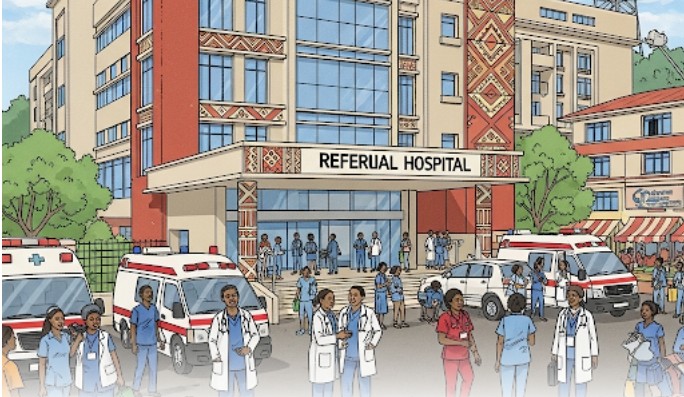
Picture this; you rush your ailing loved one to what’s
supposed to be the county’s best public hospital.
But on arrival, you are hit with a stark reality: there are
no essential drugs. There’s no food either—you’ll have to bring meals from home
every day.
The wards? Cramped and dim, some without electricity.
Your patient may even have to share a bed with another. And
when you call for a medic, there’s none in sight.
This isn’t a scene from a dystopian novel. It’s the daily
reality in many county referral hospitals across Kenya.
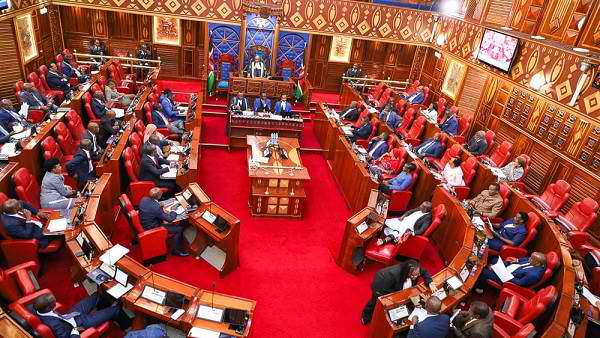
A new Senate report has laid bare the devastating state of
public healthcare—hospitals with empty pharmacies, expired medicines, chronic
staff shortages, stalled infrastructure projects and neglected medical
equipment.
For millions of Kenyans, the promise of accessible, quality
healthcare remains just that—a promise.
Some lack even the most essential materials—like curtains to
guarantee the privacy of patients, especially expectant mothers.
In many cases, water and electricity supply is erratic, and
hygiene conditions are deplorable, exposing patients to further health risks.
The Senate Health Committee's report on inspections of
select county referral hospitals reveals widespread deficiencies that
compromise the quality of healthcare services.
“The committee noted that most health facilities did not
have the requisite number of staff working in critical departments and that
various departments in the hospitals were faced with a high workload and staff
shortages,” the report reads.
Among the hospitals inspected were Longisa County Referral
Hospital in Bomet, Ekerenyo Subcounty Hospital and Nyamira County Referral
Hospital in Nyamira county.
Others are Kisii Teaching and Referral Hospital, Kenyenya
Subcounty Hospital in Kisii county, Vihiga County Referral Hospital in Vihiga,
Jaramogi Oginga Odinga Hospital, and Ahero Subcounty Hospital in Kisumu county.
At Longisa hospital, the committee observed an acute
shortage of staff, inadequate equipment and strained infrastructure.
Even mothers in the maternity ward were forced to share
beds.
“During the visit, 46 patients were admitted against a bed
capacity of 39, indicating a dire need for more beds and staffing,” the report said.
Hospital management admitted that the ward was originally
designed for 16 patients but now accommodates up to 120.
It is manned by just 12 nurses, two gynaecologists, four
medical officers, two interns and 10 clinical officers, with two doctors and
three nurses per shift.
At the time of inspection, five nurses were on study leave.
The maternity ward had a bed occupancy rate of 90 per cent—leading to rampant
bed-sharing.
The facility also reported severe drug shortages,
particularly in the TB section.
The Kenya Medical Supplies Authority was singled out for
failing to meet demand, with its fill rate still below the hospital's
requirements.
At Ekerenyo Subcounty Hospital, the maternity wing had only
three beds and no curtains for patient privacy.
“The committee observed that the male ward had bare windows
and lacked bed screens, raising concerns about patient comfort and dignity,”
the report notes.
The facility was also critically understaffed and staff
morale was low due to heavy workloads.
At Nyamira County Referral Hospital, a major concern was
drug shortages, with Kemsa again under fire.
“Kemsa’s fill rate was reported at 60 per cent, with
essential drugs having a fill rate of just 40 per cent. The hospital had
received drugs worth Sh13 million against an order of Sh25 million,” the report
reveals.
At Kisii hospital, one of the busiest in the region handling
60–70 outpatients daily, the situation was no better.
The roof was leaking, the CCTV system was faulty and the
theatre and ICU were in suboptimal condition.
“Various departments—including oncology, pharmacy,
laboratory, renal and the newborn unit—were overwhelmed due to staff
shortages,” the report states.
Specialists were missing in key departments, hampering
service delivery. Equipment shortages were also rampant, with the casualty
department having limited incubators.
In the radiology unit, CT and MRI machines were
non-functional—crippling diagnostics.
Patients were frequently forced to buy medicine from private
pharmacies. Anti-TB drug shortages were reported at the main hospital and
surrounding satellite clinics.
“The central stores were in a state of disrepair, with the committee
noting flooding, ceiling leaks and broken support beams,” the report adds.
Drugs and supplies were placed directly on damp floors and
discarded or mismanaged equipment—including new incubators—was found dumped in
the store.
The records-keeping system was inadequate, and waste
disposal failed to meet public health standards.
Biological specimens were seen in open spaces, while the
incinerator appeared overwhelmed.
At Kenyenya Subcounty Hospital, the kitchen was
non-functional. Patients relied on relatives to bring food or purchase it from
outside. There were no on-site toilets or bathrooms—patients used external pit
latrines.
Water supply was irregular due to a broken borehole pump,
forcing reliance on an expensive community water project.
At Vihiga County Referral Hospital, the committee found that
the facility does not meet the criteria for a Level 5 hospital due to the poor
infrastructure and low staffing levels.
The oxygen plant was non-functional because of power supply
issues. Critical equipment was poorly maintained, and cases of medical
negligence remained unresolved. Security was also flagged as inadequate.
In Kisumu, the committee found a mass exodus of healthcare
workers. At the time of the inspection, 156 nurses had resigned from the
facility due to poor working conditions.
INSTANT ANALYSIS
Senators have exposed the poor state of county hospitals in
what could be affecting the quality of services delivered in the facilities.
The lawmakers revealed that the facilities lack essential resources, including
supplies and equipment. The facilities are acutely understaffed and dogged with
the shortage of bed capacity. The facilities are dogged with frequent
stockouts, delayed supplies and expired drugs. The hospitals lack a proper
billing system; this results in revenue losses and inefficiencies.