According to the World Health
Organization (WHO), 30 people die by drowning every hour, making it one of the
world’s most silent and under-recognised public health emergencies.
Today, July 25, marks World Drowning
Prevention Day, a global observance established by the United Nations General
Assembly in 2021 to raise awareness about the devastating impact of drowning
and to call for action to prevent it.
The day was
declared by the United Nations in to encourage countries, communities and
individuals to take real action like teaching swimming, fencing off dangerous
water points and training people in rescue and CPR.
"It’s also a time to share
stories of survivors and everyday heroes who’ve helped prevent drowning," UN stated.
"The day is a chance to remind the world that drowning is preventable and that even low-cost community efforts can save lives."
In Kenya, where flash floods, open
quarries and unsupervised rivers are common risks, the day is especially
relevant. It helps shine a light on how better planning, awareness and local
solutions can stop needless deaths especially of children. So, the day is celebrated not with fanfare, but with purpose to protect life.
This year’s theme, “Your story can save a life, drowning prevention through shared
experiences,” highlights how community voices and lived experiences can
drive change and save lives.
Drowning kills over 300,000 people each
year worldwide, according to WHO’s 2021 data. Nearly half of these deaths occur
among people under the age of 29 and a quarter involve children under five
years old.
Many of these tragedies happen silently,
often in moments when no one is watching: a toddler wandering off near an
unfenced pond, a young fisher caught in a sudden storm or even a teenager
unable to swim across a river.
In Kenya, drowning remains a persistent
and deadly threat especially among children, fishers and residents of
flood-prone areas. According to the Kenya National Bureau of Statistics (KNBS)
and Kenya Maritime Authority (KMA), at least 1,200 people die from drowning in
Kenya every year.
In 2022 alone, the Kenya Red Cross
recorded over 300 child drowning deaths, primarily in Homa Bay, Kisumu and
parts of Nairobi’s informal settlements.
Children are often unsupervised near
rivers, dams, or drainage canals.
The situation is compounded around Lake
Victoria, where overloaded and poorly maintained boats are used daily by
fishers and local commuters.
Nearly 60 per cent of water transport deaths in
Kenya involve the absence of life jackets and unsafe vessels, according to KMA.
During rainy seasons, flash floods in
informal settlements like Mathare and Kibera regularly claim lives, often
sweeping away children and adults alike.
The lack of fencing around quarries,
dams and rivers further contributes to accidental drownings.
In 2024 and 2025, floods killed between
169–228 Kenyans most of whom were unable to swim.
Efforts to address drowning in Kenya are
slowly taking root.
KMA has intensified safety enforcement on water transport,
requiring boat operators to use life jackets and meet inspection standards. In
Kisumu County, water safety clubs have been introduced in schools with support
from UNICEF, training children on swimming and rescue skills.
“Swimming should be treated as a
survival skill, not a sport reserved for the privileged,” Joyce Kariuki said, a
Nairobi-based child rights advocate.
In coastal counties, the Kenya Lifesaving
Federation has partnered with local organisations to teach community members
CPR and safe rescue techniques, although the reach remains limited.
WHO recommends that countries invest in
low-cost, community-driven interventions.
These include placing barriers around
water bodies, offering safe spaces for preschoolers away from open water,
teaching school-age children basic swimming and rescue skills and strengthening
public awareness campaigns.
There is also a strong case for integrating these
lessons into the national school curriculum, especially in regions where
drowning deaths are most common.
In emergency situations, the right
response can mean the difference between life and death. If someone is pulled
out of water unconscious, WHO recommend the C-A-B method of CPR:
Compressions, Airway and Breathing.
Start chest compressions at a rate of
100–120 per minute and allow the chest to rise fully between pushes. If
trained, give two rescue breaths after every 30 compressions. Continue until
help arrives or the person starts breathing again.
WHO Director-General Tedros Adhanom said
while there has been a decline in drowning deaths globally, the risk remains
dangerously high in low- and middle-income countries.
“Still, every drowning death is one
death too many and millions of people remain at risk,” Tedros said.
WHO noted that only 33 per cent of
countries offer national programmes to train bystanders in safe rescue and
resuscitation and just 22 per cent include water safety and swimming lessons in
school curricula. Drowning continues to claim lives not because the solutions
are unknown, but because they are under-prioritised.
World Drowning Prevention Day is not
just a date on the calendar. It is a global call to action to prevent the
preventable, to protect the vulnerable and to save lives.
“Let us not just
remember the statistics. Remember the stories. Share them. Learn from them. Let
them move you to action,” WHO urged.




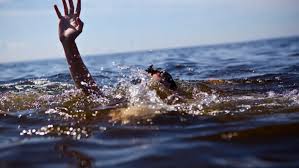 Drowning Incident