This marked the third time in history that the US has cut ties with the
agency.
A statement said the
“continued involvement in UNESCO is not in the national interest of the United
States”, accusing the organisation of working to advance divisive social and
cultural causes.
“Pursuant to Article II(6) of the UNESCO Constitution,
U.S. withdrawal will take effect on December 31, 2026. The United States will
remain a full member of UNESCO until that time,” the Department said.
A History
of on-and-off relations
This is not the first time the US has exited UNESCO.
In 1984, President Ronald Reagan withdrew, accusing the agency of mismanagement,
anti-Western bias and being overly influenced by Soviet interests.
The US rejoined in 2002 under President George Bush, as a gesture of renewed
global engagement.
In 2011, US funding was again suspended under
President Barack Obama after UNESCO admitted Palestine as a full member state, triggering
a congressional funding ban.
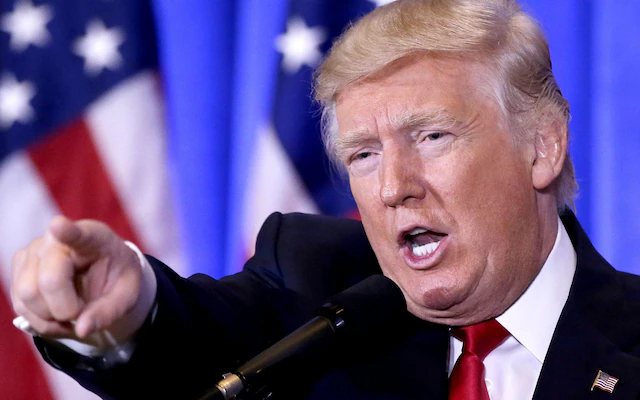
In 2017, President Donald Trump formally announced a complete withdrawal,
citing similar criticisms.
That decision was reversed by President Joe Biden in 2023, who emphasised
the importance of US leadership in multilateral institutions. He warned that strategic competitors, especially China, were filling the vacuum.
Why the US is leaving, again
The Department accused UNESCO of promoting “divisive social
and cultural causes and maintains an outsized focus on the UN’s Sustainable
Development Goals, a globalist, ideological agenda for international
development at odds with our America First foreign policy”.
“UNESCO’s decision to admit the “State of Palestine” as a
Member State is highly problematic, contrary to US policy, and contributed to
the proliferation of anti-Israel rhetoric within the organisation,” the
Department added.
It said continued US participation in international
organisations will focus on advancing American interests with clarity and
conviction.
In a swift response, UNESCO Director-General Audrey
Azoulay expressed “deep regret” over the decision, although she acknowledged
that the move had been anticipated.
“Thanks to the efforts made by the Organisation since 2018,
the decreasing trend in the financial contribution of the US has been offset,
so that it now represents 8 percent of the Organisation's total budget compared
to 40 percent for some United Nations entities; while at the same time,
UNESCO’s overall budget has steadily increased,” she said.
Azoulay also rejected claims of ideological
bias, pointing to UNESCO’s efforts in Holocaust education, the fight against
antisemitism, and science ethics as evidence of balanced, global engagement.
UNESCO in brief
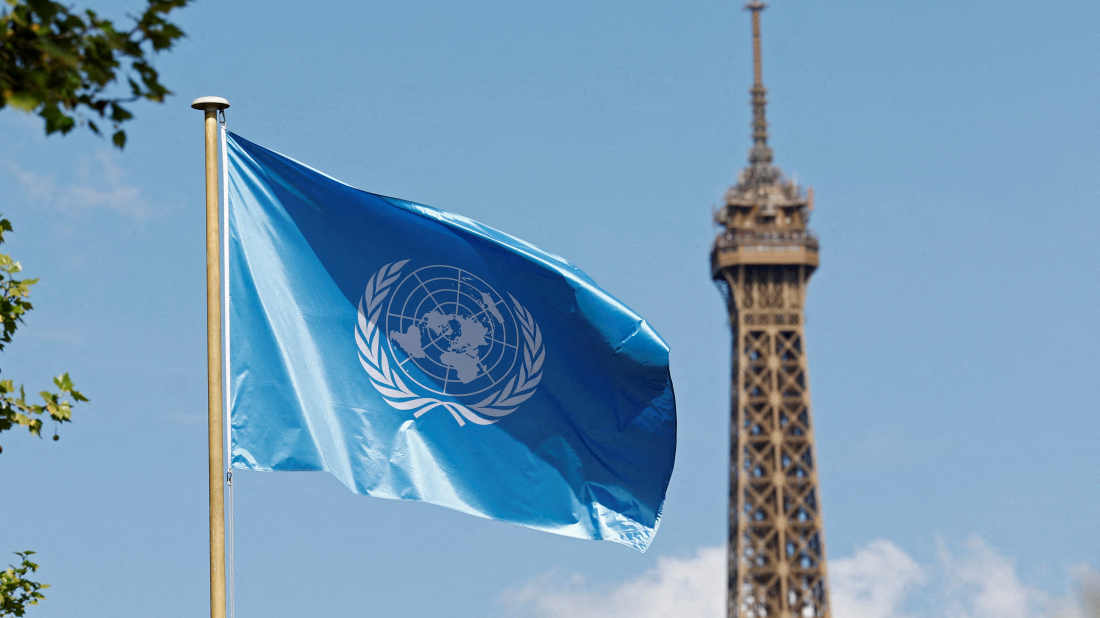
UNESCO is a specialised United Nations agency focused on building peace
through international cooperation in education, science, culture, and
communication.
It supports global initiatives in AI ethics, literacy, press freedom, and
climate education.
Headquartered in Paris, France, UNESCO currently has 194 member states, 53
field offices and 199 national commissions.
It is also responsible for identifying and protecting World Heritage Sites,
1,248 across 170 countries, which are of outstanding cultural, ecological or historical
value.
Impact on US World
Heritage Sites
There are 26 UNESCO World Heritage Sites in the US, about half of which are
natural landmarks.
These include sites like Yellowstone National Park, the Grand Canyon and the
Statue of Liberty.
With the US exiting UNESCO, global oversight
over these sites could weaken.
Environmental and cultural challenges, such as climate change, tourism
pressures and industrial development, may worsen without international
monitoring and research support.
UNESCO will no longer contribute to conservation efforts or coordinate with
U.S. agencies on best practices for preservation.
Notably, President Trump recently signed an
executive order to raise entry fees for foreign visitors to national parks,
many of which hold World Heritage status.
“The
national parks will be about America first,” Trump said.
Political implications
The withdrawal deepens perceptions of US partisanship on the global stage.
Critics argue it is a continuation of the Trump-era “America First” policy,
sidelining global cooperation in favor of nationalist rhetoric.
US officials, for their part, insist UNESCO has become too focused on
politically charged issues and global development goals.
This move also fits a broader trend of US
disengagement from multilateral institutions.
Since he took over White House, Trump has withdrawn from the World Health Organisation
(WHO) and the UN Human Rights Council, fueling concerns about a systematic
retreat from international diplomacy.
With the US absent, countries like China may
gain greater sway over UNESCO’s priorities, especially in emerging fields like
digital governance and cultural diplomacy.
The Asian-country has since criticised Trump’s decision.
“This is not what a major country should
do,” Foreign influence over UNESCO’s priorities, especially in emerging fields, such as the Ministry spokesman Guo Jiakun told a news conference in Beijing.
"This is the third time the U.S. has withdrawn from UNESCO. This is not
the behaviour of a responsible big country.”
Economic consequences
Economically, the departure may disrupt global projects and funding
pipelines.
Although the US now contributes a smaller share of UNESCO’s budget, down to
8 percent from 22 percent, its funding still supports major programs in education,
scientific collaboration and heritage preservation.
American consultants, nonprofits, and academic partners involved in
UNESCO-linked initiatives, such as AI ethics, girls’ education, and cultural
heritage, may lose access to grants, networks and policymaking platforms.
This could limit UNESCO's influence and reduce international collaboration in
sectors where American institutions have long played a leadership role.
The loss of soft power is particularly
concerning. UNESCO has long served as a diplomatic bridge for promoting shared values and fostering alliances in the Global South.
By stepping away, the US risks weakening its cultural and educational
footprint while empowering rival states to define global norms.