The Mara-Serengeti Migration, known as the "8th Wonder
of the World" is celebrated for its unmatched scale, natural drama, and
ecological significance.
Much like the original Seven Wonders celebrated ancient
human engineering feats, the Great Migration is celebrated as a natural
masterpiece.
It is one of the largest and longest terrestrial migrations
on earth, a synchronised natural event of massive scale and danger and a display
of life, death, and survival.
The migration has become a global symbol of wildlife
conservation and natural beauty.
Acknowledging its significance, the Ministry of Tourism and
Wildlife has called on Kenyans and international visitors to experience one of
the most breathtaking natural wonders this migration season.
Tourism Cabinet Secretary Rebecca Miano has highlighted this
rare opportunity to witness the inspiring animal movement.
Tourism Cabinet Secretary Rebecca Miano highlighted this
rare opportunity to witness two awe-inspiring animal movements happening almost
simultaneously.
“It is amazing every year between July and September,” Miano
noted.
Narok County Governor, Patrick Ole Ntutu, has assured both
local and international tourists of their safety during the period.
Ntutu has affirmed that the county is fully prepared to
receive visitors, with enhanced security and a sustained conducive environment
for hotels, cultural exhibitions, and wildlife safaris.
“This is a critical season for our county and the country at
large. We have put all necessary measures in place to ensure tourists feel
secure and welcome,” said Ntutu.
Across continents, millions of animals migrate vast distances in search of food, breeding grounds, or more favourable climatic conditions.
These epic journeys not only capture the imagination of
scientists and nature lovers but also make significant contributions to global
biodiversity and ecotourism.
The term "8th Wonder of the World" has been
attributed to wildlife migration—especially about the Great Migration
in East Africa—because of its sheer scale and biological significance.
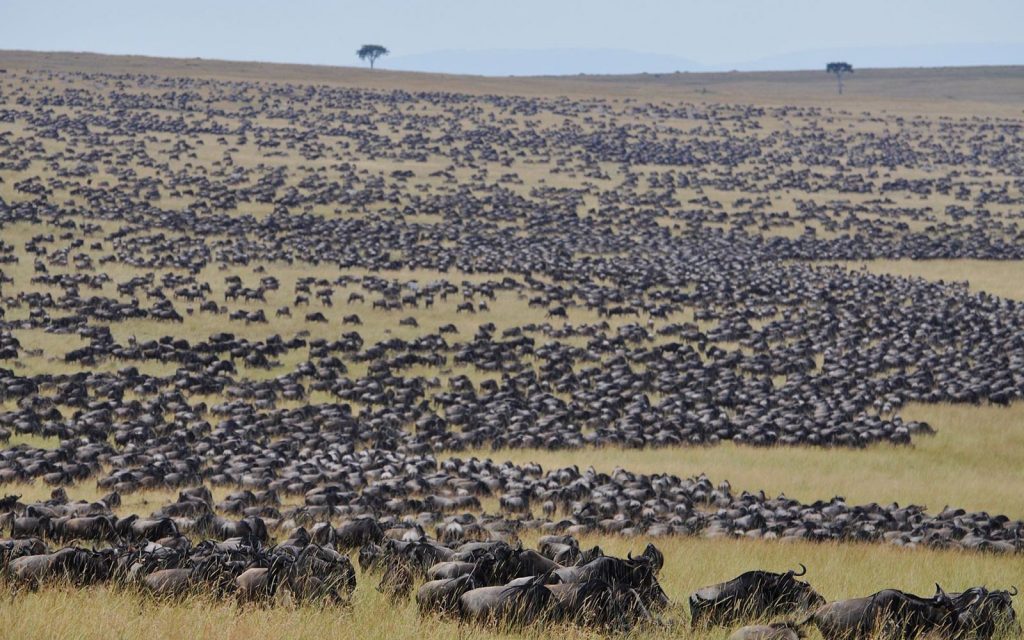
In the Serengeti-Mara ecosystem, over 1.5 million
wildebeest, 200,000 zebras, and hundreds of thousands of gazelles make a
circular journey covering about 2,800 kilometres annually.
This phenomenon is not just about the numbers; it’s a story
of survival against predators, harsh climates, and treacherous river crossings.
It is a synchronised dance of nature, driven by instinct and shaped by
evolution.
It is regarded as the most dramatic and awe-inspiring
wildlife spectacle on the planet.
The migration is driven by a primal need: the search for
fresh grazing and water.
The animals follow the rains, moving in a clockwise
direction across an area that spans over 25,000 square kilometres.
The journey begins in the southern Serengeti, where the
herds give birth to around half a million calves between January and March.
This time of year offers lush grasses and relative safety, though predators
like lions and hyenas take full advantage of the vulnerable young.
As the dry season sets in around May to June, the massive
herds begin to move northwest in search of greener pastures, eventually
reaching the Grumeti River, the first of many life-threatening obstacles.
Crossing these crocodile-infested waters, they face both
natural hazards and predation, making it a high-stakes survival drama.
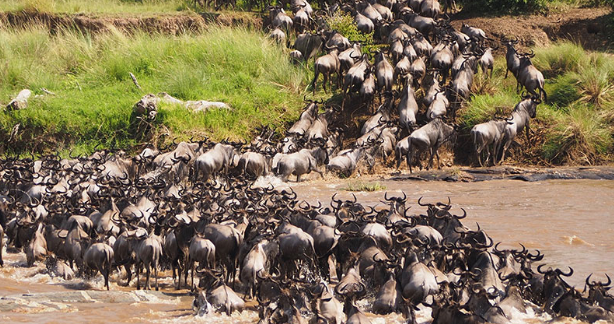
By July and August, the herds reach the Mara River and enter
the Maasai Mara in Kenya—home to one of the most iconic scenes in nature:
wildebeest leaping into the river, desperately swimming through strong currents
while crocodiles lie in wait.
In October and November, as the short rains return to the
Serengeti, the herds begin their annual southward migration once more, completing the cycle.
The migration is a cornerstone of East African tourism,
drawing over 100,000 visitors annually. Luxury lodges, mobile tented camps, and
guided safaris provide access to the migration routes with minimal disruption
to the wildlife.
The tourism generated by the migration supports local
communities, funds anti-poaching efforts, and helps maintain protected areas.
Kenya and Tanzania have established national parks and
conservancies specifically to preserve the migration corridor.
Yet, this natural wonder faces increasing threats from human
development, including fencing, agriculture, and infrastructure that can
disrupt migratory paths.
Conservationists have continued to advocate for the
protection of these corridors to ensure the survival of this ancient cycle.
Seeing the Mara-Serengeti migration in person has been described
by many as an unforgettable experience.
Visitors often describe the sound of
hooves thundering across the plains, the dust clouds rising, and the
heart-pounding moments of river crossings as deeply moving.