Khadija Adam was on her regular visit to Westgate Mall,
Nairobi, on September 21, 2013, when the calm air was disturbed by a chilling
sound of gunshots.
“PAH! There were three shots… I had never heard such
gunshots,” she told The New Yorker.
Everyone was scrambling for cover; police and civilians
alike.
Later, survivors of the Westgate attack would describe
the experience as traumatic and chaotic.
In interviews with various news agencies, shoppers
recalled the sound of grenades, gunfire and people screaming in fear.
One survivor told BBC,
“I saw people running and screaming. Then I saw blood. So much blood.”
That was the day the world watched in horror as Al-Shabaab
militants stormed Nairobi’s upscale mall, killing 67 people and injuring more than 200, in one of the country’s deadliest terror attacks.
For four days, the attackers and security forces battled out, with the
attack becoming a gloomy reminder of the August 1998 US Embassy bombing.
The militants would later confess they targeted Kenya in response to the
deployment of the military to Somalia to counter a rising insurgency that saw a
number of tourists abducted.
It wasn’t just an attack on civilians. It was a turning point. The moment the country’s anti-terror laws began to shift,
with ripple effects that still shape lives today.
Westgate: The charges and court
proceedings
In what would result in imprisonment
for the convicts, 46 prosecution witnesses testified before a Milimani Law
Court.
In June 2024, the High Court in
Milimani upheld the conviction and sentencing of Mohamed Ahmed Abdi and Hussein
Hassan Mustafa.
Lady Justice Grace Nzioka ruled that
the evidence presented by the prosecution, as analysed by the trial court, was
sufficient to support the charges against them.
The two were convicted of conspiracy
to commit a terrorist act, with Abdi additionally charged with being in
possession of an article connected to a terrorism offence.
However, the High Court acquitted
them of the charge of providing support to a terrorist group.
“Following the testimony of 46
prosecution witnesses, the trial court sentenced the two to 18 years each for
the offense of conspiracy to commit a terrorist act, and Abdi to 15 years for
the offense of being in possession of an article connected with terrorism,”
stated the Office of the Director of Public Prosecutions (ODPP).
Lady Justice Nzioka upheld the
sentence and the trial court’s order that the sentences run consecutively.
Garissa: A generation lost
Barely two years later, on April 2, 2015, the Garissa University College massacre shook the nation again. 148 students, most of them under 24, were gunned down
after being separated by religion. 79 were injured.
A survivor, Stephen Mwangi, narrated
how while hiding in a wardrobe with other students, he saw his sister being
rounded up alongside others by the terrorists.
The attack began at 5:30 am when
masked gunmen affiliated with Al-Shabaab accessed the institution, approximately
200 km from the Somalia border.
The attackers began by shooting two unarmed guards at
the gate before storming the hostels, detonating a blast that created a crater
and triggering mass panic.
They forced over 700 students to lie face down and
systematically separated Muslims (who were released) from Christians (who were
shot).
Among the deceased were students, police and soldiers.
Many others escaped or were rescued during the siege, which lasted nearly the
entire day.
It ended when four attackers were killed, one by
detonation of his suicide vest.
After Garissa, counter-terror efforts went deeper.
Military intelligence was deployed domestically. The National Counter Terrorism Centre (NCTC) was
restructured.
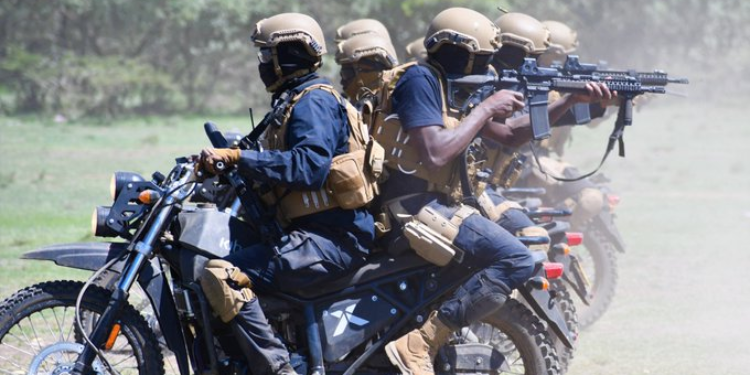
Special police units mushroomed, often with wide discretion to detain,
surveil and question.
Five men were later arrested in connection with the attack.
The Garissa University attack court
case
In March 2023, the High Court
lowered the prison sentences for two defendants who were convicted in the Garissa
University terror attack.
High Court Justice Cecilia Githua acquitted Hassan Edin Hassan and Mohamed Abdi
Abikar of the crime of being members of the al-Shabab militant group.
The judge said the prosecution did not present evidence to prove the two terror
convicts were members of the militia group.
She, however, upheld the convictions
of conspiracy to commit a terrorist act. Their prison sentences were lowered
from 41 years to 25-and-a-half years.
“Their
actions of aiding and abetting terrorists who carried out the actual cowardly
and premeditated acts which caused much suffering to families of deceased
persons and still traumatise the survivors who bear the scars for the rest of
their lives, cannot be forgiven,” the judge said.
In 2019, a lower court had sentenced them to 25-and-a-half years for conspiracy
to commission and commit a terrorist act and 15-and-a-half years for being
members of Al-Shabaab.
Tanzanian national Rashid Charles Mberesero was suspected of having been
among the gunmen.
How laws hardened after
Westgate
The country’s legal framework on terrorism
is primarily governed by the Prevention of Terrorism
Act (POTA), No 30 of 2012, along with supporting regulations
and constitutional safeguards.
Under Sections 2 and 4 of POTA, a terrorist act includes the use or
threat of action causing death or serious injury, serious damage to property,
risk to health or safety of the public, and disruption of essential services.
This is usually done with the intention to intimidate the public, coerce a
government, and, advance a political, religious, or ideological cause.
It is important to note that an act is not
terrorism if it only involves peaceful protest or advocacy without the
intention of causing harm.
POTA outlines the various offences and penalties, which spa from 20 years to
life imprisonment.
Again, there is emphasis in noting that even in terrorism cases, the constitution guarantees right to a fair trial,
right to be informed of charges, right to
legal representation and right to bail, although courts may deny bail for serious offences
like terrorism.
POTA is supported by The Prevention
of Organised Crimes Act (2009), which targets criminal gangs and
networks that may also engage in terror-like activities.
Although not exclusively a counterterrorism law, POCA is used to disrupt networks
that may also finance or support terror operations. Examples are Al-Shabab
cells and Mungiki.
The Security Laws (Amendment) Act
(2014) amended parts of POTA to give more powers to security agencies
and The Proceeds of Crime and
Anti-Money Laundering Act is used to trace and block terrorism
financing.
The Security Laws allowed extended detention of
terrorism suspects (up to 90 days with court approval), gave expanded powers to NIS for surveillance and arrest and introduced
new offences like publishing material
that could incite terror.
Criticism of the law
Multiple reports by Amnesty International
Kenya, the Kenya National Commission
on Human Rights (KNCHR) and Human
Rights Watch (HRW) have documented misuse
of the counterterrorism laws, particularly the POTA.
In 2014, a
joint report by Amnesty and HRW titled “Kenya: Killings, Disappearances by Anti-Terror Police”
documented how:
“Counterterrorism operations have led to the
enforced disappearances and extrajudicial killings of dozens of people, mostly
Muslim men in Nairobi, Mombasa, and the North Eastern region.”
In its report “The Error of Fighting Terror
with Terror”, KNCHR documented over 120 cases
of extrajudicial killings, enforced disappearances, and arbitrary detention
between 2013 and 2015.
KNCHR
(July 2023–Nov 2024) documented 1,376 arbitrary arrests and 74 over 120 cases of extrajudicial killings, enforced disappearances, and arbitrary detention between 2013 and 2015.
KNCHR (July 2023–Nov 2024) documented 1,376 arbitrary arrests and 74 enforced disappearances.
During the June 2024
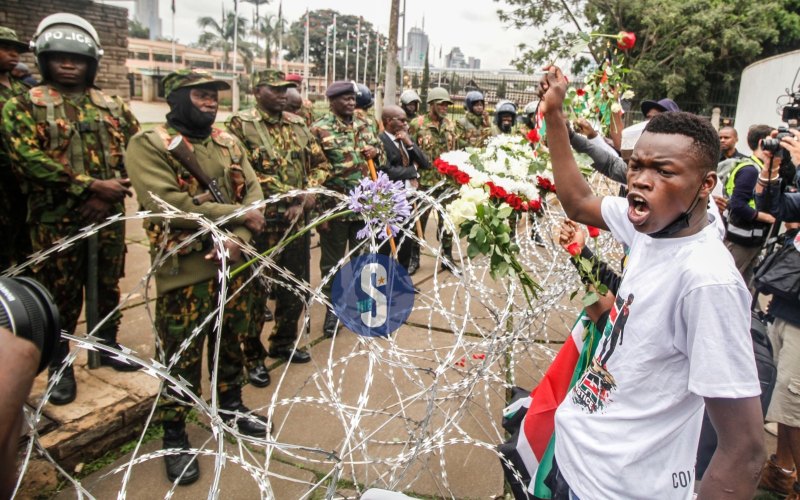
“#RejectFinanceBill” protests, Amnesty
International reported 21 abductions and
disappearances, alongside 52 arrests, confirming use of forceful tactics by uniformed and non‑uniformed officers.
HRW (June 2025 report)
describes abductions and enforced disappearances of leaders and participants of protest actions, with bullets
and beatings used against protestors, including minors, and no investigations or prosecutions of
security personnel responsible.
Boniface Mwangi:
The activist who saw it coming and a U-turn in charges
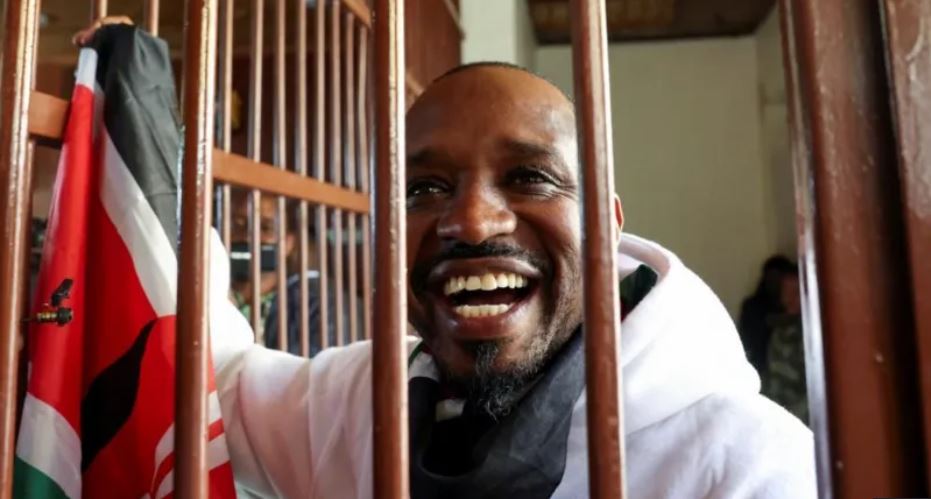
On July 19, 2025, the arrest of activist Boniface Mwangi by officers from
the Directorate of Criminal Investigations (DCI) at his home in Lukenya,
Machakos County, sparked public outrage.
He was taken to Pangani Police Station for processing and on Monday
arraigned in Kahawa Law Courts.
According to police, officers recovered two
unused tear gas canisters, a blank 7.62mm round, laptops, mobile phones, hard
drives and documents from his residence and office.
While initial statements from authorities hinted at possible
terrorism-related charges, Mwangi was ultimately charged under the Firearms Act
for unlawful possession of ammunition and tear gas canisters — not terrorism.
“On 19th July, 2025, at Mageuzi Hub, in Nairobi County within the Republic
of Kenya, you were found in possession of noxious substances to wit three
Teargas canisters without lawful authority….you were found in possession of one
round of a 7.62 x51mm blank ammunition without lawful authority,” the charge
sheet reads.
Mwangi maintained his innocence. Principal Magistrate Gideon Kiage ordered
his bail release at Sh1 million.
KHRC condemned the move, calling the charges
“trumped-up” and accusing the state of weaponising anti-terror rhetoric to
justify politically motivated actions.
Amnesty International Kenya also issued a strong statement, describing the
arrest as part of a “broader effort to intimidate lawful dissent,” and pointing
to the misuse of the Prevention of Terrorism Act (POTA) in over 100
protest-related cases — a trend they warned was eroding the integrity of
Kenya’s criminal justice system and violating international legal obligations.