PRESIDENT William Ruto’s administration is navigating a perfect storm of
nationwide youth-led unrest, with the Gen Z protests emerging as the most potent challenge
to his leadership.
The convergence of economic grievances and politics has blurred the line
between legitimate youth demands and opposition-driven agendas.
The situation, worsened by economic stagnation and political fractures fueled
by early 2027 campaigns, has left the President with no easy solutions.
Deep-rooted political maneuvering, unmet promises, and a struggling economy
complicate Ruto’s situation.
The Gen Zs, digitally native, politically aware, and feeling let down with
empty promises, have taken to social media and the streets to demand
accountability.
Their hue and cry is that the Kenya Kwanza administration has left
unemployment, police brutality, and economic mismanagement unaddressed.
Their rallying call, ‘Ruto wantam’ (Ruto one term), has brought to light
their feeling of rejection by the Ruto leadership.
Unlike past protests led by opposition figures like Raila Odinga, this
movement lacks a central leader, making it harder for the government to co-opt
or suppress.
They operate without traditional opposition leadership, organise through
social media to demand systemic change, and are relentless.
Former Public Service Cabinet Secretary Justin Muturi said the President has
himself to blame for the crisis he is facing.
He argued that the President was yet to be the “calming force during crisis,
the guardian of liberty, the moral compass in moments of conflict.”
Muturi, citing the President’s recent order to the police to shoot
protesters in the leg, said by choosing to incite violence, Ruto has failed the
test of statesmanship.
He says there is a way out of the crisis. “President Ruto can
still reclaim the moral high ground, not through silence or spin, but through
justice and humility.
“It demands that the President, above all, leads not with the iron fist of
fear, but with the open hand of constitutional fidelity,” the former Speaker of
the National Assembly said.
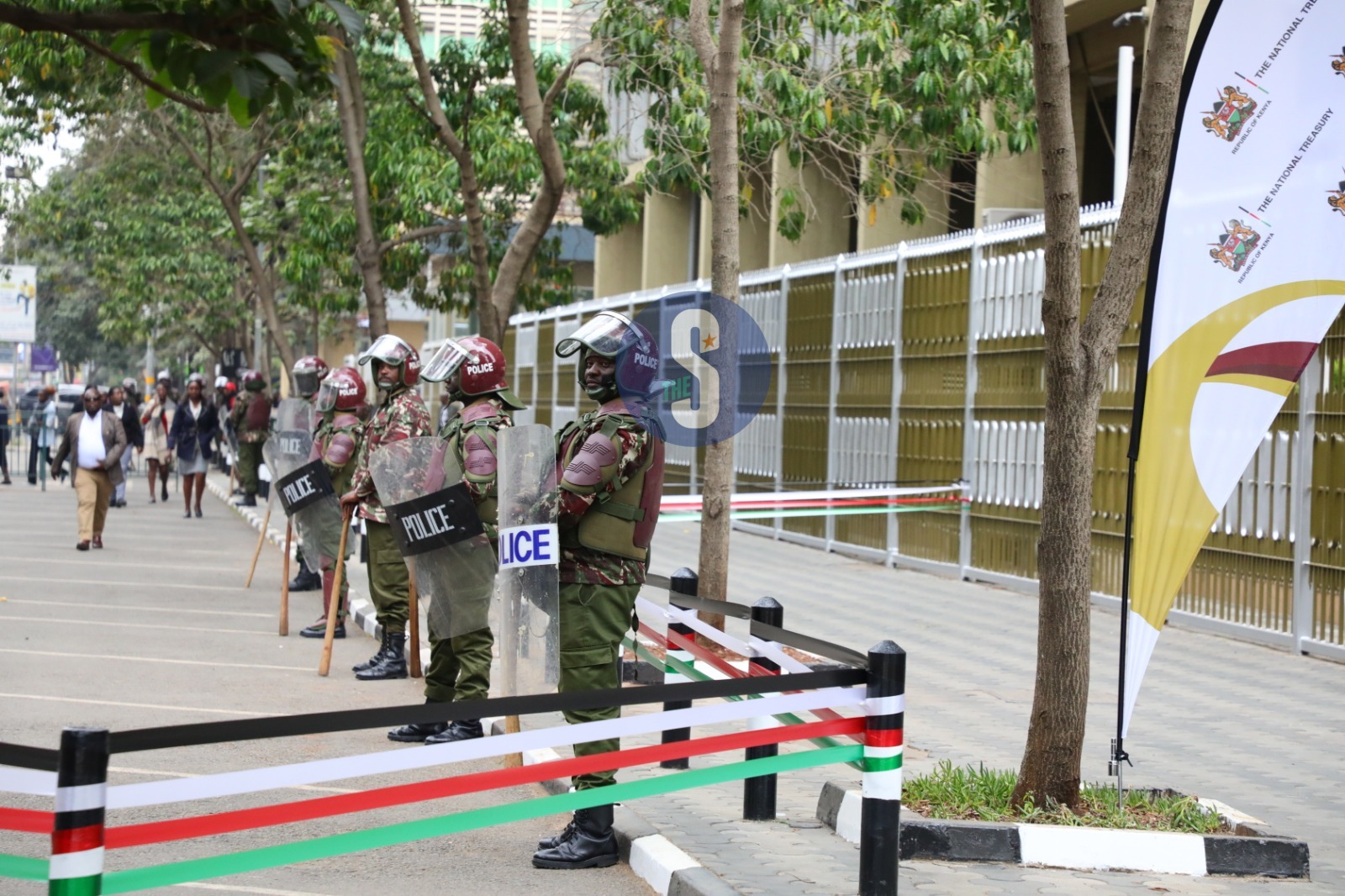
The killing of blogger Albert Ojwang’ in police custody and the deaths of 31
protesters in recent demonstrations have worsened public anger.
The response, including orders for police to shoot protesters in the legs,
has drawn international condemnation and further eroded public trust in
government.
Pauline Njoroge, Jubilee Party deputy national organising secretary and
a prominent blogger, says Ruto can undo the crisis “but is concerned with
political power than the well-being of the people.”
For Kiharu MP Ndindi Nyoro, the Ruto-led government is abetting the crimes,
hence there cannot be any solution in sight.
Analysts warn that repression risks radicalising the youth and destabilising
the country’s fragile democracy.
Political commentator Javas Bigambo said, “The current state of affairs is
unsustainable. There is a need for broader reflections.”
BROKEN PROMISES
Ruto’s 2022 campaign pledged to create four million jobs, but three years
later youth unemployment remains rampant.
A World Bank-backed initiative, which has promised 800,000 jobs, has run
into funding challenges.
The economic empowerment drive spearheaded by Deputy President Kithure
Kindiki has been dismissed by critics as a political stunt.
Meanwhile, the economy is sinking under a Sh11 trillion public debt, staging
the need for austerity, hence eating into government interventions.
As the pressure mounts, additional taxes are no option, as was witnessed in
the 2024 protests that forced Ruto to drop the contentious Finance Bill, 2024.
“Government needs to know that the young people of today are not of the
1990s. Ruto’s government needs a 360 degrees paradigm shift,” said Eric Okeyo,
former Private Security Regulatory Authority chairman.
“Since most of them are under 35, the issues of the earlier years are
irrelevant to them, and make no difference to them.”
More pressure on Ruto has come in the face of the impeachment of Deputy
President Rigathi Gachagua backfiring, polarising his Mt Kenya support base.
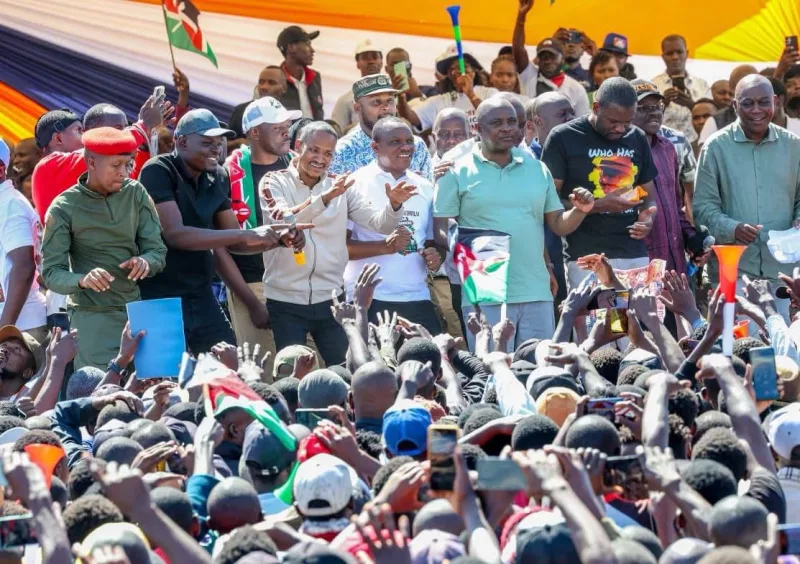
Gachagua’s new Democracy for Citizens Party aims to "kick Ruto out in
2027" and send his loyalists home.
Those behind him are exploiting discontent over resource allocation and
perceived marginalisation as campaign points.
Mt Kenya leaders, who were once Ruto’s staunchest allies, now fear electoral
oblivion, most of them maintaining a studious silence in the unfolding political
fireworks.
While it was envisioned that Raila Odinga joining government would quell the
fire, the events after reveal the opposite.
WAY OUT
Ruto’s allies, including Raila, advocate dialogue, but Kenya Kwanza critics
say they are not ready for any talks.
Peoples Liberation Party leader Martha Karua says nothing good can come from
the “rogue regime”.
“They are the ones who should change by listening to Kenyans. It is not
about getting this regime to do anything,” she said last week in an interview with
Citizen TV.
Opposition figures like Gachagua dismiss concessions as “too late” and have asked
Gen Z to consider fighting Ruto at the ballot box.
Observers say that Ruto’s survival hinges on delivering economic relief,
ending police violence, and reconciling with political competition.
“Without swift action, the ‘Wantam’ chorus may crescendo into his political
obituary,” Prof Olang Sana of Maseno University said.
Whereas experts argue that Ruto must shift to dialogue, he has instead
doubled down, and says he won’t be taken prisoner by elements out to overthrow
him.
He has framed the unrest, which has left hundreds dead and hundreds other
reeling from unquantifiable losses, as an existential threat.
The President has also vowed to deploy all state machinery to crush what he
called "terrorism disguised as dissent."
“Enough is enough," he said. "We will use whatever means
available to stabilise this country."
Ruto’s deputy Kithure Kindiki has adopted a conciliatory tone, asking their
political rivals to shun violence and pursue peaceful consultation.
Kenyans have found themselves at a crossroads over the wave of protests,
with hundreds counting the cost in losses, while pensively waiting for sense to
prevail.
INSTANT ANALYSIS
As the standoff persists, lives are at stake. According to civil society
groups, more than 140 people have died in the confrontations, the latest being 32
who lost their lives as police responded to Saba Saba protests. At least 45
people were killed during the 2023 anti-government protests, 60 died in the
2024 Gen Z protests, 20 more were shot during the June
25 memorial protest.