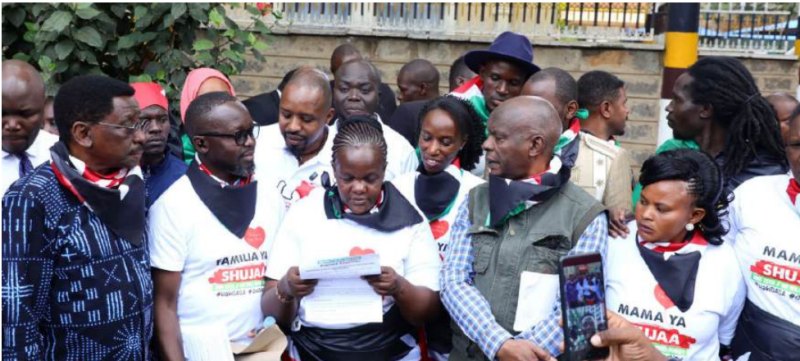
On Sunday, the Kenya Human Rights Commission office became a scene of terror when individuals violently stormed the premises.
They assaulted those present, stole valuables, and instilled fear among peaceful citizens who had gathered to demand accountability and justice. Among them were elderly women, some as old as 80, who had come to demand that security agencies stop killing their sons and daughters for exercising their right to protest.
This was a clear and calculated attack, an escalation in a pattern of repression that has intensified in recent months. Three days after the attack, at around 6:20 pm, two officers from the Directorate of Criminal Investigations arrived at our office.
They claimed they were there to investigate the assault. When pressed, they said they intended to take photographs of the premises to aid in a forensic investigation.
While KHRC has always supported lawful investigations, the timing and suspicious nature of this visit raise serious questions. Where was the urgency on the day of the attack? Why arrive days later, well after working hours, without following proper procedure?
The events at our office on Sunday were preceded by another chilling development. On Saturday, Martin Mavenjina, KHRC’s Senior Legal Advisor on Transitional Justice, was detained and allegedly taken to Uganda after landing at Jomo Kenyatta International Airport. Martin was returning from official duties in South Africa.
This is not a new terrain for KHRC. Since its founding in 1991, the organisation has operated with a clear mandate of promoting human rights and demanding accountability from state and corporate actors. For this, we have repeatedly found ourselves in the crosshairs of those in power.
In 2008, following the disputed 2007 presidential election, our then executive director received credible death threats after speaking out against violence. Since then, intimidation has taken many forms, including regulatory strangulation, malicious legal threats, media smear campaigns, and informal repression, where the state covertly uses proxies to avoid accountability and delegitimise the cause of its targets.
In 2015, the NGO Coordination Board issued a threatening notice of deregistration against KHRC. The accusations were outrageous and unfounded, falsely claiming that we operated illegal bank accounts, filed falsified financial reports, and failed to meet statutory obligations. We challenged the move in court and won. Justice Louis Onguto ruled that the board’s actions were unconstitutional, finding that KHRC had been denied both notice and a fair hearing.
But the attacks continued. In 2017, at the height of yet another contentious general election, KHRC was again targeted. The regulatory system was weaponised, and claims were peddled to silence us. Another deregistration notice was issued. Again, KHRC stood its ground.
Fast forward to 2024. KHRC defended victims of police brutality during the Gen Z-led protests. We exposed the extent of violence and in response, the regime retaliated with surveillance, harassment, and attempts to criminalise our work. Investigators were sent to examine us.
Digital and physical surveillance have become part of our daily reality. Following the protests, there was an attempted hack on KHRC’s website and email servers, likely intended to access sensitive internal communications. Staff members reported their phones being tapped. Unidentified vehicles with tinted windows were routinely parked outside our office.
Why is KHRC under sustained assault? It is because we refuse to be silent. We have consistently spoken truth to power, stood with the oppressed, and demanded justice where there was impunity. We do this not for recognition, but because our constitution demands it, and our conscience compels it.
We are not alone. We are deeply grateful for the immense solidarity from fellow civil society organisations, grassroots movements, journalists, lawyers, and concerned citizens. Their support has fortified our resolve. Together, we form an ecosystem of resistance that no regime can dismantle.
What is happening to KHRC is a signal to all actors in the civic space that the walls are closing in. But rather than recoil in fear, we must treat this moment as a clarion call to defend democracy with greater urgency. Now is not the time to retreat. It is time to double down on our pushback.
If these attacks are allowed to stand, if repression is normalised, Kenya will find itself firmly on the path of authoritarianism. Civic space will vanish, institutions will be hollowed out, and the people’s right to dissent will disappear.
But history favours those who resist oppression. KHRC is unbowed, and we are not alone. We know how this story ends. Oppression will be defeated, and we will be there, on the frontlines, until that day comes.
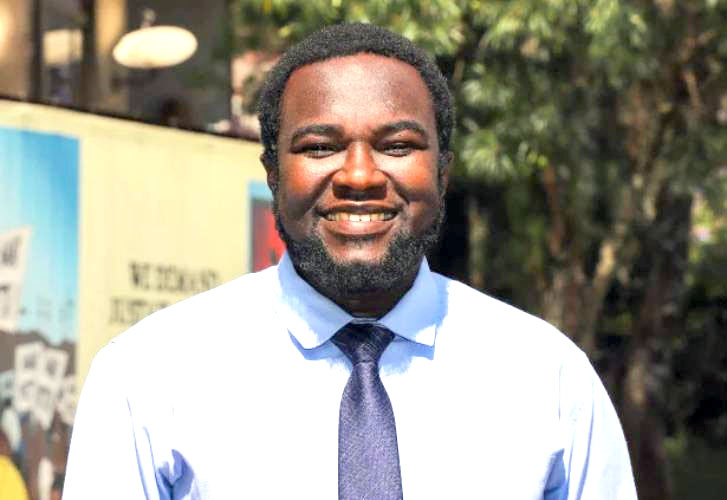
Progamme manager for inclusion and political justice
at the Kenya Human Rights Commission



![[PHOTOS] Raila Odinga Stadium construction enters home stretch](https://cdn.radioafrica.digital/image/2026/06/45f6990c-4882-4cd2-b83c-8fc730dcdce5.jpg)