After public service vehicles boycotted
service and the city was sealed off, groups in satellite towns around Nairobi
had a field day.
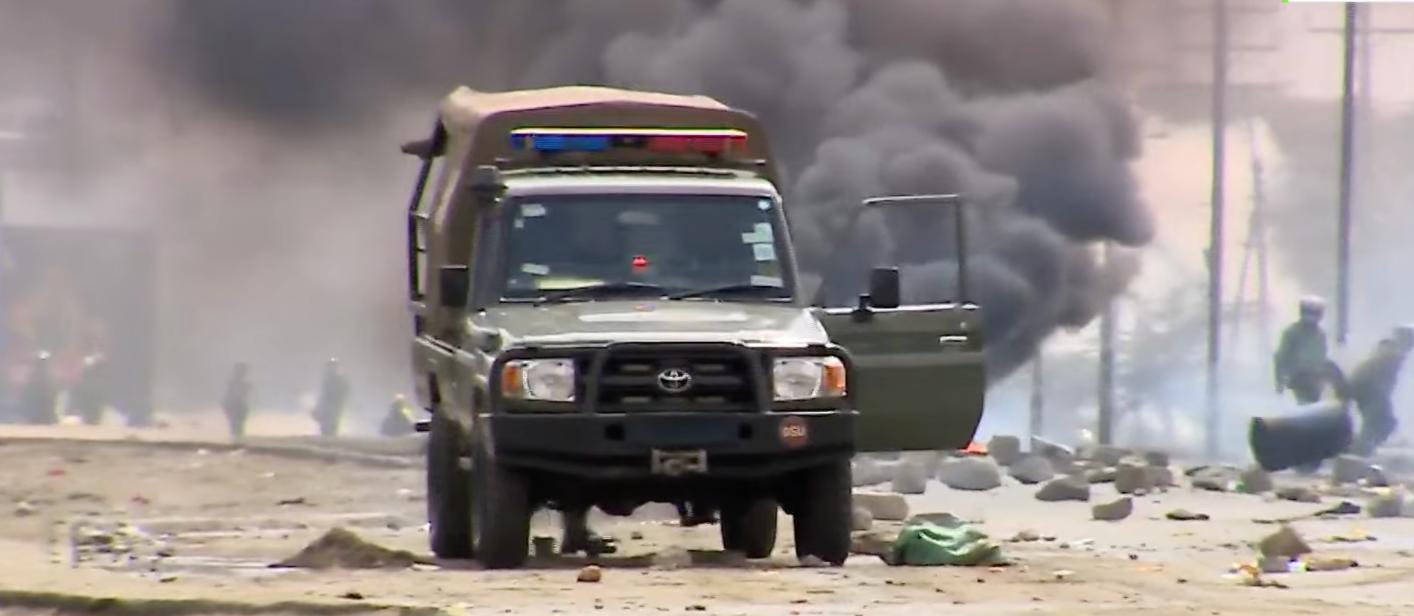
For almost five hours, the towns such as
Kitengela, Ongata Rongai, Kiserian, Githurai, Kahawa West, Roysambu, Ngong and
parts of Machakos were chaotic.
This is after the protesters in these towns
blocked roads and started to target supermarkets for looting.
Others targeted police stations in the area
with an aim of torching them.
Overwhelmed, the local police sought help
from Nairobi. A special squad in civilian nicknamed Special Tactical Unit
responded in 10 unmarked Subaru vehicles.
They started from Ngong Town, snaking through
to Ongata Rongai, then to Kiserian, and later in Kitengela.
And within a short while, the blocked roads
were opened and the mobs had retreated to their homes.
But this left a trail of deaths. Locals said
many people were shot and killed or injured.
The team proceeded to Machakos as others
cruised towards Roysambu, Kahawa West, Kiambu and Ruiru where chaos was reported.
They also said they had cleared the mess.
By then, some shops had been attacked and
robbed by gangs.
The police vehicles moved
in a tight formation, dispersing the mobs and
clearing the roads.
The impact was felt as the groups retreated.
The convoy, which appeared to be under coordinated
command, was composed of masked individuals wearing balaclavas and carrying
high-caliber firearms with full magazine carriers, prepared for combat.
The
group, operating with military-style precision, appeared unmistakably lethal.
Locals
took videos of the group of police arriving and confronting the gangs that had
choked the areas.
In
one clip, a figure—unarmed and giving instructions—seemed to command the squad,
reinforcing the impression of a chain of command within the unit.
Across
the city and outlying towns, multiple casualties were reported in the wake of their
operations with at least two people confirmed dead in Kangemi, three in Ngong,
one in Kitengela, one in Kamukunji, and two others along Jogoo Road.
Despite
being heavily armed, the squad showed little intent to carry out arrests.
Only
one instance was documented in which two suspects were violently subdued,
beaten, and bundled into one of the vehicles.
“This
was necessary because the mob had plans for more destruction and robbery,” said
an official aware of the operations.
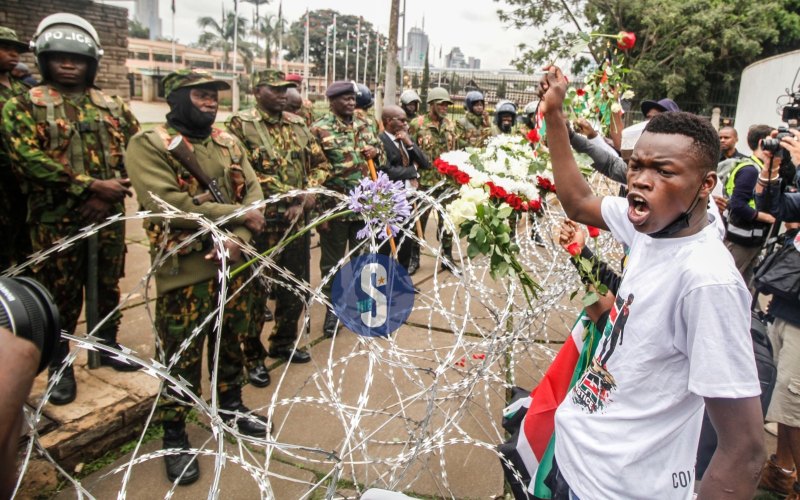
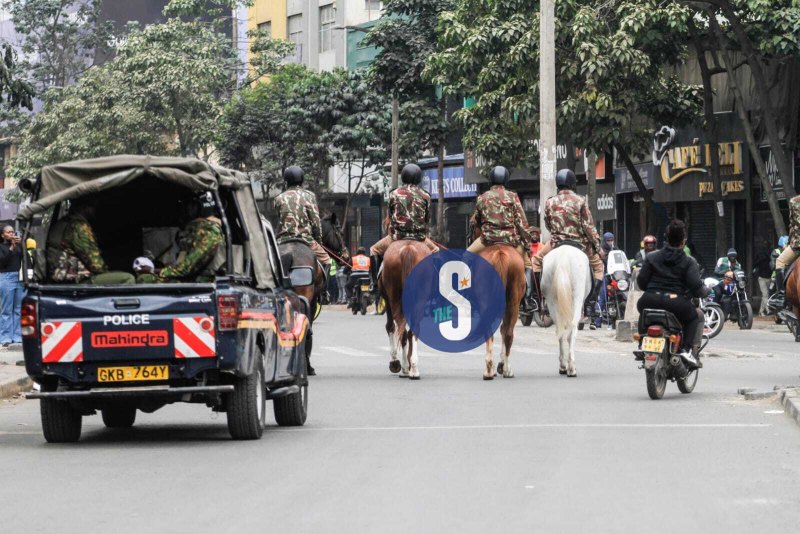
Across
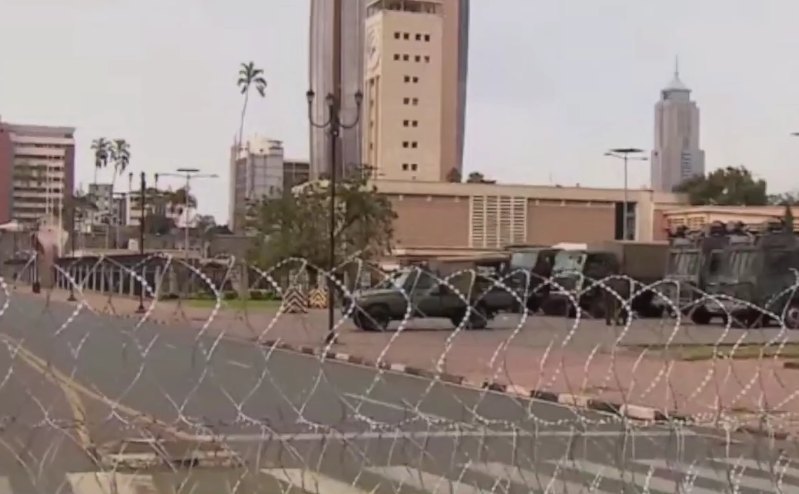
Nairobi, the scale of security deployment was unprecedented.
The
capital was transformed into a virtual fortress. Armored Personnel Carriers
roamed the streets, helicopters hovered overhead, and anti-riot police flooded
nearly every intersection.
At
least 25 barricades were mounted.
Meanwhile,
daily life was brought to a standstill.
Schools, especially public day primary and secondary
institutions, suspended learning due to safety concerns.
Businesses remained shuttered across multiple urban
centers, and transport disruptions left thousands stranded.
Police
on Monday confirmed that 11 people died due to the chaos that rocked Saba
Saba protests across the country.
Police said 52 police officers sustained
injuries, while 114 civilians were injured during the protests.
According to the police, 125 police vehicles
were damaged, 36 government vehicles were damaged, while 47 civilian vehicles
were damaged.
Police have arrested 567 people participating in
the protests across the country.
The police commended Kenyans for being
law-abiding and heeding the call to maintain law and order.
However, police added that certain individuals
remained determined to engage in acts of lawlessness that involved multiple
criminal acts, including attacks on law enforcement officers and looting.