Governors face more scrutiny as
details emerge on how county governments will share the Sh415 billion allocated
for the 2025-26 financial year.
With the allocation rising from Sh387.42 million from the last
financial year, all the 47 counties will have more cash at their disposal.
The County Allocation of Revenue Bill, 2025, now before the
Senate, outlines how the equitable share of nationally raised revenue will be
distributed among Kenya’s 47 counties.
As
per the Bill, Nairobi, Kiambu, Nakuru, Turkana and Kakamega will receive the
largest portions, with Lamu, Elgeyo Marakwet, Isiolo, Tharaka Nithi and Taita
Taveta getting the least share of the allocation.
“The
object of this Bill is to provide for the allocation of an equitable share of
revenue raised nationally among the county governments, in accordance with the
resolution approved by Parliament under Article 217 of the Constitution,” the
Bill states.
The
allocations come at a time when governors are under increased scrutiny over
poor fiscal discipline, ballooning wage bills and low development expenditure.
Most
of the devolved units are failing to meet their own source revenue targets,
forcing them to rely entirely on the equitable share for survival.
In
the Bill, Governor Johnson Sakaja’s Nairobi is receiving Sh21.41 billion from
Sh20.17 billion allocated in the previous year.
Governor
Susan Kihika’s Nakuru’s allocation has increased from Sh13.77 billion to
Sh14.45 billion, with Governor Jeremiah Lomorukai’s Turkana’s allocation
growing from Sh13.21 billion to Sh13.89 billion.
Governor
Fernandes Barasa’s Kakamega and Kimani Wamatangi’s Kiambu are getting Sh13.67
billion and Sh13.07 billion from Sh12.98 billion and Sh12.29 billion,
respectively.
Also,
in the category of big gainers are Mandera, whose allocation has increased from
Sh11.69 billion to Sh12.26 billion and Kilifi, which will get Sh12.81 billion
from Sh12.16 billion.
Others
are Kitui (Sh11.50 billion), Bungoma (Sh11.83 billion), Wajir (Sh10.50
billion), Meru (Sh10.55 billion), Machakos (Sh10.17 billion).
“Each
county government’s allocation shall be transferred to the respective County
Revenue Fund in accordance with a payment schedule approved by the Senate,” the
Bill states.
Kisii
will get (Sh9.81 billion), Kwale (Sh9.07 billion), Narok (Sh9.77 billion),
Uasin Gishu (Sh8.97 billion), Mombasa (Sh8.38 billion), Migori (Sh8.88
billion), Marsabit (Sh8.10 billion), Kisumu (Sh8.90 billion) and Makueni
(Sh8.97 billion).
Conversely,
Lamu is receiving Sh3.85 billion from Sh3.25 billion, Elgeyo Marakwet is
getting Sh5.51 billion from Sh4.82 billion, and Isiolo is receiving Sh5.63
billion from Sh4.92 billion.
Tharaka
Nithi and Taita Taveta are receiving Sh5.05 billion and Sh5.75 billion from
Sh4.39 billion and Sh5.06 billion, respectively.
Kirinyaga
is getting Sh6.15 billion from Sh5.44 billion, Laikipia is getting Sh6.10
billion from Sh5.38 billion, Nyamira is getting Sh6.07 billion from Sh5.35
billion while Nyandarua is getting Sh6.66 billion from Sh5.93 billion.
Samburu
will receive Sh6.33 billion from Sh5.62 billion, Vihiga Sh6 billion from Sh5.29
billion and Embu is getting Sh6.07 billion from Sh5.36 billion.
In
addition to their equitable share, the 12 counties receiving the least funds
will each get an additional Sh371.66 million under an affirmative allocation
established in the new revenue-sharing formula.
This
totals Sh4.46 billion, deducted from the overall Sh415 billion, to promote
development in historically marginalised areas.
The
remaining funds—after deducting the Sh4.46 billion affirmative allocation—are
distributed using a new formula that will guide revenue sharing from 2025-26 to
2029-30.
“For
the avoidance of doubt, the allocation of the equitable share of revenue to
county governments shall be in accordance with the fourth determination of the
basis of division of revenue among counties, approved by Parliament pursuant to
Article 217(7) of the Constitution,” the Bill emphasises.
The
baseline allocation has been set at Sh387.42 billion, which was the equitable share
for counties in FY 2024-25. This means no county will receive less than it got
in the previous financial year.
“The
first Sh387.42 billion (being county equitable share for FY 2024-25) shall be
shared among counties based on the baseline allocation factor derived from each
county’s allocation for FY 2024-25,” the formula states.
Any
amount above this baseline—excluding the affirmative fund—is shared using the
new formula.
The
formula entails: basic (equal) share, which has been weighted at 35 per cent,
the poverty index at 14 per cent and geographical size at eight per cent.
Population
weights 45 per cent.
The
new framework will dictate revenue sharing among the counties for five years,
from 2025-26 to 2029-30.
The
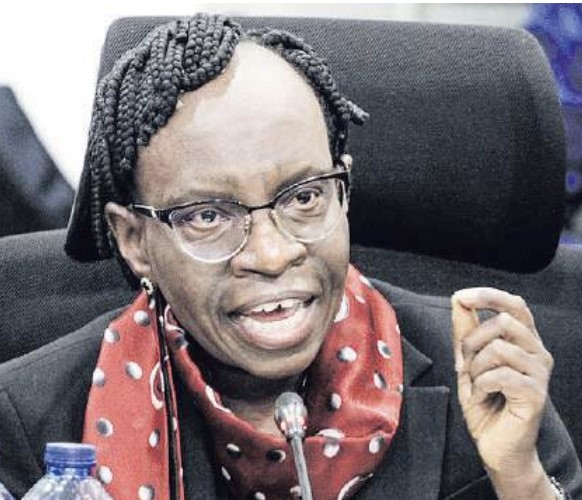
latest CoB report, by Margaret Nyakang’o, reveals that counties spent Sh154.94
billion on personnel emoluments in the first nine months of the last financial
year—nearly triple the Sh56.87 billion spent on development.
Nairobi
splashed Sh12.83 billion to pay its more than 13,000 staff compared with Sh2.42
billion spent on development over the period.
Nakuru
spent Sh4.8 billion on personnel emoluments against Sh940.07 million on
development, with Kiambu spending Sh6.38 billion on staff against Sh1.81
billion incurred in development.
Turkana
spent Sh4.39 billion against Sh2.60 billion incurred on development, with
Kakamega spending Sh4.98 billion on staff compared with Sh1.20 billion on
development
Kisumu
spent Sh4.18 billion on personnel emoluments against a paltry Sh491.86 million
on development over the period.
Lamu
spent Sh1.43 billion to pay staff, while Taita Taveta spent Sh2.2 billion
during the period and Embu spent Sh2.15 billion.
Other
big spenders on staff emoluments are Bungoma (Sh4.70 billion), Kitui (Sh4.4
billion), Machakos (Sh5.2 billion), Narok (Sh4.5 billion), Wajir (Sh3.2
billion) and Mombasa (Sh3.9 billion).
Others
are Meru (Sh3.8 billion), Nyeri (Sh3.3 billion) and Murang’a (Sh3.1 billion).
The
CoB report reveals that nearly all the counties are relying on the exchequer
for funding as they perennially fail to meet their own source revenue targets.
In
the first nine months of the last fiscal year, county governments generated Sh45.91
billion from their OSR, which was 53 per cent of the annual target of Sh87.11
billion.
Ideally,
the counties should have hit 75 per cent of their targets as at the end of the
third quarter of the fiscal year.
At
least 15 counties recorded less than 50 per cent of their annual revenue
target.
They
are Nyamira (47 per cent), Kilifi (46 per cent), Busia (46 per cent), Siaya (44
per cent), Embu (44 per cent), Nandi (44 per cent), Kajiado (43 per cent),
Kiambu (42 per cent), Kwale (42 per cent), Kisii (41
per cent) and Bomet (40 per cent).
Taita
Taveta, Kisumu, Bungoma and Machakos counties have recorded less than 40 per
cent of their annual targets.
“The
low OSR performance creates an environment for accumulating pending bills. The
Controller of Budget advises county governments with low OSR performance in the
first nine months of FY 2024-25 to consider revising their revenue estimates
downward,” Nyakang’o said.