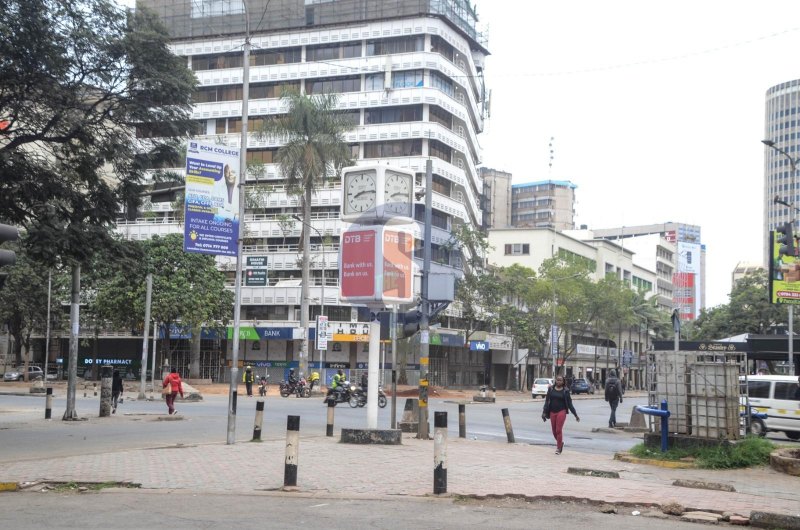
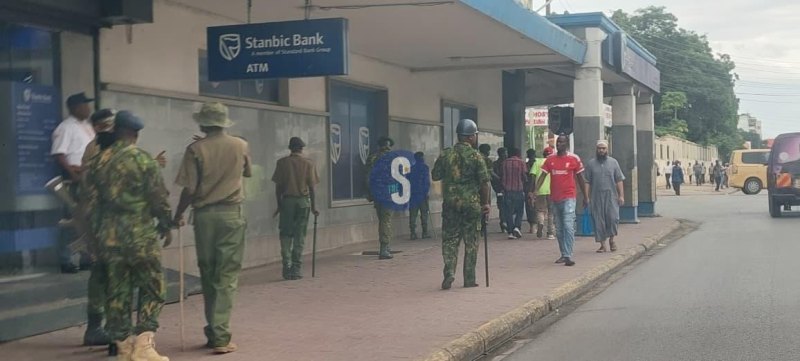
The city could have been
overrun to the ground, officials say.
Authorities are commending
detectives at the Directorate of Criminal Investigations for stopping what they
termed as anarchy during the protests.
Also being commended are
teams in Juja, Ruiru, Githurai and the General Service Unit headquarters.
They managed to stop crowds
that had originated as far as Thika Town, aiming to arrive in Nairobi.
Their destination was either
City Hall, Parliament or at least State House, oblivious of the dangers that lay
in waiting.
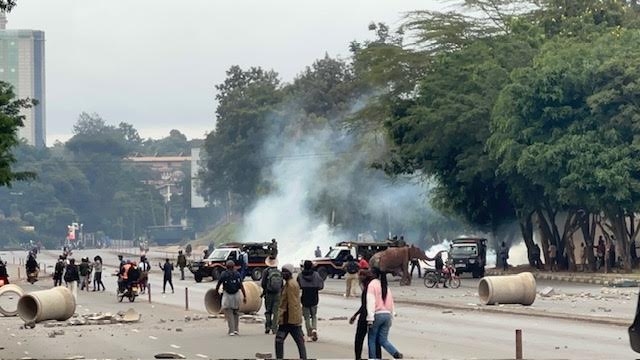
As teams of police were fighting
to contain the protesters that had managed to arrive in the Central Business
District, larger crowds were battling with teams along Kiambu Road and the
entire Thika Road.
“Had they breached the
police cordons and arrived in the city centre, we would not have a town or anything
to talk about now. Police were also restrained and ordered not to use live
bullets,” said an official aware of the issue.
On Kiambu Road alone, the
crowd had breached two police barricades at the Northern Bypass and AAR
Hospital area.
Their aim was the Nairobi city
centre.
After learning the crowd had
breached the two barricades, authorities at the DCI headquarters on Kiambu Road
ordered almost 100 cops to dash for their weapons and stop them at all costs.
In the meantime, a water
cannon was summoned from GSU headquarters.
When the crowd arrived
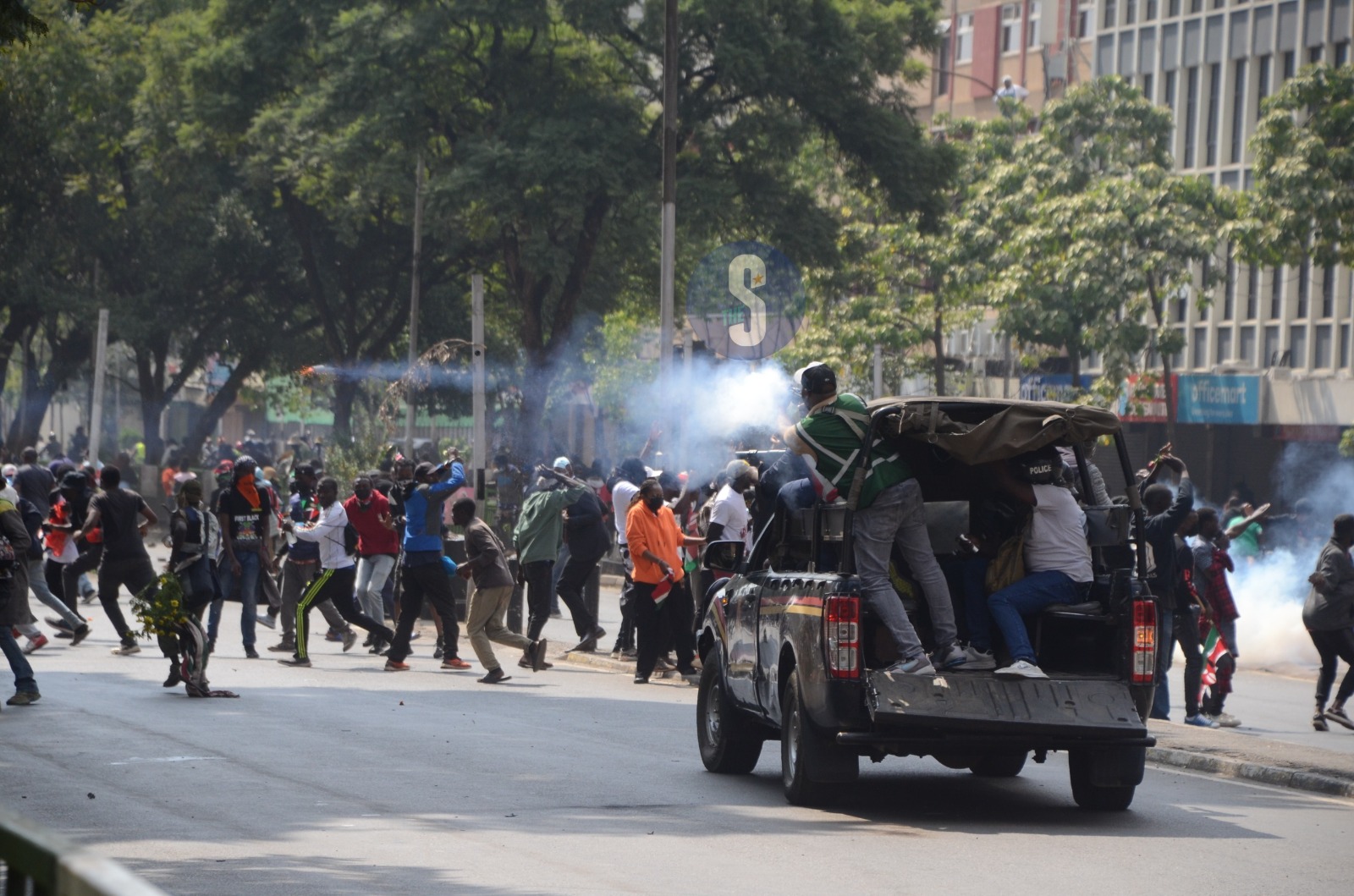
outside the DCI headquarters, Mazingira Complex, they confronted a heavily armed
team that shot into the air to disperse them.
Instead of escaping, they
seemed more organised. They sat on the road and waited for an order to surge
forward.
The standoff lasted almost
30 minutes. It took the arrival of the water cannon to disperse the crowd that
officials put at about 3,000.
They were driven away to the Thindigwa area. While on the way, many were injured and robbed.
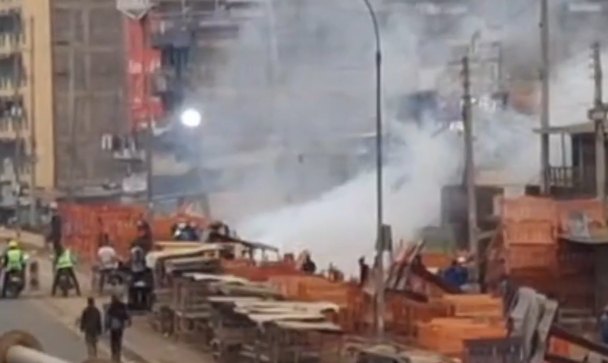
In the meantime, other teams
were fighting crowds on the larger Thika Road. From Waitithie, Juja, Ruiru,
Githurai and Alsops area, the scenes were similar as cops fought to contain the
situation.
In the end, properties valued
at millions of shillings were lost.
Officials said more than ten
people were killed and 400 were injured in the protests.
The protests were called to commemorate the 2024
Finance Bill protests in which more than 60 people were killed.
The Independent Policing Oversight Authority
(IPOA) said a number of injuries among police officers were also documented.
There were at least 61 suspected protestors arrested
across the country.
Further, there was infiltration of
demonstrations by goons.
This led to the looting of property in many places.
The government banned
live TV and radio coverage of the protests, but its decree was overturned by
the High Court in Nairobi.
President William Ruto urged protesters
not to threaten peace and stability, as some in the crowds tried to reach his
official residence but were pushed back by police.
"Protests
should not be to destroy peace in Kenya. We do not have another country to go
to when things go wrong. It is our responsibility to keep our country
safe," he said.
The
president was speaking at a burial ceremony in the coastal county of Kilifi.
His
absence from the State House, his official residence, was notable as young
protesters threatened to storm it. They were stopped and dispersed outside the State House Girls.
The protests were held in 24 countries and later
turned chaotic. Properties were looted, and otherswere destroyed.
Many roads were blocked for hours as groups
flocked there to air their anger and frustration against the government.
IPOA said they deployed officers to the Kenya
National Commission on Human Rights Situation Room to strengthen bilateral
collaboration between the two
institutions in monitoring interventions.
So far, the Authority has recorded:
IPOA said there was extensive damage to private
and public property, and the monitoring team documented the use of excessive and
varied force by police officers, including live ammunition, tear gas,
water cannons, whips, and batons, among other measures.
“Police officers concealed their identities
contrary to the law. Interruption of free movement and normal public service
operations, including public transport, policing services, and commercial
activities,” IPOA said in a statement.
Consequently, IPOA has taken up preliminary
enquiries into the various concern areas and will expedite investigations into
cases where excessive force was documented during the public order management
of the protests.
Separately, the Kenya National Commission on
Human Rights (KNCHR) recorded 8 fatalities during the demonstrations that
marked the first anniversary of anti-Finance Bill 2024 protests.
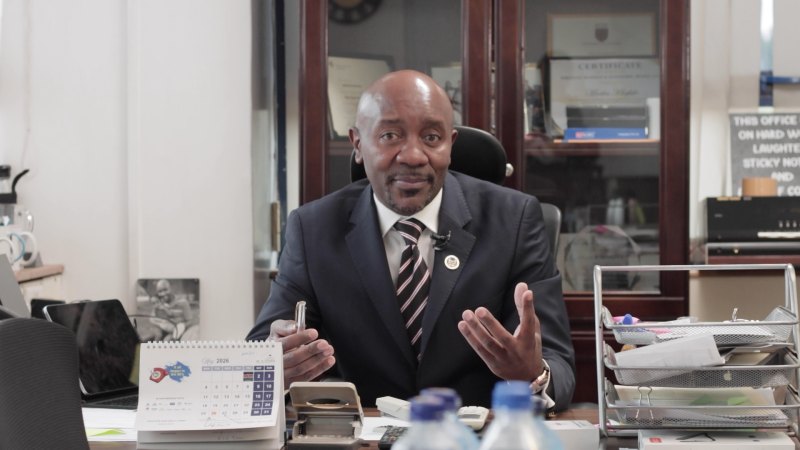
KNCHR Vice Chairperson Dr. Raymond Nyeris,
revealed that the deaths resulted from six different Counties: Machakos (2),
Makueni (2), Nakuru (1), Kiambu (1), Uasin Gishu (1) and Nyandarua (1).
KNCHR also reported over 400 casualties,
including protesters, police officers and journalists.
Out of this, the
majority have been treated and discharged, with 83 being referred for
specialised treatment.
Further, 61 individuals were detained at
different police stations countrywide, most of them in Nairobi County.
Owing to the chaos experienced in the protests,
KNCHR received information of criminal elements that infiltrated the
demonstrations.
"The Commission received information of
infiltration of the demonstrations by Criminal Elements and Destruction of
Property. Credible reports of “hired goons” infiltrating protests in Eldoret,
Mombasa, Nairobi, Nakuru, Nyeri, Kajiado and Kisumu," the statement read
in part.
"These groups have engaged in violence,
looting and property destruction."
In addition, the Commission condemned the
directive by the Communications Authority of Kenya for all media houses to stop
live broadcasts of the protests, citing that it violated the public's right to
access information.
"The Commission will continue to monitor
the situation and provide timely updates on the promotion and protection of
Human Rights in the country during this period," said the Commission.

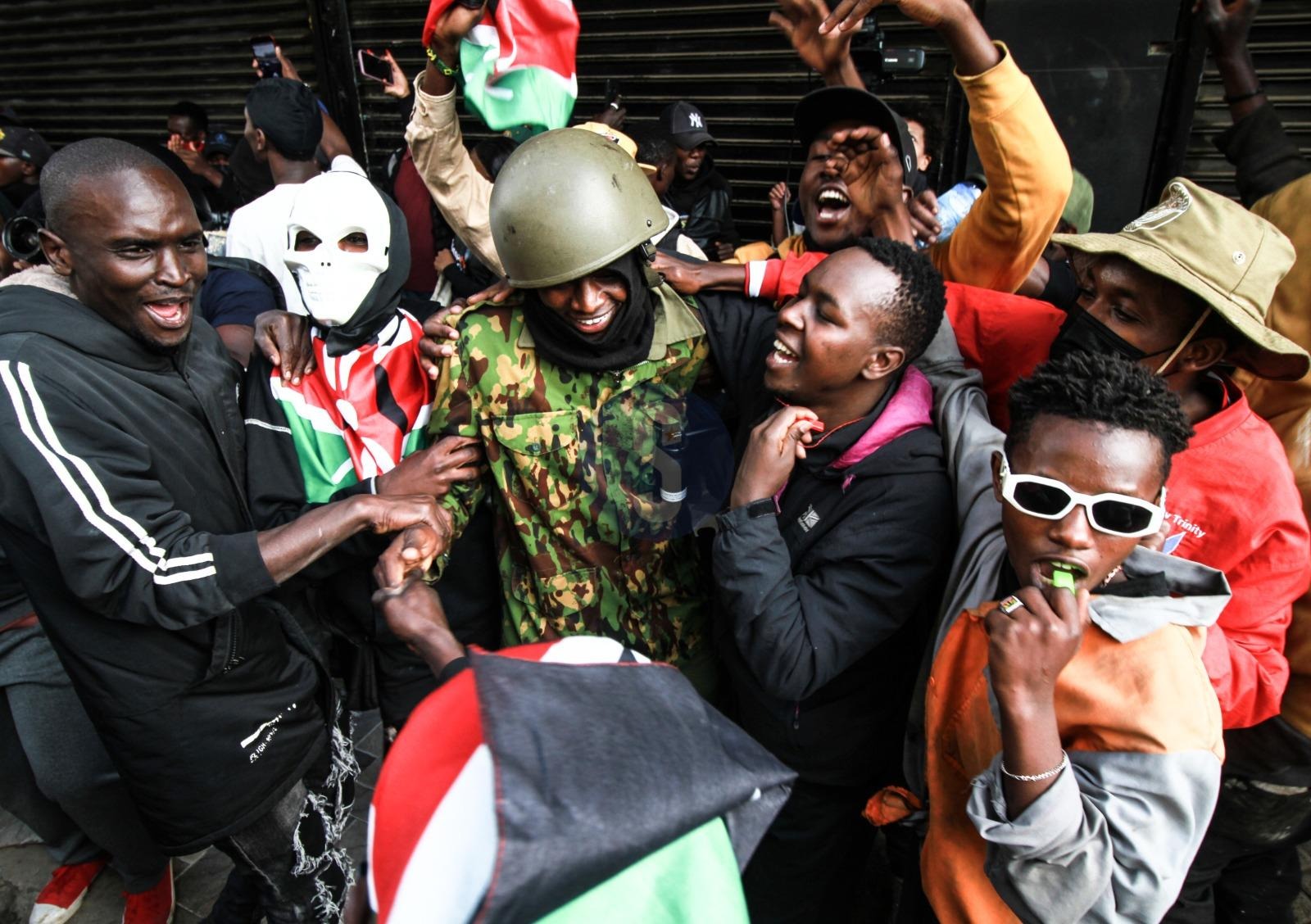








![[PHOTOS] Calm prevails in Kisumu, Homa Bay](https://cdn.radioafrica.digital/image/2026/06/dff8923b-c99a-4f40-a4be-cc996653e4e0.jpg)