Last weekend was a welcome long one, occasioned by Madaraka Day falling on a Sunday and therefore making Monday a rest day for workers.
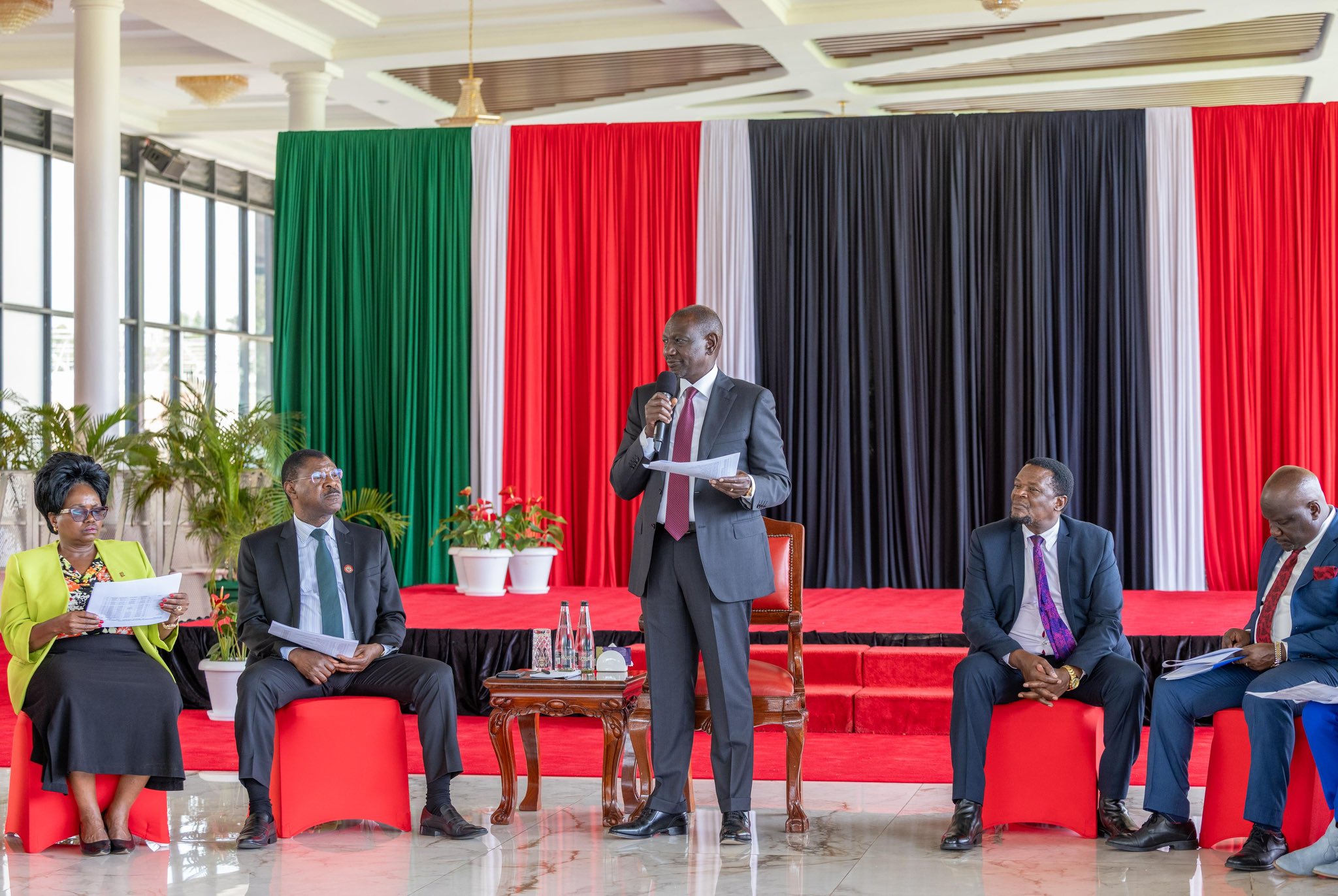
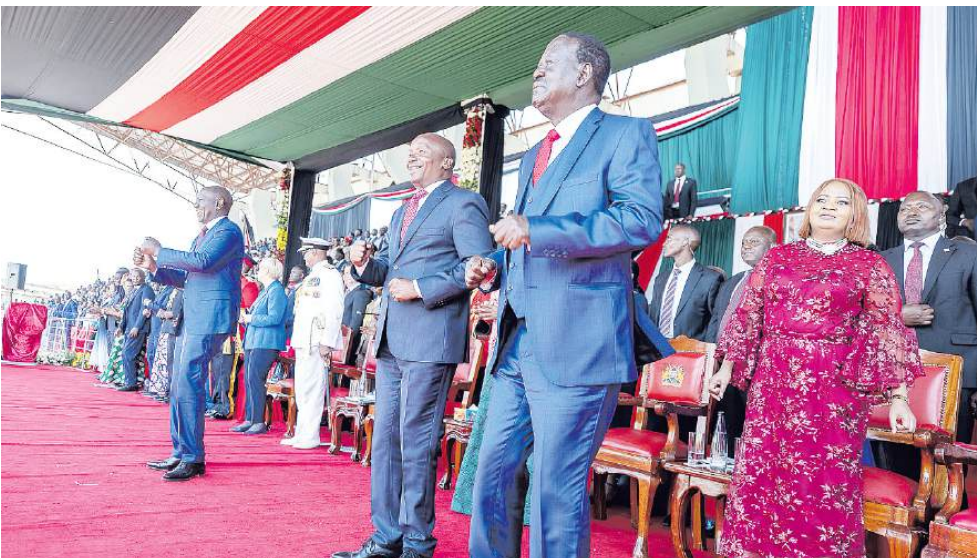
In Homa Bay county, it was a jamboree, as the political class arrived to celebrate the day in the lakeside town. The people of the lake truly know how to throw a bash, so obviously, state machinery must have been briefly mesmerised by the adulation directed at President Ruto and his delegation, by residents of Homa Bay.
It is too early to remind all and sundry that these adoring crowds in Luo Nyanza will last only as long as ODM leader Raila Odinga is happy, but will melt into thin air as soon as he gives a different political message.
This disclaimer is important, because politicians often forget the demarcation between own support and borrowed support, sometimes at great cost to their ambitions and aspirations.
Be that as it may, and if social media narratives were anything to go by, bloggers and commentators from the Mount Kenya region didn’t seem too enthused by the carnival atmosphere in Homa Bay.
For days, during and after the Madaraka fete, derogatory and demeaning phrases sprung up, targeted at the Luo community, in an extravaganza of ethnic slurs run by mostly central Kenya social media users.
A visitor to this republic, watching the latest political events, wouldn’t believe that the Mount Kenya region bears a huge responsibility for putting the Kenya Kwanza regime in power.
But the same region, having premised its choice in the 2022 election on communal hate for ODM chief Raila Odinga, does not now like the aesthetics of Raila and his native region becoming the new lovers of the current regime.
Truth be told, the Ruto regime probably loves this widening rift between the Kikuyu and the Luo nations. I am even persuaded that there is a level of the intelligence apparatus’ involvement in the social media narratives that drive this wedge.
From a political perspective, the Luo community’s embrace of Ruto will be driven largely by the renewal of old Luo-Kikuyu fault lines, or at least the growing sentiment that the two premier communities may not be able to work together in 2027.
The perennial political power fight between the Kikuyu, the Luo and the Kalenjin, over the past electoral cycles, has evolved into a predictable two-against-one contest, with regular switching of sides and all the attendant jealousies.
We are in the season of the Kikuyu-Kalenjin fallout, with the Luo getting cosy in government, at the expense of the Kikuyu. In Kenyan street slang, the Mount Kenya region has reacted by “catching feelings”. But these feelings and sentiments are misplaced.
In the scheme of things, the central Kenya community had no real issues with Ruto or Kenya Kwanza until the then DP Rigathi Gachagua was impeached.
So, in a sense, the current issues may indeed be Gachagua’s personal issues wrapped in community garb. And yet when Gachagua reigned in government, he preached the divisive, self-entitled gospel of “shares”, whose core doctrine was the supremacy of his region over others, in the sharing of the national cake.
His people cheered him on, testament to the fact that skewed national development in favour of one region was quite okay for them.
The loud lamentations about the government turning its attention to “people who did not vote for it”, in reference to Luo Nyanza, are not new and not specific to the current regime.
Under President Uhuru Kenyatta, and following the 2018 handshake between Raila and the former president, Mount Kenya politicians waxed lyrical about how Uhuru had “taken all our development to Luoland”.
The net effect of that siege mentality was a mass vote for William Ruto, in defying Uhuru’s preference of Raila for president, in the 2022 election.
My understanding is that this vote was meant to not only come with government largesse for the region, but a continuation of that anti-Raila gospel, an inexplicable lifelong indoctrination that is difficult to understand from the outside.
But once Gachagua fell out of favour and made it his mission to indoctrinate his people against Ruto and the government, the President was always going to look elsewhere for support and for a large vote bloc to stabilise his government. In Kenyan politics, that description always falls squarely on Raila Odinga’s Luo base.
Kenya’s political history is replete with anecdotes of the many times the ODM boss has bent over backwards to accommodate the interests of the Kikuyu nation.
It may not even be as recent as the younger political watchers may imagine. As early as 1997, Raila had been set to back a Kenneth Matiba run for the presidency, before the latter backed out of the 1997 polls and burned his voters’ card.
Five years later, Raila practically handed the presidency to Mwai Kibaki, in the 2002 election, before the disputed 2007 polls came along, in which there is near-consensus is that Raila won before being robbed.
Fast forward to 2018, when Uhuru was facing internal schisms within his government, and needed the handshake to gain a semblance of stability and flow during his reign.
Indeed, one of the most common complaints from Raila’s core base is his propensity to extend political favours to a region that consistently shows contempt to him.
But the new generation of Raila supporters has admittedly run out of patience with this philosophy of extending a hand of friendship to people who do not appreciate the grace of it.
Indeed, the so-called “Kumi Bila Break”, alluding to support for Ruto’s full second term, in most of the Raila bases, is driven by the ethnic epithets, especially those against the Luo community. The feeling on the ground, evidenced by the placards waved generously to welcome Ruto to Nyanza region last weekend, is that the Luo community is now in government to replace the departed Kikuyu community.
There is a level at which this divide is hurting national politics, because the entire 2027 election has reduced simply to those who want a second term for Ruto and those who want him out after one term.
It makes me sad, because the whole matter is devoid of any real conversation around service delivery and the functionality of government. Instead, it has been turned into a slur-fest between communities and their supposed access to government and its attendant largesse.
In the meantime, the reality is that whatever choices remain to be made in 2027, the Luo community, in the absence of Raila on the ballot, has become a toss-up in the election, ready to embrace new friends and alliances.
The Mount Kenya region may frown upon Luo Nyanza’s closeness to Ruto now, but everyone knows that Raila’s base is a juicy attraction to many political formations.
And my assessment is that both the Kenya Kwanza regime and the country’s intelligence services will be glad to have the mountain and the lake renewing their age-old rivalry, because that makes it easier for Ruto to find the embrace of the Luo nation and to use it to form a formidable political force ahead of the election.
The more those anti-Luo slurs from the mountain spread, the more the mountain sends the lake into Ruto’s waiting embrace!




![[PHOTOS] Elderly brave cold to vote in Ol Kalou](https://cdn.radioafrica.digital/image/2026/07/d2345b9e-578f-45ff-9bb0-d7819671c165.webp)
![[PHOTOS] Ol Kalou residents turn out in large numbers to vote](https://cdn.radioafrica.digital/image/2026/07/fe42d51c-7f79-466e-94e8-59561f77bbe7.webp)