

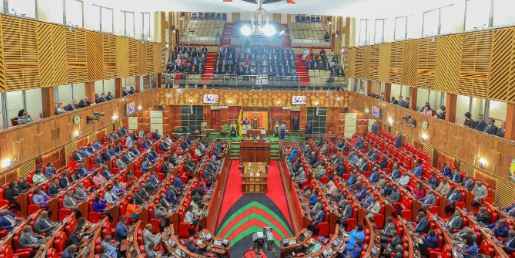
 The National Assembly
The National Assembly wrapped up a productive legislative session in April, passing five crucial Bills and introducing eight new ones.
Among the highlights was the unanimous passage of the Anti-Money Laundering and Combating of Terrorism Financing Laws (Amendment) Bill (National Assembly Bill No. 5 of 2025).
This landmark legislation aims to align Kenya’s financial laws with global standards, strengthening the powers of the Financial Reporting Centre and enhancing collaboration among agencies to detect and deter illicit financial activity.
National Assembly Speaker Moses Wetang’ula underscored the importance of timely legislative review, directing relevant departmental committees to scrutinise the newly introduced Bills and report back within stipulated deadlines.
Another key piece of legislation passed was the Division of Revenue Bill (National Assembly Bill No. 10 of 2025), which outlines the equitable distribution of national revenue between the central government and the counties.
This is expected to ensure the uninterrupted provision of essential public services at the county level.
In a bid to shore up domestic revenue, lawmakers passed the Excise Duty (Amendment) Bill (National Assembly Bill No. 7 of 2025), which introduces new taxes on alcohol, sugary beverages, and luxury items. According to the National Treasury, these levies could generate over Sh60 billion in the 2025/2026 fiscal year.
Parliament also approved the Social Protection Bill (National Assembly Bill No. 12 of 2025), setting up a legal framework for integrated social support initiatives.
The legislation will institutionalise cash transfers, disability assistance, and emergency relief through the establishment of a unified National Social Protection Council.
Additionally, the County Governments Additional Allocations Bill (Senate Bill No. 1 of 2025) received the National Assembly's green light. The Bill allows the national government to issue targeted grants and loans for specific county projects, especially in health and infrastructure.
Several other Bills moved through critical stages of the legislative process during the month.
These included the Basic Education (Amendment) Bill (National Assembly Bill No. 59 of 2023), which aims to promote inclusive education and enhance the role of Boards of Management in schools and the Kenya National Council for Population and Development Bill (National Assembly Bill No. 72 of 2023), seeking to grant the Council autonomy to guide national policy on population and family welfare.
Another proposed law was the Treaty Making and Ratification (Amendment) (No. 2) Bill (National Assembly Bill No. 9 of 2024), which advanced past Second Reading, proposes improved public participation and greater parliamentary oversight in international treaty-making.
In the Senate, lawmakers held a session with Labour and Social Protection Cabinet Secretary Alfred Mutua to discuss the enforcement of constitutional requirements for the inclusion of persons with disabilities (PWDs) in public service.
Senators expressed concern over the recent removal of the Disability Mainstreaming Indicator from government performance contracting, with Nominated Senator George Mbugua pressing for accountability and clear action from the ministry.
Meanwhile, the Hansard Association of Kenya (HAK) received accolades for its contribution to professional development within Kenya’s legislative bodies.
During the close of HAK's annual conference, Senate Deputy Clerk Eunice Gichangi lauded the association for fostering collaboration with academic institutions and other stakeholders.
“HAK’s strategic partnerships have greatly enhanced its capacity-building initiatives. The integration of academia adds immense value to our institutional growth,” Gichangi said.
The legislative developments in April underscore Parliament’s growing role in shaping a more transparent, inclusive, and accountable governance framework for Kenya.