He is now a key player in the broad-based government,
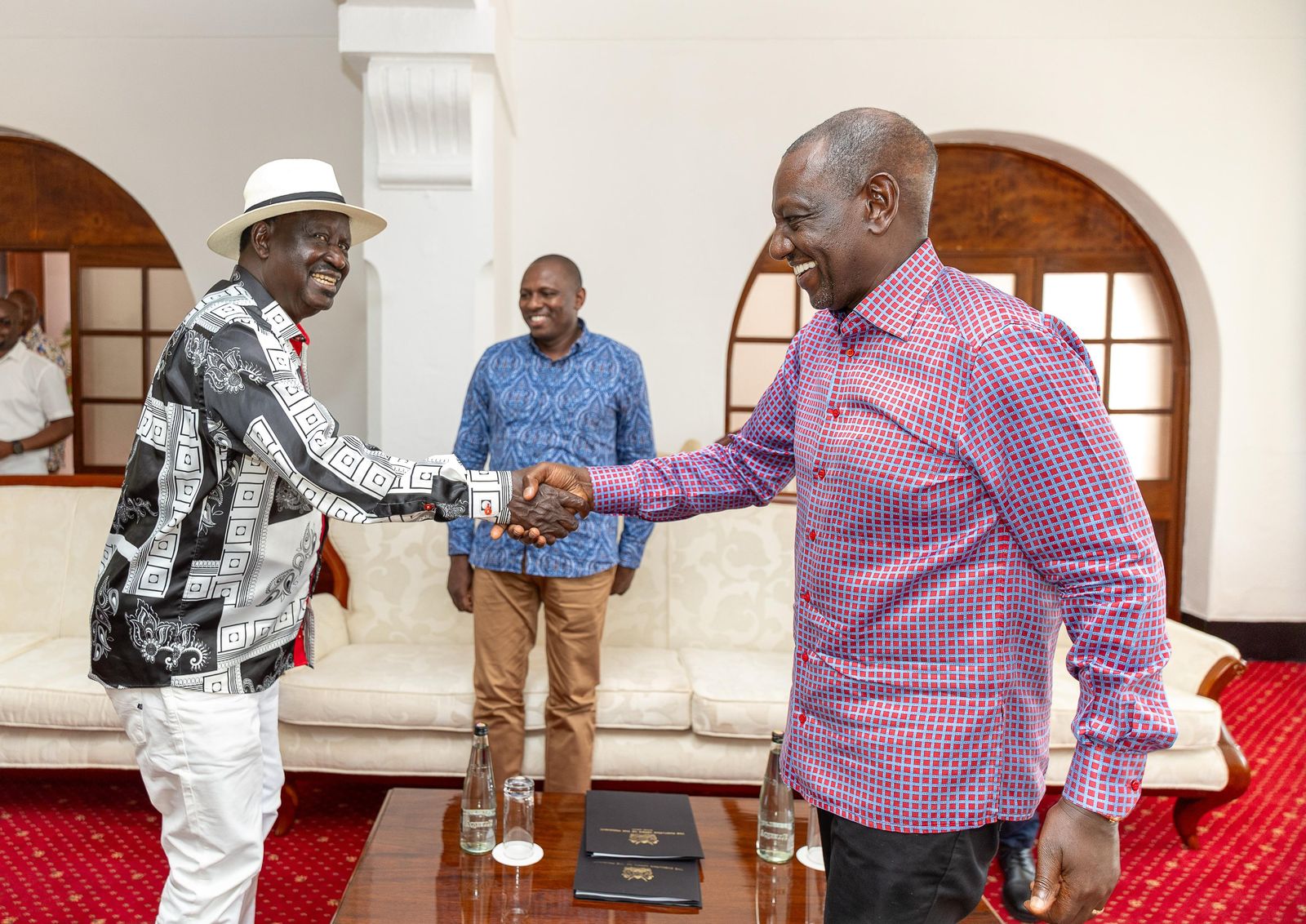
following the signing of a working partnership with President Ruto, whose Kenya
Kwanza administration is spearheading the reforms.
Coming at a time when President Ruto is heavily backing Raila's backyard to buttress his 2027 reelection chances, a fallout over the sugar reforms could chip away at any gains made so far.
On Friday, May 9, 2025, the government formalised the long-awaited
leasing of four public sugar factories, marking a turning point in efforts to
revive the once-thriving sugar industry.
The Kenya Kwanza administration has
undertaken far-reaching reforms, including the leasing of at least five sugar
factories in the Western and Nyanza regions for 30 years.
Although political leaders from across the divide in
Chemelil, Muhoroni, Sony, and Nzoia sugar belts have protested the leasing,
Raila has stepped in to offer President Ruto critical political insulation.
Notably, Raila, who had previously opposed similar efforts
during the tenure of retired President Uhuru Kenyatta, has now publicly
supported the current leasing strategy.
His support was evident on Wednesday, May 14, 2025, when he
held a meeting with the Kenya Sugar Board, chaired by former Rarieda MP
Nicholas Gumbo, at his Capital Hill office.
The meeting came on the same day that MPs and senators
allied to the ODM party criticised the government for leasing the four sugar
factories.
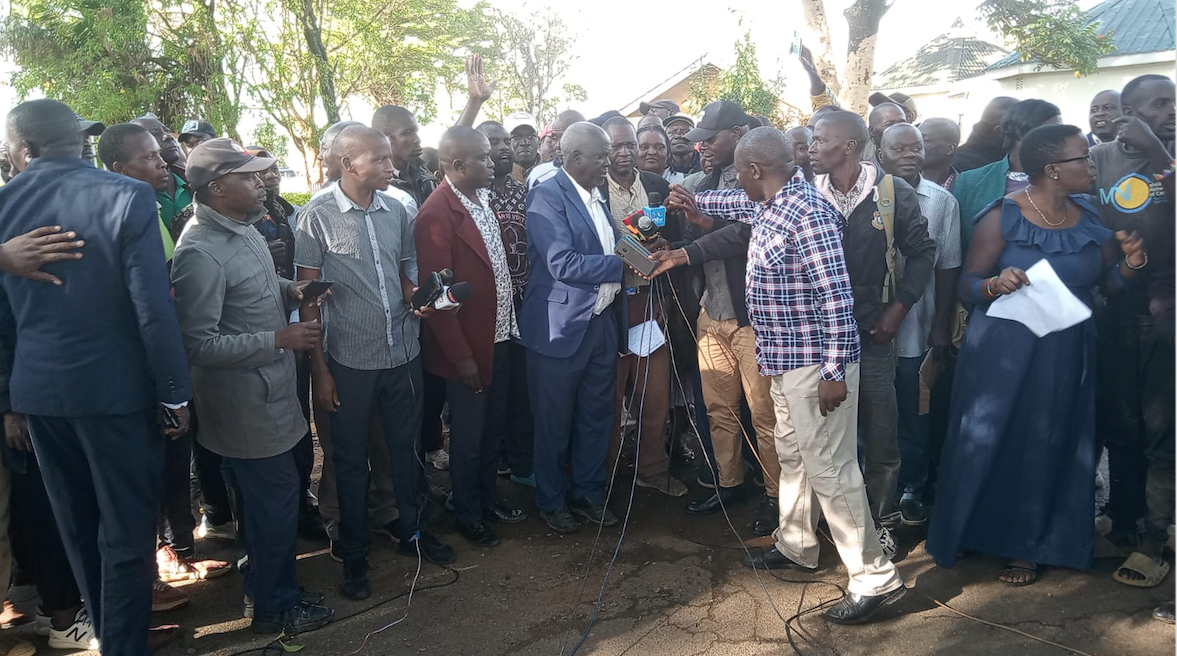
It also followed a protest led by a section of Western Kenya
leaders, including DAP-K party leader Eugene Wamalwa and Trans Nzoia Governor
George Natembeya, who opposed the leasing of the Nzoia Sugar Factory.
Wamalwa supported the protests and urged President Ruto to
drop the leasing plan.
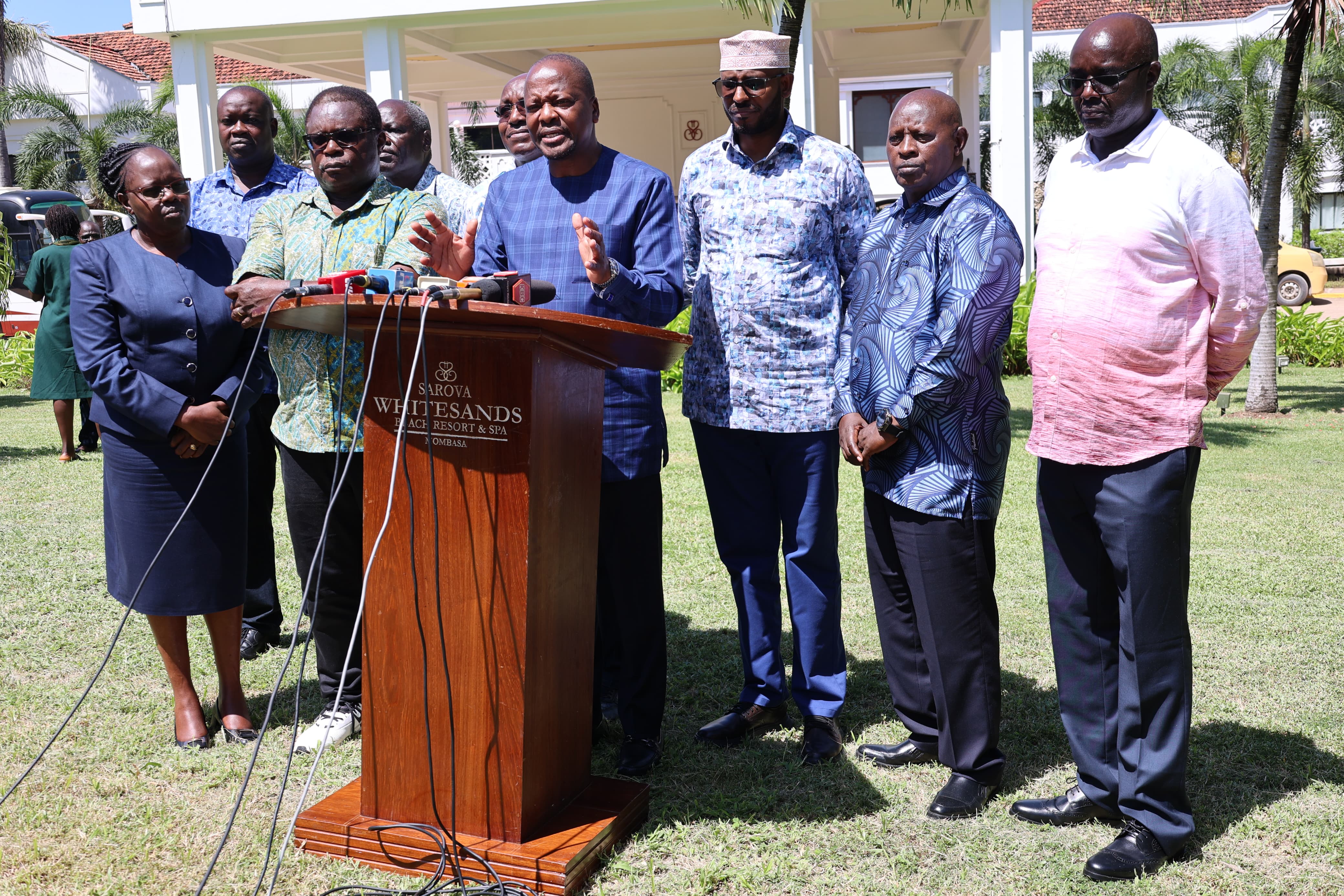
MPs and senators, including Raila's allies from Western Kenya, also addressed the media in Parliament and protested against the leasing.
Despite the political pushback, Raila on Wednesday
reaffirmed his support for the reforms and expressed his willingness to offer
counsel when needed.
"The Rt Hon Raila is a key stakeholder in the sugar
value chain. They briefed him on the ongoing reforms in the sugar subsector,
which aim to steer it back to a path of growth and achieve domestic
self-sufficiency while ensuring maximum returns for all players," read a
statement issued after the meeting.
He urged the board to stay focused on its core mandate of
achieving self-sufficiency through domestic production while maximising
benefits for farmers, millers, and other stakeholders.
"He assured the board of his full support for the
reforms being undertaken and expressed his readiness to offer advice whenever
required," the statement added.
The leasing plan has sparked uproar in Western and Nyanza,
with politicians allied to Raila questioning the rationale behind the 30-year
tenure, allegedly approved without public participation.
On May 12, 2025, elected leaders from Kisumu County called
on President Ruto to issue an executive order halting the leasing of
state-owned sugar factories, citing irregularities in the process.
Led by MPs James Nyikal (Seme), Onyango Koyoo (Muhoroni),
Aduma Owuor (Nyakach), Shakeel Shabir (Kisumu East), Joshua Oron (Kisumu
Central), and Women Representative Ruth Odinga, the leaders clarified that they
were not against leasing per se, but rather the opaque manner in which it was
being carried out.
In a joint press statement, they cited a lack of
transparency, disregard for public input, and threats to local livelihoods.
Separately, Kisumu Governor Anyang’ Nyong’o—one of Raila’s
key allies—also criticised the leasing deal, revealing deepening cracks within
ODM over the sugar sector reforms.
"This is nothing short of daylight robbery and an
economic coup d’état," Governor Nyong’o said.
However, Raila’s silence over the protests and his ultimate
endorsement of the reforms could prove politically vital for President Ruto as
he navigates the fragile sugar politics while ramping up sectoral reforms.
Observers argue that without Raila’s support, it would have
been politically explosive for Ruto to proceed with the leasing plans.
Political analyst Alexander Nyamboga says the President’s
growing closeness with Raila allowed him to time the move smartly.
“Without Raila’s support, the country could be witnessing
deadly protests across ODM strongholds and in the affected factories, which
would complicate the leasing process,” said Nyamboga.
“Raila is Ruto’s political shield during the leasing
process, and that is why the President maintains a close working relationship
with him, despite his lack of a formal office.”
Raila has previously gained significant political mileage by
championing farmers’ interests, reinforcing his strong support base.
In 2015, he fiercely opposed the proposed leasing of sugar
factories under then-President Uhuru Kenyatta’s reform drive.
In 2019, Uhuru
and Raila jointly proposed the privatisation of sugar mills, but the plan
stalled by 2021 as the country entered campaign season ahead of the 2022
elections.
The Ministry of Agriculture and Livestock Development has secured a Sh12.29 billion investment from private firms to revive four state-owned sugar mills.
Agriculture CS Mutahi Kagwe said the investment will go to Nzoia, Chemilil, Sony and Muhoroni Sugar companies, following a 30-year lease.
West Kenya Sugar Company, which clinched the lease for Nzoia Sugar, will pump in the largest amount of Sh5.76 billion.
Kibos Sugar & Allied Industries Ltd. will invest Sh4.5 billion in Chemilil Sugar.
West Valley Sugar Company Ltd., now in charge of Muhoroni, is set to invest Sh1.02 billion, while Busia Sugar Industry Ltd. will put Sh1 billion into Sony Sugar.
Kagwe said the four firms will also pay a combined goodwill fee of Sh521,971,400 for leasing the land owned by the factories.