President William Ruto's trusted allies in the Mt Kenya region are navigating treacherous political waters as widespread discontent threatens to trigger a mass exodus of support ahead of the 2027 general election.
Despite delivering a decisive victory for Ruto in 2022, the region's loyalty has dramatically waned amid economic hardships, unfulfilled promises and bitter power struggles following Rigathi Gachagua's controversial impeachment.
The political landscape has fractured into three distinct camps: those still loyal to Ruto, supporters of the ousted deputy president Gachagua, and a third group gravitating toward Deputy president Kithure Kindiki.
This splintering has eroded Mt Kenya's traditional role as Kenya's political kingmaker, a position it held for decades.
Two key Mt Kenya-based parties, the Democratic Party of Kenya and the Farmers Party, recently withdrew from the Kenya Kwanza coalition, signalling deepening cracks within President Ruto’s political base.
The Democratic Party, associated with Justin Muturi, and Farmers Party associated with Irungu Nyakera announced its immediate exit citing a consistent pattern of dishonesty, disregard for the constitution, and exclusion from key coalition decisions.
The departures of both parties from Kenya Kwanza highlight the mounting political fallout and the visible exodus from Ruto’s ruling alliance.
In key counties like Nyeri, Nakuru and Kiambu, Ruto-aligned leaders are under mounting pressure as they struggle to justify the high cost of living, stalled infrastructure projects and what many residents see as the sidelining of Mt Kenya’s economic interests.
Prominent figures such as William Kabogo (ICT CS), Lee Kinyanjui (Trade CS) Kimani Ichung’wah (Majority leader) , Thuo Mathenge (TND Party Leader) and Mutahi Kagwe (Agriculture CS) among others are finding it especially difficult to sell the government’s agenda at the grassroots.
Facing skepticism and even hostility at public rallies, many have shifted to promoting government initiatives through corporate events and official functions rather than direct engagement with voters at grassroots level.
Analysts argue that this shift reflects the region’s growing restiveness towards Kenya Kwanza administration and the challenge of reconnecting with a once-loyal base.
Nyakera has openly criticised the government for facing mounting opposition, attributing it primarily to a pattern of unfulfilled promises and continuous misleading of the electorate.
Speaking to the Star, Nyakera expressed concern that the administration’s failure to deliver on its campaign pledges has eroded public trust and fueled widespread disillusionment across the country.
Nyakera acknowledged that the recent appointments of prominent Mt Kenya leaders such as Kabogo, Kinyanjui, and Kagwe among others are undeniably political moves aimed at shoring up regional support.
However, he emphasised that these nominees possess the potential to make meaningful contributions in their respective ministries, provided they are allowed to operate without interference or being micromanaged by top brass from the national government.
“If the government fulfills its campaign manifestos, people can regain trust and confidence in its leadership and as it stands, there is a glaring absence of trust because the people have yet to see a credible record of development,” Nyakera said.
He pointed out that many Kenyans are frustrated by the gap between rhetoric and reality, with promises of economic growth, job creation and improved services remaining largely unfulfilled.
Nyakera urged the Kenya Kwanza administration to shift its focus away from political maneuvering and instead prioritise delivering tangible results that will spur the country’s development.
“The Kenya Kwanza administration has lost trust among its citizens, partners and institutions. Without restoring this trust through genuine development efforts, the government’s political capital will continue to erode,” Nyakera cautioned.
The New Democrats party leader Thuo Mathenge refuted claims that his recent appointment as Chairperson of the Kenya Agricultural and Livestock Research Organization was intended to sanitise the President’s image in Mt Kenya.
Mathenge emphasised that, along with Kabogo and others; he joined government to champion the interests of the region, insisting that Ruto does not require any political sanitisation as he is already delivering for the people.
He cautioned Gachagua against inciting the public against the government, branding him a “pathological liar” and urging residents to disregard his divisive rhetoric.
“The mourning period for Gachagua is over—we cannot keep sympathising with him. It’s time for Mt Kenya to move on and seek new leadership, because Gachagua has nothing left to offer our people,” Mathenge said.
Mathira MP Eric Wamumbi, a close ally of Ruto, recently faced backlash in Kirinyaga after publicly backing the President at a burial.
A video later surfaced of Wamumbi suggesting he would not seek re-election in 2027, but he clarified that his remarks were misreported, stating he is focused on serving his constituents for now.
Wamumbi, who has been a critic of Gachagua, urged residents to support and pray for the Kenya Kwanza administration as well as the President.
"Let me first do my work until 2027. Those who want the seat can wait, but for now, I’m committed to delivering for my people," he said.
Political analyst and JKUAT don Charles Mwangi observes that while Mt Kenya delivered Ruto a decisive victory in 2022, the region’s mood has since soured.
He notes that voters are now pragmatic, demanding tangible results, better roads, markets, jobs and genuine economic empowerment, rather than empty rhetoric or symbolic appointments.
He argues that for many electorates, the government’s controversial Finance Bill and new taxes amid economic hardship were the final straw.
Mwangi describes Mt Kenya as a battleground of shifting allegiances and rising discontent ahead of 2027.
He argues that Gachagua’s impeachment fractured the trust that underpinned Ruto’s support, splitting the Kenya Kwanza coalition and fueling a powerful opposition movement in the region.
“Gachagua’s impeachment didn’t just remove a key ally; it fractured the trust that underpinned Ruto’s support, leaving his loyalists scrambling to patch up the cracks,” he said.
He added, “Despite the President’s projects and unity calls, the reality is clear: faith in his administration is wavering and the risk of mass defection is real,” Mwangi said.
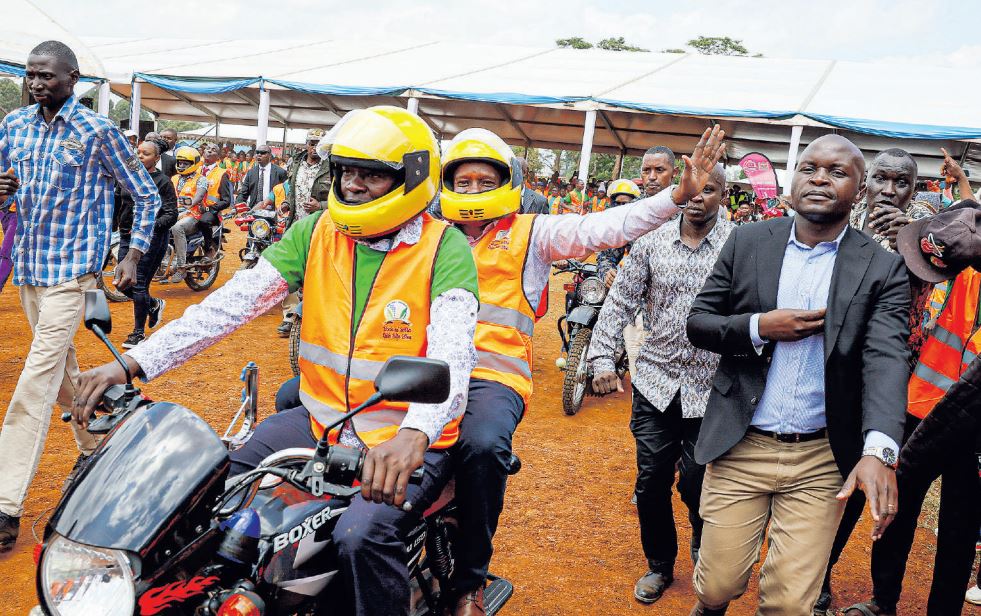
Ichung’wah, recently during Ruto’s tour in Mt Kenya, faced a hostile crowd that jeered him as he tried to address residents.
Despite Ruto handing him the microphone, Ichung’wah was drowned out by loud jeers and forced to cut short his speech.
Attempting to steady the crowd, he retorted in Kikuyu, “No one can scare me,” but the hostility persisted, making it impossible for him to continue.
Analysts argue that the tense reception reflected growing frustration among Mt Kenya residents toward some leaders perceived to have supported the impeachment of Gachagua.
Nyandarua Woman Representative Faith Gitau also faced heckling but pressed on to address insecurity concerns, calling for increased security resources despite the jeers.
Kabogo experienced a similar cold reception during the tour, failing to rally the crowd’s enthusiasm.
Kabogo recently in an interview with Star reaffirmed the government’s commitment to Mt Kenya’s development, highlighting ongoing projects like the Mau Mau road.
He accused Gachagua of sponsoring youths to criticise the government for his own political gain, insisting that Mt Kenya remains firmly behind President Ruto.
“Mt Kenya cannot afford to be in the opposition. Gachagua is advancing his personal interests, not those of the community,” Kabogo said.
Echoing this sentiment, Kirinyaga Governor Anne Waiguru also recently dismissed claims that Ruto’s support in the region is waning in favour of Gachagua.
During the opening of a Goat Artificial Insemination Center in Mwea, Waiguru said the President’s recent visit demonstrated his enduring popularity.
“We will continue to support President Ruto because we know 2027 will be decided on performance. Let’s work together for the sake of development,” she emphasised.
DP Kindiki during a fundraiser in Kiambaa on Sunday, urged the community not to punish the government, emphasising their commitment to delivering development and fulfilling campaign promises.
He defended former President Uhuru Kenyatta, dismissing claims that he orchestrated Kenya’s economic decline, attributing the downturn instead to the Covid-19 pandemic that shut down the economy for nearly two years.
“We blamed Uhuru for the economic challenges, but the real cause was the pandemic—no businesses were operating and people were not working. That’s what led to the situation in 2022,” Kindiki said.
He reaffirmed the government’s dedication to grassroots development, highlighting ongoing projects like the construction of 400 modern markets nationwide, with 25 in Kiambu alone.
Political analyst Albert Kasembeli observes that the perception of Ruto sidelining Mt Kenya’s interests, especially after Gachagua’s removal, has deepened the region’s sense of abandonment.
He argues that even staunch loyalists now face heckling and skepticism at local gatherings.
“Ruto’s loyalists are fighting on two fronts: convincing a skeptical electorate that the administration’s development agenda will bring real change, and outmaneuvering a resurgent opposition tapping into deep wells of resentment,” Kasembeli notes.
Kiamwangi MCA Kung’u Smart has highlighted the growing momentum of the opposition, fueled by Gachagua and public discontent.
He noted that the opposition is gaining traction at the grassroots level, posing a significant challenge to President Ruto’s administration.
"The battle for Mt Kenya is intensifying, and unless Ruto’s team can reverse the tide, the political exodus will continue unabated. The opposition is successfully rallying the electorate against the government, leveraging widespread frustration and disillusionment," Kung’u said.
He further warned that the opposition's strategy of mobilising public anger could lead to a decisive shift in political allegiances, potentially altering the region's electoral landscape ahead of the 2027 elections.
"The opposition is capitalising on the sense of betrayal and neglect felt by many in Mt Kenya, and this could spell trouble for Ruto’s re-election bid unless his team can deliver tangible results and restore trust," he cautioned.