The dissention against President William Ruto’s administration has intensified due
to a combination of factors.
Economic hardship has also compounded the dissent.
A growing
youth movement is demanding accountability and change.
Since taking office, Ruto has faced
significant challenges regarding his
leadership style.
He rode into the
presidency promising that his administration would address a raft of
challenges the country was facing,
revive the economy and put money
in people’s pockets.
In mid-2024, protests that started
as resistance of the then Finance Bill
become a focal point for expressing dissatisfaction with the government policies.
These demonstrations highlighted issues such as unemployment, rising living costs and
police brutality.
The Kenya National
Human Rights Commission reported that at least 39 people were killed
during these protests, primarily due
to excessive police force.
This saw the President not only
withdraw the Bill but also dissolve
his entire Cabinet bringing in new
faces as he tries to respond the calls
for better managers in his regime.
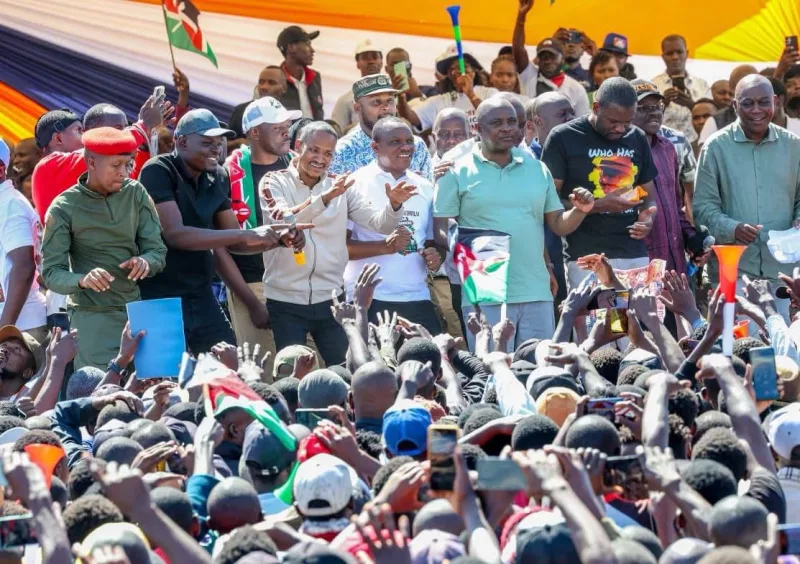
In the recent past the protests have
metamorphosed to slogan shaming
the presidency with the slogan ‘Ruto
must go’.
Economic conditions have further fuelled dissent against Ruto’s
government. Many Kenyans are
grappling with high inflation rates
and a lack of job opportunities.
Despite these challenges, the government has managed to stabilised the
economy and reduced inflation from
9.6 per cent to 3.5 per cent. This is
a positive move that indicates good
times to come.
In the face of ongoing political unrest and dissatisfaction, it is crucial
for Kenyans to consider giving the
President time and space necessary
to fulfill his mandate.
While frustrations are valid, a measured approach
will lead to more constructive outcomes for the nation.
It’s an open secret that Ruto assumed office during a period marked
by significant challenges, including
a high debt burden, economic instability exacerbated by global events
like the Covid-19 pandemic and the
war in Ukraine and rising public discontent over proposed tax increases.
These factors have created an environment where immediate results
are expected from his administration, yet many of these issues are
deeply rooted and complex.
Political stability is key for the
government to implement its policies effectively.
Constant protests
and calls for resignation are not the
solution but will undermine efforts
to address pressing issues that face
the country.
It’s incumbent upon
us to allow the head of state latitude to ensure economic recovery
and governance reforms.
Ruto needs
some time to navigate these challenges without incessant pressure;
Kenyans can contribute to a more
stable political environment that
fosters dialogue rather than division.
Despite criticisms, there have
been steps taken by the Kenya
Kwanza administration that indicate a commitment to addressing
Kenya’s challenges.
For instance,
he has made moves towards fiscal
responsibility by attempting to meet
International Monetary Fund targets
while also promising investments in
critical sectors like agriculture and
technology.
These initiatives require
time to materialise into tangible
benefits for the citizens. Kenya faces
significant development challenges,
but these can be overcome with determined leadership.
The writer is the former
president, Kenya
Football Federation