The Kenya Kwanza administration has been scaling
up plans to increase the acreage under irrigation to
control climate change.
About 700,000 acres are under irrigation, with the
government planning to raise it to 1.8 million by 2032.
This is in a bid to make the country food secure and
leverage on small-scale farmers who account for a large
part of food production.
“With climate change, a much more predictable food
system must be on irrigation,” President William Ruto
said late last year.
Efforts to increase irrigation have seen numerous
schemes established and existing ones expanded.
In Tana River county, Bura Irrigation project has
seen dry farms transformed and covered by food crops,
benefitting over 2,500 households.
According to the National Irrigation Authority
CEO Charles Muasya, the scheme is gazetted to cover
174,000 acres but only about 12,000 are currently
developed with only 6,000 acres fully utilised.
Last month, Ruto commissioned the Bura gravity canal that has seen the scheme transition from
diesel-powered generators to gravity, enabling the enhancement of the area under irrigation towards 25,000
acres and eventually to 40,000.
Muasya noted that the government has plans to
construct the proposed High Grand Falls dam that will
cover 400,000 acres and generate 1,000 megawatts of
power.
“The authority has come up with an ambitious
programme to irrigate 224,000 acres through public
irrigation schemes that currently irrigate 80,000 acres,”
Muasya said.
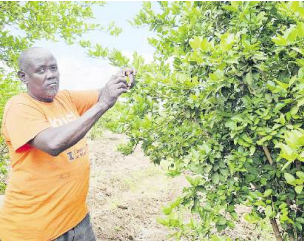
Khalif Hassan, a farmer, said he was previously a
pastoralist and that the scheme enabled him diversify
his income.
“I plant onions, melons and maize because they are
less perishable and give me up to two months to look
for a market,” Hassan said.
The scheme has transformed the drought-prone
area that depended on aid every time rains delayed,
enabling residents to contribute to efforts to enhance
food security.
“Those who thought pastoralists cannot farm are
very wrong. We have proven that with God’s help, we
can help achieve the country’s food security.”
Ahmed Abdirahman, another farmer, said he focuses
on watermelons that mature in 60 days, providing
quick returns for his investment.
Abdirahman has eight acres under irrigation and
ensures the fruits are at different stages of maturity to
provide a continuous supply to buyers.
About 5,000 acres in the county are currently irrigated through the Hola Irrigation Scheme that supports
1,450 farmers.
In Embu County, 1,248 acres of land are irrigated
through Kagaari, Kyeni and Gaturi irrigation project
that draws water from river Thuchi, benefitting 1,921
homesteads.
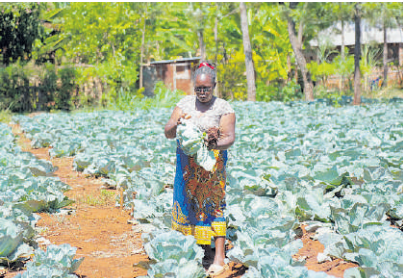
Farmer Lucy Wawira said they would helplessly
watch as their crops went bad in the farms before the
project was implemented.
In the neighboring Tharaka Nithi county, Kamwangu irrigation project, is transforming over 110 acres
owned by 220 households.