Unscrupulous traders have
hijacked the government’s fertiliser
subsidy programme, denying farmers much-needed inputs at the peak
of planting season.
This situation is
likely to precipitate a food shortage
in the country.
This is the latest agony to farmers, who are also grappling with
fake inputs, government-delayed
distribution and poor income from
the previous harvest, making maize
farming a costly venture.
Most are
opting to plant conventional seeds
without applying fertiliser.
A spot check by the Star in North
Rift, Western Kenya and Nyanza regions noted cartel-like gangs selling
a bag of subsidised fertiliser at exorbitant rates of between Sh3,500
and Sh6,000 per 50kg bag, more
than double the price offered by the
government.
The gangs are so daring that they
are conducting the illicit trade adjacent to National Cereals and Produce Board and Kenya Seed Company depots.
Thus, they are competing with
the government for impatient and
frustrated farmers, who are queuing
for many hours, hoping to access
the much-delayed relief from the
government.
On Friday, unscrupulous traders conducting their activities next to
the Kitale NCPB depot attacked
and beat up a journalist who exposed their operations.
Farmers are now pointing fingers
at the government, attributing the
crisis to late delivery by the government.
“I suspect that unscrupulous
traders are colluding with state officials to perpetuate theft of these vital resources,” Paul Naibei, a farmer
in Moi’s Bridge, told the Star.
“Where are these thugs getting
state fertiliser? I have unsuccessfully
queued here for two days now.”
He wondered why the government should wait until the peak of
planting season to distribute the
subsidised inputs.
A similar situation was witnessed
in Eldoret, Kapsabet, Iten and Mosoriot, with farmers who fear that
the commodity may run out of
stock resorting to buying from the cartels at the higher prices.
Small-scale farmers’ spokesperson in the region David Kiberenge
appealed to the state to ensure the
subsidised fertiliser is distributed
to buying centres at the village level so that farmers can get it easily
without spending extra money on
transport.
“We also need pre-planning so
that farmers can always get fertiliser in good time so that they prepare
early enough,” Kiberenge said.
“This last-minute business is hectic and causes unnecessary inconvenience to farmers, especially as concerns time wasting on queues and
in�ltration of cartels.”
In Busia, Bungoma and counties
in the larger Nyanza region, illicit
traders are selling subsidised inputs
in neighbouring counties, mostly
Trans Nzoia and Uasin Gishu.
“When you go to the depots,
you’re told that there is no fertiliser, come back later,” Rashid Ojaamong, a farmer from Malaba,
said.
“But while in town and other
roads, you see lorries and matatus
transporting the commodity out of
the county.”
He is worried that although long
rains are already on, the shortage of
essential inputs could lead to a serious food crisis next year.
Noah Okanusi, a farmer in Osajai location in Malaba North ward,
said the government allocates subsidised fertiliser to every county,
but some farmers collude with unscrupulous traders and hoard the
fertiliser for sale in neighbouring
countries.
“Many farmers have been forced
to plant without fertiliser because
they were waiting for the supply
from the government since they
cannot afford the market prices,”
he said.
A senior official at NCPB, who
requested to remain anonymous
due to the sensitivity of the matter,
on Friday said the process is mostly
rigged at the registration stage, with
unscrupulous farmers colluding
with state officers to receive more
vouchers.
“Fertiliser subsidy is one of the
best-performing programmes under
the Bottom-Up Economic Transformation Agenda, and it has been critical in helping the country achieve
the food security status it currently
enjoys,’’ he said.
“Unfortunately, dark forces have
infiltrated the system to deny farmers benefits.”
Lake Region Economic Bloc vice
chairman Kenneth Lusaka on Friday condemned unscrupulous individuals who are buying fertilisers at
night from cereal boards and selling
them at highly inflated prices.
This illegal activity, he said,
threatens to undermine the government’s efforts to support farmers
with affordable fertilisers.
“We want to make it clear that
the government has a very good
programme to support our farmers
with subsidised fertilisers. We cannot allow these individuals to exploit the system for personal gain,”
Lusaka said.
“Their days are numbered. We
urge everyone to be on the lookout
and report any suspicious activities
so we can ensure the success of this
programme.”
Lusaka said protecting the initiative is crucial not only for the success of the planting season but also
for ensuring the country’s food security in the face of climate change
and other agricultural challenges.
He acknowledged that there have
been some delays in the delivery of
fertilisers but assured the public that
significant efforts are being made to
address the situation.
Although the Ministry of Agriculture indicated that it had procured 7.2 million bags of subsidised fertiliser for the 2025 long
rains season, and that distribution
commenced early in the year, long
queues are still witnessed at depots
in Western, Nyanza and North Rift
regions.
On Friday, Agriculture PS Paul
Ronoh conducted an extensive tour
of grain-growing regions and reassured farmers.
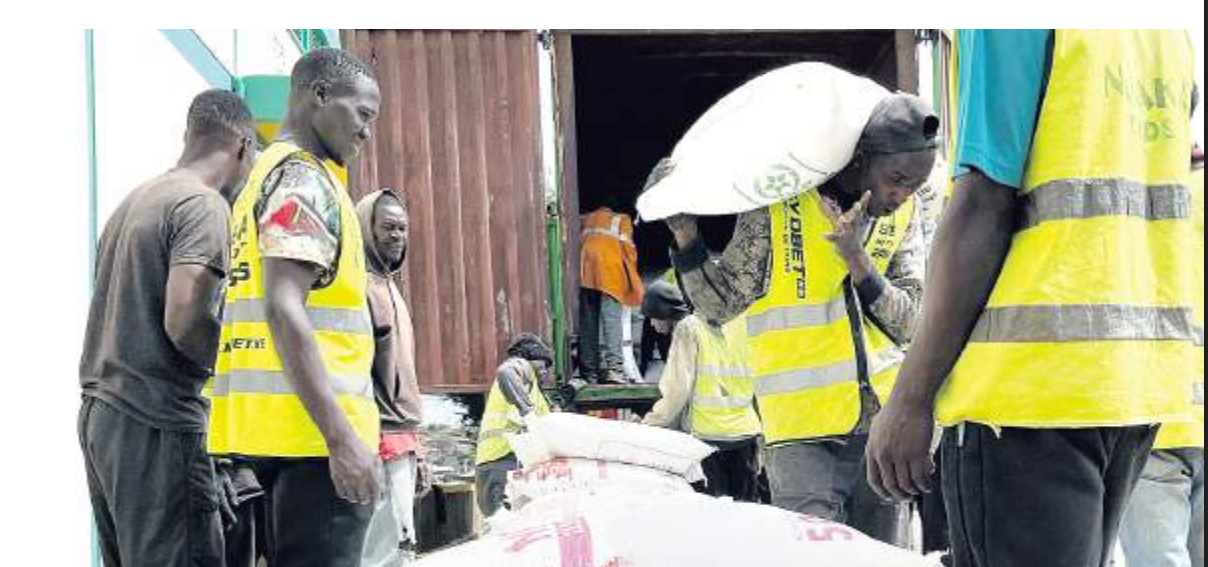
He said more than 500 lorries
were on the road, delivering fertilisers to various designated areas.
“I don’t want to see you farmers idling here at the NCPB depots
because we now have adequate fertiliser, which you should collect and go back to the farms,” Ronoh said.
“No one has a reason to complain because as a government, we
have played our part.”
Three days later, the fertiliser
supplies had run out at all depots
in North Rift, with farmers left to
scramble for the little fertiliser that
trickled in in lorries that arrived at
intervals of many hours.
“I have been queuing here for
hours but can’t get subsidised fertiliser because it is not available
for now,” farmer Japheth Taurus,
whom we found at the NCPB depot
in Eldoret, said.
“We are told another lorry is just
about to arrive and I hope to get
the 10 bags I need so I can go for
planting.”
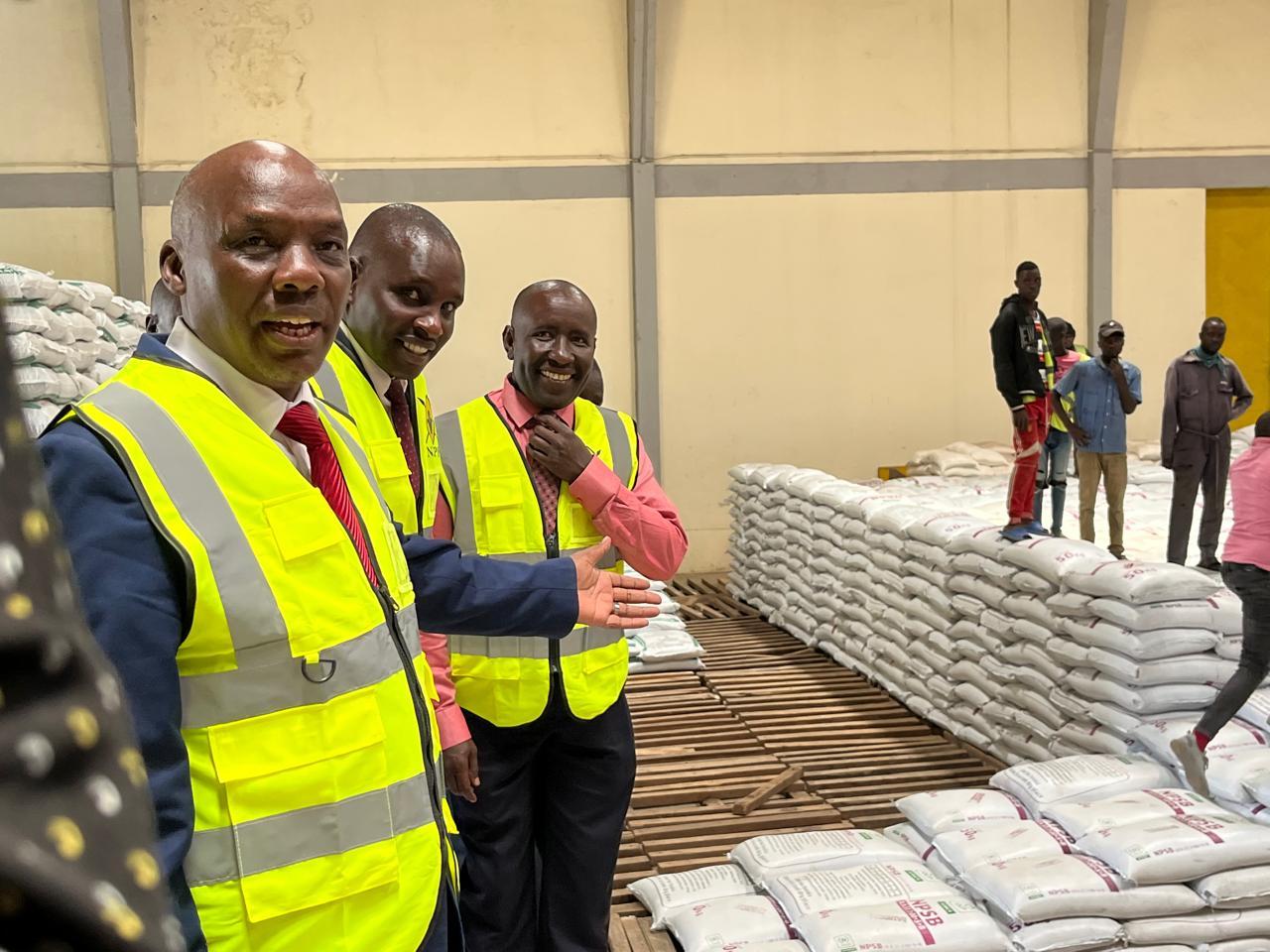
NCPB North Rift manager Gilbert Rotich said they were confident
all farmers would get the fertiliser
they need in good time for planting.
He said much of the subsidised
fertiliser required in the region is in
transit to the depots for distribution
throughout this week, which is the
peak of the planting season.
As farmers in other regions
lament, their counterparts in Kakamega have commended the national government for providing
farm inputs in good time.
Jeremiah Okova, a farmer in Likuyani subcounty, said farmers have
been accessing fertiliser and maize
seeds from as early as January.
“Sometimes you go there and
you’re told to wait. Today I was at
the NCPB depot in Kakamega and
the collection of fertiliser is ongoing, and another consignment has
just been delivered,” he said.
Okova said planting seeds are,
however, short in supply and could
affect the season.
Joshua Wesa from Butere subcounty said the subsidised fertiliser is available throughout the year
and there are no complications in
redeeming it once one receives an
e-voucher.
Complications in accessing fertiliser subsidies have seen some
county governments intervene.













![[PHOTOS] Calm prevails in Kisumu, Homa Bay](https://cdn.radioafrica.digital/image/2026/06/dff8923b-c99a-4f40-a4be-cc996653e4e0.jpg)