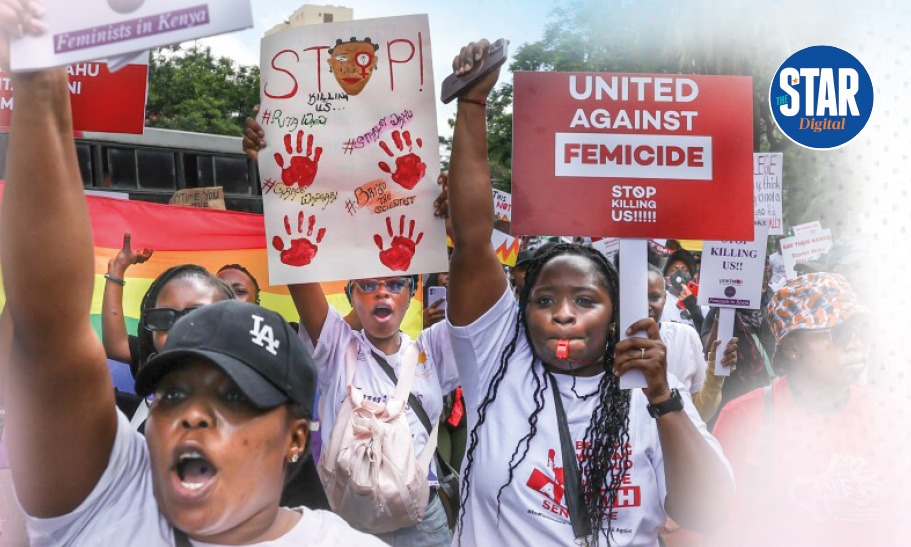
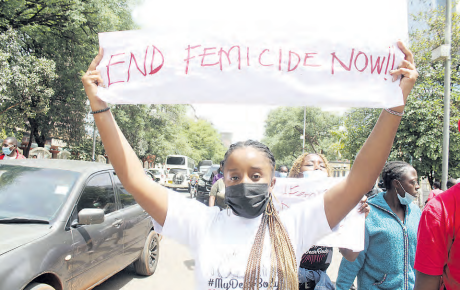
A coalition of anti-femicide campaigners is blaming the criminal
justice system for the spike in gender-based violence, saying it is not
doing enough.
The lot, convened by the Defenders Coalition, bringing together the
End Femicide Movement and the
Ni Mama Network, say the law enforcement arm and the courts have
not taken the violence seriously and
are condoning it by their alleged
aloofness.
In a wide-ranging memorandum they have sent to the technical
working group on gender-based violence including femicide, the campaigners cite various technical and
systemic inefficiencies in the law
enforcement and court’s handling
of the cases that they complain perpetuate the crime.
For example, they say police units
repeatedly demonstrate a stark lack
of specialised training and modern
forensic tools essential for handling
GBV cases.
This shortcoming not
only obstructs justice for survivors
but also reinforces a system where
impunity prevails, the document
shared with the Star reads.
The lobbies also allege that whenever women — who are victims of
violation and gender-based abuse — report to police, the officers perpetrate stereotypes that deny them
justice, thereby emboldening the
perpetrators to do the unthinkable.
“Law enforcement officers frequently perpetuate outdated gender stereotypes and engage in
victim-blaming practices. Such conduct marginalises survivors, undermining their dignity and effectively
silencing their voices,” it reads.
The lobbies say insufficient witness protection has discouraged
people who may come forward to testify against offenders from doing
so, thereby weakening prosecution
of perpetrators.
The current mechanisms to protect survivors and witnesses from
intimidation or retaliation are
grossly inadequate, they say.
“This neglect leaves individuals
exposed, especially in cases involving intimate partner violence and femicide and signals a systemic failure
to uphold their rights.”
For the Judiciary, the women advocates say, delayed determination of cases and loopholes that are then
exploited by the offenders and their
accomplices have weakened the
fight against femicide.
“The Judiciary has been characterised by sluggish case management, frequent adjournments and
overwhelming backlogs. These deficiencies prolong the justice process,
discourage reporting and ultimately
deprive survivors of timely redress,”
the document reads.
The activists
claim some judicial officers are biased when handling femicide cases.