No one seems to have picked
up the most curious thing
out of the deal-signing
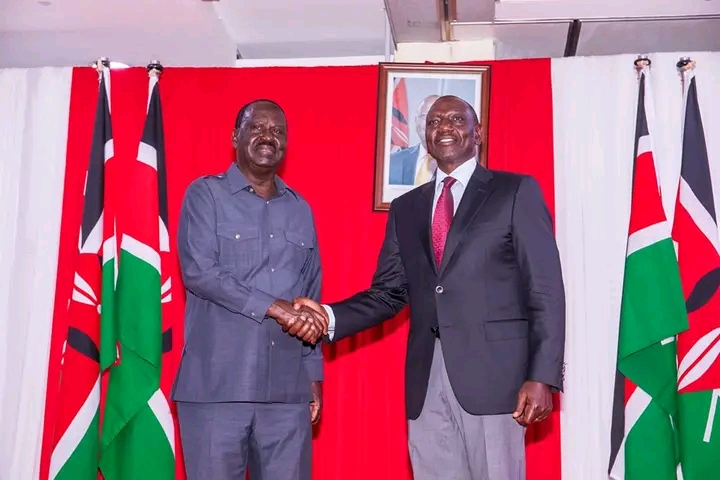
session between President
Ruto and ODM boss Raila Odinga
last Friday.
When he rose to speak,
Raila revealed that on returning to
the country after losing the AUC
contest - of course, with a well-deserved detour into the Emirati desert
for a cooling break - he found Ruto
and his people had been waiting for
him to sign a deal at State House,
Mombasa.
Raila said he declined and asked to consult his people first.
The import of this was that there
had, in fact, been a quid pro quo
arrangement on Ruto’s support of
Raila’s quest for the AUC chairmanship.
I could have bet the original
deal at Mombasa State House, which
appeared to have been fashioned on
the assumption that Raila would
win the Addis election, was markedly different from what was finally
signed at KICC on Friday last week.
It is hard to escape the feeling that
Ruto would have got himself a juicier
deal if Raila had won; one in which
the President would probably have
exercised greater control over the
ODM party and its base, moving
forward.
Be that as it may, I get the
distinct feeling that at the Friday
fete, the President and his Kenya
Kwanza team weren’t as interested in the details of the cooperation
framework read out by the two
formations’ secretary generals, as
they were in the ‘wedding fete feel’
of the whole spectacle.
Ultimately,
the public perception of a possible
Ruto-Raila coalition was all that
Ruto was investing in.
But I am here to rain on this parade. The smiles, the enthusiastic crowd waiting outside KICC and
the joyful handshakes, were the
easy part. When both sides of the
framework get down to work, it
will be clear that it isn’t as easy as it
looks.
And to maximise the benefits
of this association with Raila, President Ruto must work hard to ensure
the pro-people demands made by
the ODM boss are met.
Raila is naturally a populist politician who basks in the adoration
of his supporters. But two days after
the deal, he was heckled at a football
match in Kisii, ostensibly over the
deal with Ruto.
The one thing the
President must be aware of early
enough is that the ODM boss won’t
take such repudiation and ‘siding
with the enemy’ reaction from his
supporters for long. When pressure from the people rises, he will
be inclined to walk back whatever
agreements he has made.
The trouble for the Kenya Kwanza
regime is that if the people’s disenchantment forces Raila out of this
framework, and if the 2002 electoral season is anything to go by, then
he willwalk out with more than he
came in with! Having led his NDP
into a merger with the ruling party,
Kanu, in March 2002, Raila would
later disagree with President Daniel Moi’s pick of Kanu’s presidential
candidate for the December 2002
general election, Uhuru Kenyatta.
Thereupon, he led a massive walkout
from the ruling party, followed by
erstwhile Kanu insiders and crippled
the party for good.
There is a huge credibility crisis
surrounding the Kenya Kwanza regime, which is partly the reason it
needs Raila’s near-spotless image on
its side.
The public perception is that there is unbridled looting of state
funds and wanton wastage of public resources, even as despondency
rises within the population.
What compounds this problem is
the feeling that every ‘revolutionary’ idea that comes from the regime
tends to centre around big-money
sectors and opaque payment systems.
It will be difficult for Raila
to sustain a relationship with the
President and the ruling party, while
citizens lament the difficulties of
dealing with SHA, for instance. Indeed, a clip emerged as the KICC
signing ceremony was underway,
of a member of the public beseeching Ruto to cancel SHA and replace
it with “Babacare”, the healthcare
plan mooted in the ODM leader’s
campaign manifesto.
The reason,
according to members of the public and certain political leaders, was
that Ruto’s SHA has failed.
The former Prime Minister and
his party are almost naturally anti-establishment.
Even in a shared
government, their default setting
will be to point out the ills of government. Their 10-point agenda
for the cooperation framework is
already quite telling. It includes demands for compensation of victims
of rights abuses, an end to police
brutality, greater resources to devolved units and inclusivity in state
appointments.
On any day, these are key sticking
points between government and the
opposition. But there is an obligation now, on the part of ODM, to
mainstream these issues, partly to
avoid arriving in 2027 sharing the
government’s baggage, but mostly
to assure its own support base that
they’ll be consequential players in
government.
Truth be told, not many Raila
supporters have shown enthusiasm
for the agreement. At this stage, the
silent consensus within the base is
to trust the party leader’s wisdom and political instincts.
Raila is often referred to as the ‘father of devolution’, and on this front,
he has proposed that in the next financial year, the share of revenue to
counties be raised to Sh450 billion
from the current Sh387 billion.
One
has to remember that for the current financial year, the Senate had
proposed to cross the Sh400 billion
mark for the first time, but the National Assembly and the Executive
opposed this, forcing a mediation in
which Sh387 billion was the compromise.
It would take something
quite revolutionary to achieve a huge
increase of Sh63 billion!
But this simply goes to demonstrate that Raila and ODM’s progressive demands will have to meet
a willing partner in the President’s
UDA, or, as they say in this land, it
shall end in tears.
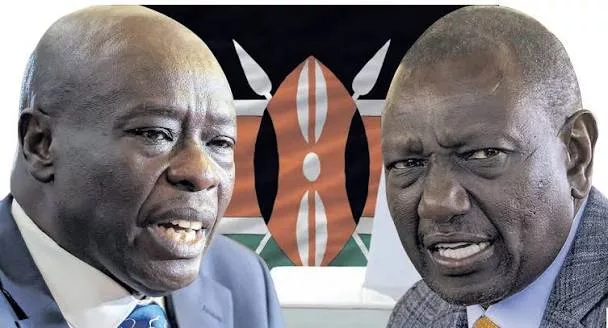
It seems the President is well aware of how unpopular
his government has become, especially in former strongholds such as
the Mt Kenya region, where his impeached deputy, Rigathi Gachagua,
is raining political terror on it, with
devastating effect.
It remains to be seen if, having
acknowledged this situation, Ruto
will do things differently. He simply
does not have the luxury to proceed
with the incompetence and cluelessness that have become the hallmark
of his administration, let alone the
discomfiting rise of tribalism and
cronyism in high places.
The heckling of Raila in his own secure base
of Kisii points to the readiness of the
population to rebel against both the
ODM boss and the President, as long
as the regime is far removed from
the people’s aspirations.
I wonder how the same government can reform itself fast enough
to sustain its partnership with Raila.
For as sure as night follows day, the
ODM chief will not be staying long in
the deal, if he feels no progress is being made in key pro-people issues.
The writer
is a political
commentator