And some patients are being turned
away, a report by the auditor general
has said.
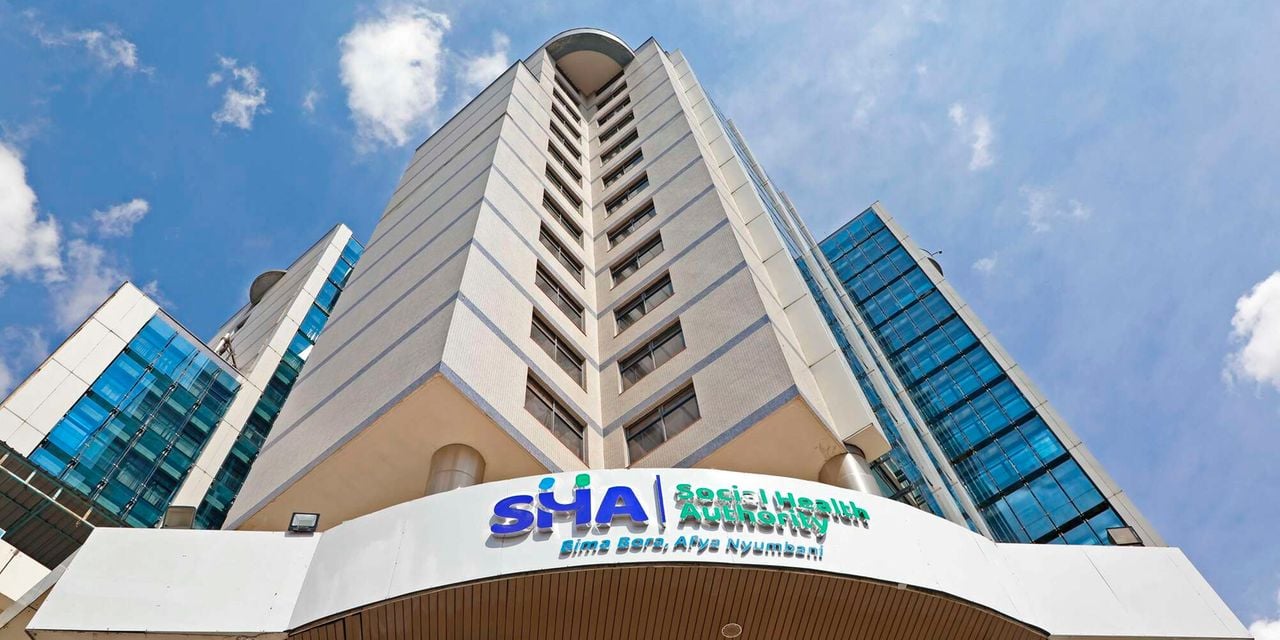
The audit said the Sh104 billion
system that contains Kenyans’ health
data is in the hands of private individuals.
Auditor General Nancy Gathungu
said her review revealed that control
was in the hands of the consortium
that won the tender.
Details emerging for the first time
show that the consortium owns the
system, its components and intellectual property rights.
Only the infrastructure would be transferred to the
procuring entity, the State Department for Medical Services.
“Ownership of the system, system components and all intellectual
property rights shall remain in the ownership of the consortium except
for the infrastructure which is to be
transferred to the procurement entity,”
she said.
The review established the escrow
agent appointed by both parties is
expected to collect Sh111 billion in
10 years.
This means the private individuals
behind the contract, which was linked
to Indian firm Adani Holdings, will
be making about Sh11 billion a year.
According to the audit report, the
consortium collects 2.5 per cent from
every contribution by members, five
per cent from claims by health facilities, and 1.5 per cent for track and
trace solutions.
Further, the government is prohibited from developing another similar
system similar to compete with the
SHA system.
It is prohibited from
developing a product with similar
functionalities.
Gathungu identified immense
risks in the event of any incidents
that would affect the system or any
technological changes.
The auditor said a clause in the
tightly guarded contract says that
even “an attempt to create a competing system” would be problematic.
As a result, Kenyans may not get
value for money in the Sh104 billion
health system introduced by President
William Ruto’s administration.
The June 30, 2024, audit cites irregularities in the procurement, unfavourable clauses in the contract and
the secrecy around the deal.
Kenya Kwanza unveiled the
Healthcare Information Technology
Digitisation System to replace the one
used by the defunct National Health
Insurance Fund.
The new system is fraught with
challenges, including concerns about
delayed settlement of claims.
A healthcare crisis is looming as
patients are being turned away over
social health insurance debts.
Various players, including MPs have
raised concerns about the SHA mess
and have implored President Ruto
to sort it out.
Religious organisations with health
facilities have also deplored the lack
of payment for claims running into
billions of shillings.
Catholic Bishop Antony Muheria
said faith-based hospitals were not
receiving the disbursements in time.
“The system is not working,” he recently said.
The Ministry of Health
recently acknowledged that it owes
hospitals about Sh10 billion in claims.
A number of private hospitals have
also blacklisted SHA over debts and
are turning away patients seeking
services under the system.
Although the government has
assured patients and facilities that
“teething problems” would be solved,
concerns are rife that bureaucrats are
slow to fix them.
As the problems mount, it is emerging the government broke the law in
using a specially permitted procurement procedure to directly source the
supplier.
The report states the system
was irregularly procured as it was
neither planned nor budgeted for in
the medium-term spending plan.
“This process was contrary to Article 227 of the Constitution...” Gathungu said.