The President is said to be thinking of forming a government of national unity to get out of the current political crisis triggered by protesting youth, who have demanded a major re-organisation of his government.
The protests have made international headlines as thousands of Gen Z and millennial demonstrators have been taking to the streets demanding drastic changes in government.
There have also been calls for the entire government to just go home over the country’s current status.
As the prospects of a government of a government of national unity look likely, the youth have come out to vehemently oppose a handshake between Ruto and Raila.
On his part, the opposition chief has said that the youth do not support a handshake or a unity government between the duo.
Raila was among the leaders who were heavily condemned for supporting the national dialogue that was initiated by the President following the deadly protests.
The national six-day dialogue under the National Multi-Sectoral Forum is scheduled for next week.
Over the years, the ODM leader has always been brought on board by the ruling regimes seeking a way out of a crisis. He has helped cool down matters during the Kanu era, Mwai Kibaki and Uhuru Kenyatta's regimes.
Even as Raila acknowledged that he has received the message from the youth, his co-principals Kalonzo Musyoka (Wiper), Martha Karua (Narc Kenya) and Eugene Wamalwa (DAP-K) have said that there should be no dialogue.
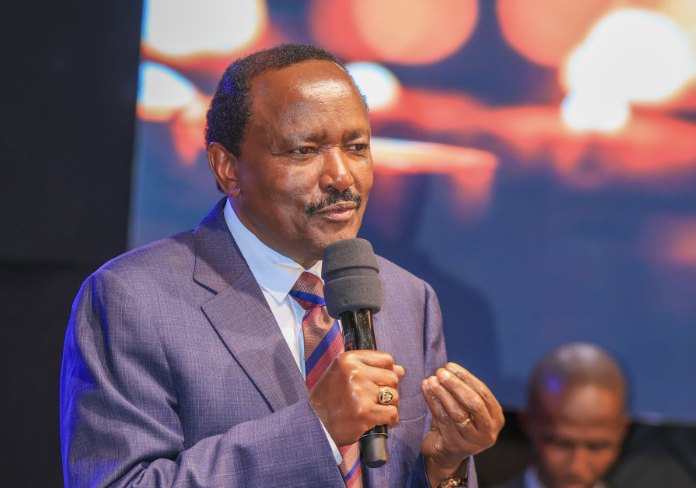
Kalonzo said the his party is in support of Gen Z, pledging that they will not engage in any dialogue.
"In terms of the Gen Z revolution, it appears that the administration lacks an understanding of public sentiment. Generation Z does not wish to engage in dialogue. They want action and Wiper agrees," the Wiper boss said.
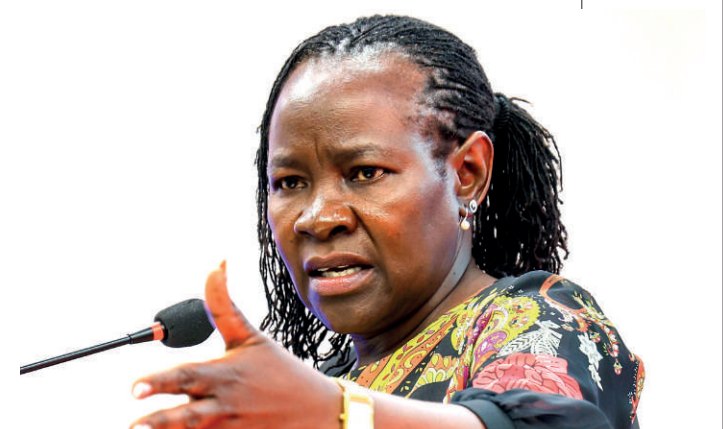
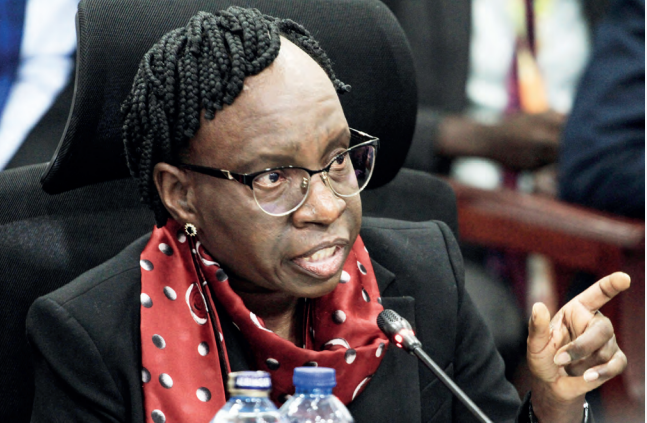
Karua has dismissed Ruto's call for dialogue to discuss pressing national issues, calling it a move aimed at dampening Gen Z's demand for change.
"Dialogue can only be meaningful if the players are in good faith and guided by the best interests of the people," the Narc Kenya leader.
Political analyst Daniel Orogo said Raila seems to be one constant towering figure that has mastered the art of abandoning his colleagues and reaching pacts with the Presidents or ruling government's that he rivalled.
“A reference point is the IPPG (Inter-Parties Parliamentary Group) in 1997, 2008 post-election crisis and 2018 handshake and it seems to be happening now,” Orogo said.
He said Raila’s declaration that Kenya is bigger than an individual has seen him being seen as a selfless leader who rescues troubled regimes.
“Various regimes have seen him as the only political neutraliser to calm down the political storm with the ruling political parties,” Orogo said.
He added that the Azimio leader's sense of patriotism and selflessness has always been confused to mean greed and betrayal of his partners, who traversed the campaign landscape with him and lost elections.
Nominated MP John Mbadi said that dialogues have pulled the country from difficult situations in the past.
“National conversations usually take place in times of a crisis, whether it was BBI (Building Bridges Initiative), National Accord, all these came at a time of crisis. We cannot say that we are not confronted by a crisis. This crisis has come out because the youth are not happy with governance of the country and the only way to deal with it is through a national conversation,” he said.
The former Suba South MP said that the opposition called for a national conversation during Uhuru and Kibaki’s time.
“We have always called for conversation when we feel there is something of national interest. Whatever shape the current dialogue takes, it will be a national conversation. It can be on economic, social or political matters.”
Githunguri MP Gathoni Wamuchomba said that after the conclusion of 2022 election, Raila and his Azimio brigades went to the streets to demand for talks among other issues.
She said that the National Dialogue Committee was formed and held sessions live on camera where Kenyans presented their opinions and suggestions.
“Baba backed down; relaxed and waited. It’s now over a year; the report was neither debated nor adopted in parliament; it’s gathering dust on the shelves, no wonder we are yet to reconstitute the IEBC,” she said.
Wamuchomba added that Gen Zs then came along in the struggle and aroused a national economic concern.
“They again conceded and are planning to form a new Multisectoral committee. Allow me to call it NADCO 2,” she said.
“It’s my opinion that this will be another round of pounding water in a pot. No matter what energy is put, no ugali can come out of it.”
Raila first joined the ruling regime in March 2002 during the merger of Kanu led by then President Daniel Moi and the National Development Party.
The two parties merged in an effort to increase their chances of winning the 2002 election since the NDP was the second largest opposition party and commanded massive support among Raila’s ethnic Luo voters.
However, in July 2002 Moi did not endorse Raila as the Kanu presidential candidate, which was reported to be one of the pre-conditions for the Kanu-NDP merger.
Moi instead endorsed Uhuru.
Following the endorsement, the ODM leader and his troops left and joined the National Alliance of Kenya to form the National Rainbow Coalition.
Raila sacrificed his presidential ambitions in 2002 and declared "Kibaki Tosha". He rallied opposition leaders behind Presiden Kibaki, handing him the presidency at the third attempt.
He would later be named Prime Minister in 2008 to end a political standoff with Kibaki following the disputed 2007 presidential vote that triggered violence.
The violence claimed more than 1,200 lives and displaced 600,000 people.
A February 2008 power-sharing agreement between the two leaders helped restore order.
Then came the 2017 election, which was preceded by a series of protests that claimed lives and left several brutalised. The country was dangerously leading to the brink of civil unrest.
On March 9, 2018, on the steps of Harambee House, the building that houses the president's office along Harambee Avenue in Nairobi, Uhuru and Raila shook hands.
The 'handshake' was a public declaration to cease all hostilities, and the two leaders committed to finding common ground in the interest of moving the country forward economically, politically as well as socially.
The two leaders, foes-cum-friends, promised peace and a renewed war against corruption.
Two years after the handshake, Uhuru opened up on the deal, saying Kenya had been split down the middle and was almost becoming ungovernable were it not for the 'handshake'.
"I'm telling you this honestly as your President who consumes first-hand information only available to the head of state," Uhuru said of the National Intelligence Service security briefs on the prevailing situation then.
"The handshake stabilised the country and has afforded us the opportunity to identify the practical reforms that would strengthen our unity, inclusivity, equity and good governance.”
The 'handshake' led to the birth of the BBI, which was meant to address the nine thematic areas, which the two leaders identified to be ailing the country.