The apocalyptic tales suggest that law enforcement authorities had declared a curfew in the area as protestors attempted to storm and overrun a police station, with a section of them itching for the armoury and with that, invited a vengeful reprisal from police, precipitating a bloodletting.
And in what seemed to be poking a wasp net with a stick, the protestors angered by the President’s “lecture” occupied the town-bound section of Thika road and once police responded, they overpowered them, and chased the contingent to Mwihoko police station, almost taking over the installation.
Then the heavens broke loose.
Unknown number of deaths resulted, with Law Society of Kenya president Faith Odhiambo estimating it to be near 100 civilians.
Twelve officers sustained various injuries and were treated in various hospitals before being released.
Interview by some residents and traders at the famous Githurai market as well as police sources show that the protestors got angered by the President’s “irresponsible lecture and refusing to hear us.”
And on the road, they lit bonfires and as police responded, they allegedly turned violent.
A police report details that “police officers led by subcounty commander tried to negotiate with them to peaceably disperse but they refused and started pelting the officers with stones.”
From tear gas and rubber bullets amid the darkness, the young men who know the area like the back of their hands sent the officers panting, making them retreat to their Mwihoko station.
As they were withdrawing, the report said, the protestors allegedly blocked the road with an electric pole and cornered one of the Land Cruisers, destroying it before setting it a blaze.
They gave the officers a chase to the station, and destroyed other vehicles, almost taking over the command of the station.
But it is at this point that the battle in the night took a turn in the favour of the officers.
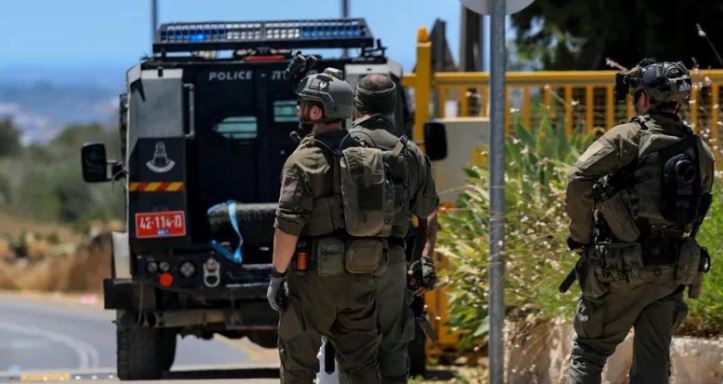
The cops got reinforcement from Githurai Kimbo police station and a firing spree ensued.
Stanley Mwangi, a trader at the market and who was a protestor, recounted to the Star that he was lucky to be alive.
“The police stated shooting at the crowd indiscriminately and at the station, a crowd of people that I can estimate to be about 25 people fell down and remained unresponsive,” he said.
And while those like Mwangi were able to take off on their feet, the officers also gave them a hot chase, now shooting indiscriminately.
The pandemonium caught those still at their shops in the centre in the crosshairs, killing scores.
Francis Kinyari, who works as a matatu tout, had just closed the work for the day and in the midst of the melee, he ran to his house only to bump into an officer who killed him in cold blood.
Muteti Njau, another trader in the area, said he lost a friend who had just closed his shop and was on the way home.
His body had 30 gunshot wounds, he said.
Mwaniki Muthoni said he knows a couple who were killed in their house when they were just about to sleep in Mwihoko as the cops stormed their rented house in a shooting rage.
John Ochieng’, a medical supplies specialist, said the shooting spree went beyond Githurai area, deep into the villages, and estimated that as many as 120 people could have been killed.
“I know neighbours whose gatemen were killed in the indiscriminate shooting as the police thought that whoever they found walking was part of the culprits.”
In their report, the police detailed that 740, 7.62mm blank cmm, 7.62mm special and 18 rounds of 5.56 x 45mm were fired.
Also, 700 pieces of teargas canisters were spent. Another round of 258 pieces of 37/38 teargas were used to disperse the violent group.
At the same time, Police Reform Working Group said that as of Tuesday evening, they had recorded 23 deaths caused by police shootings nationwide.
They said there were over 50 arrests, 22 abductions and over 300 injuries. Reports reaching us also indicate that police opened fire and killed several people in Githurai, Nairobi on Tuesday night.
The lot's report corroborated the findings from Star's interviews, saying that the "police shot several people in Githurai in Nairobi—one over 40 times—between 10 pm and 1 am, way after the protest ended."
"We believe that the massacre that happened in Githurai was fuelled by an inciteful and insensitive address President William Ruto gave yesterday at State House. Ruto spoke at 9pm and threatened Kenyans, and the massacre started at 10 pm,” they said in a statement.
“The killings were further exacerbated by the deployment of the Kenya Defense Forces (KDF)—an illegal deployment per Article 241 (2, c) of Kenya’s Constitution, which requires the National Assembly first to approve such deployment.”
At the same time, the Nairobi county government said that up to 12 bodies with gunshot wounds arising from the protests had been booked in various morgues controlled by City Hall.
The devolved administration says that six bodies were at the City Mortuary and another six at Mama Lucy Hospital mortuary.
They were shot during the anti-Finance Bill demonstrations held in the city on Tuesday.
Speaking at the City Mortuary, where she had gone to assess the situation and operations of the morgue, Nairobi Health executive Suzanne Silantoi confirmed the number, stating that the 12 were brought in with gunshot wounds.
"The 12 were received yesterday by the respective mortuary attendants in the respective facilities. Six at Mama Lucy and six at City Mortuary while another one was taken in the morning," she confirmed.
Silantoi further confirmed that at least 51 people were treated at county hospitals and discharged.
There are three people still admitted at Mbagathi Hospital and seven at Mama Lucy Kibaki Hospital.
"Some who were received had soft tissue injuries and were treated and released. However, the 10, three at Mbagathi and seven at Mama Lucy Kibaki Hospital, are responding positively to treatment," Silantoi confirmed.