The education sector is poised for massive reforms over the next five years if a newly unveiled plan is implemented.
From enhanced investment in science, technology, engineering and mathematics (STEM) courses and special needs education to better resourcing and digitising learning, the future looks bright.
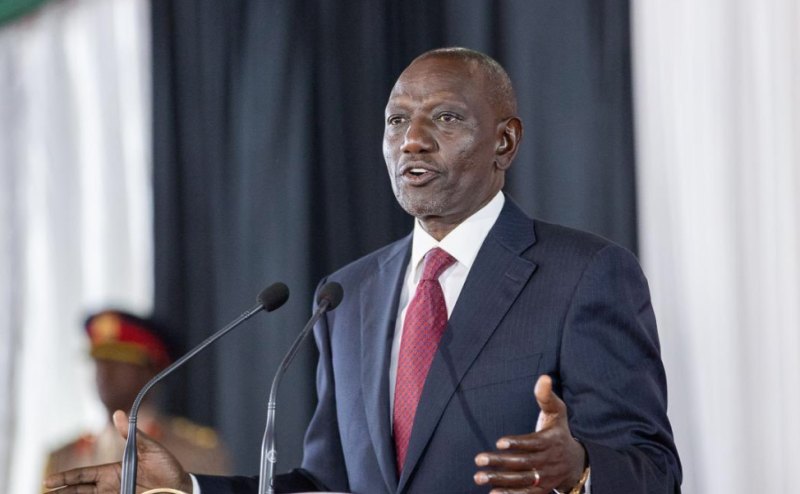
The national education sector strategic plan 2023-27 shows President William Ruto is not just focused on brick and mortar, but also has a soft spot for the software issues that really matter in running a competent modern day education system.
The President has been vocal about taking the sector through a radical surgery to align it with the digital times.
Part of his proposals include scrapping off some courses, strengthening STEM learning and turning the education funding model on its head to align with the country’s economic realities.
In particular, enhancing integration of ICT in teaching and learning tops the charts. It is to be implemented between now and 2027. The state also plans to connect some 9,000 schools to the internet at a cost of Sh80 million.
In the five-year period, 1,000 schools will be connected within the first year, and double the number in the second year.
There are also plans to connect another 2,500 schools to the internet grid annually for the next two years and finish the fifth year by connecting another 1,000 schools.
Part of this initiative will see development and deployment of digital apps for ICT integration in the learning and mainstreaming teaching of the STEM courses.
Government plans for infrastructure development include upgrading and maintenance of the existing ones. The main focus here is low-cost boarding schools that target families at the bottom of the economic pyramid.
A hundred new education resource centres will be built and refurbished at a cost of Sh700 million.
Two hundred classrooms for feeder schools are intended for construction at a cost of Sh100 million. The plan says it hopes to build 60 new dining halls in low-cost boarding schools at a cost of Sh125 million to be spread over the planning period.
Accompanying this is enhancing quality control by professionalising and institutionalising quality assurance and accreditation system.
In this respect, the plan says, its mark of achievement will be attaining 2,500 “[quality assurance] officers whose skills have been developed” and this is broken down to 500 officers every year at a cost of Sh150 million.
Further, as a part of rejigging the delivery of specialised teaching service, the plan says special needs educators will be trained “on preliminary screening of learners with special needs and disabilities” with the target put at 3,400.
A bulk of 1,500 such teachers are to be trained in the first year and the balance spread over the remaining period. Cost proposed for this is Sh96 million.
Moreover, the state hopes to direct special focus on early learning by “developing a framework for engaging county governments, parents, communities and other education partners” to change attitude on early childhood education and give it the necessary primacy it deserves.
The state seeks to “align curriculum with societal needs and industry demands” at a time when unemployment is sky-high with training institutions blamed for churning out graduates with irrelevant qualifications and unable to cope and adapt to changes in industries.
In this respect, the plan says it seeks to put in place 3,900 “electronic curriculum support materials and programmes produced and transmitted.”
Also part of this is digitising curriculum content complete with shoring up the capacities of teachers and trainers to deliver a skill-based education that appreciates the shift in the labour market.
According to the plan, the regime for provision of capitation, bursaries, scholarships and loans should be reviewed over the plan period, and learners with special needs and those from vulnerable backgrounds will be zeroed in on for support.
The capitation is targeted for all learners while bursaries, loans and grants are to be differentiated for those most deserving.
A total of 36 million learners in primary schools will receive the capitation, 13.4 million in junior schools and 18.6 million in senior schools.
The plan also delves in detail on mentorship and apprenticeship focused on research and innovation, aimed at enabling the new breed of school leavers able to stand on their own feet.
In terms of costing, the plan says the price of the goodies increase “over the period due to the ongoing education sector reforms.”
“In the State Department for Basic Education, the financial requirement for the 2023/24 stands at Sh198,787 million increasing to Sh236,962 million in 2027/28 translating to 20.2 per cent increase,” the plan reads.
“In TVET (Technical and Vocational Education and Training) sub-sector, the financial requirement for 2023/24 stands at Sh34,454 million increasing to Sh35,164 million in 2027/28, translating to 8.3 per cent increase.
"In higher education sub-sector, the financial requirement for 2023/24 stands at Sh251,391 million increasing to Sh386,963 million in 2027/28, translating to 53.9 million increase.”