The Nakuru government is implementing a raft of strategies through public private partnerships to enhance value chains in crops and livestock production.
The aim is to support food and nutrition security, grow exports and reduce imports.
This is part of the devolved unit’s strategy to shift from local markets to emerging and fast-growing regional markets within the East African Community and attract premium prices for farmers’ produce.
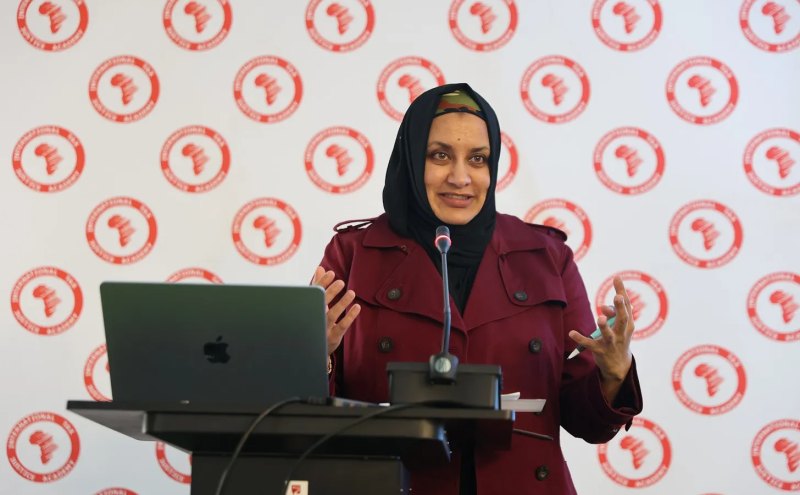
Governor Susan Kihika said value addition and agro-processing of agriculture and livestock products represents a huge potential source of livelihoods for farmers, adding that her administration has invested huge resources to promote dairy, potato, maize, pyrethrum, avocado and oil crops value chains.
Kihika further disclosed that in line with the Kenya Kwanza manifesto, her administration had also put in place measures to revolutionise agriculture from a subsistence activity to an agro-enterprise that provides residents in the region with employment.
“It is the conviction of the Kenya Kwanza leadership that sustained agricultural growth is critical in uplifting standards as well as generating rapid growth to this nation,” Kihika said.
She spoke after leading her executive in a closed-door consultative meeting with members of the President's Council of Economic Advisors led by senior advisor and head of Economic Transformation Secretariat Augustine Cheruiyot.
“I have advised my team to work on the comparative advantage of a value chain for each of the eleven subcounties and 55 electoral wards to act as an anchor for increased productivity, marketing and processing. My officers have firm instructions to work closely with the State House team in driving the development agenda,” Kihika said.
The country, the governor observed, has long exported commodities in raw form. She affirmed that with increased investment in value addition, volumes of Kenya’s enriched commodities and finished products will increase and this will help the country stake a bigger claim to local, regional and global market shares.
According to the Food and Agriculture Organisation, the full potential of agriculture in terms of economic benefits is mainly hidden in the value addition component of the production process.
Economists have singled out access to appropriate machinery as one of the major challenges facing Kenyan enterprises, which limits most local businesspeople to being export brokers of raw produce.
Kihika pointed out that any value addition to crops and livestock products adds a percentage of increased financial value to the produce and has the effect of improving the incomes for local farmers.
She stated that it is in this segment of the production chain that more jobs can be created, foreign exchange can be expanded as a result of exporting finished products and the national output of the economy can be enhanced.
The World Bank has projected that by 2030, the size of the food and agribusiness industry in Africa will reach $1 trillion. This will mainly have to do with value addition to the food-related produce coming from the farms.
Kihika elaborated that value-addition activities in the crop and livestock chain include processing, drying, use of modern farming methods, use of fertilisers, refrigeration, preservation, eco-packaging, transportation, using precision analytics to make on-farm decisions, branding or generally transforming a product to globally suitable and acceptable standards.
The governor said a major contributor to food scarcity in the country has been the massive post-harvest losses that occur due to low-value addition and inadequate cold chain facilities.
FAO estimates that Kenya losses between 20 – 50 per cent of its agricultural production after harvest.
Kihika stated that her government was making deliberate efforts to set up milk cooling plants and potato cold storage facilities along the supply chains towards the endeavour for value addition in the devolved unit.
She said her administration was supporting farmers to form or join cooperatives to help them better tap market opportunities and attract government investments.
“Agriculture can transform Nakuru county with the cooperative movement serving as the fulcrum for increased maize, pyrethrum, potato, dairy, leather, beef, beans, tea, coffee and horticultural productivity,” Kihika said.
She said the Ggovernment had avenues to assist farmers but lack of proper structures delayed such processes.
“Most farmers in crop and dairy sectors are in production as individuals, which makes it hard for them to tap maximum market potential. The government best assists farmers in organised groups,” the governor said.
Cooperatives are best placed to coordinate agricultural production, offer technological input, training and research for farmers, credit and provide extension services.
The governor revealed that her administration was strengthening the cooperative movement to enable farmers enhance high-quality production and aggregate produce to attract foreign markets.
She said more than 500 farmers have been trained on how to sell as a group and negotiate contract sales with larger buyers, adding that by aggregating their produce the farmers attract larger buyers who offer higher prices.
To increase productivity in agriculture, Kihika stated that her government was fixing the structural problems plaguing the sector.
This includes providing extension services, improving infrastructure for irrigation, streamlining access to local and regional markets, and deployment of agricultural risk management instruments.
To create concentrated and sustainable farming that can yield and feed more, the county is promoting greenhouse farming and irrigated agriculture to enable farmers utilise the small arable land available.
Through partnerships, the devolved unit is also facilitating soil mapping and testing using remote sensing and GIS tools for intense and more accurate interventions.
Kihika said intense capacity building on farming strategies, techniques, and data to increase efficiency of agricultural produce was being carried out.
The two levels of government are collaborating to support farmers with a view to improve yields and farmers’ earnings, particularly through soil fertility interventions to enhance crop production and livestock breed improvement in dairy farming.
The governor said they have also made efforts to boost artificial insemination services and trained farmers on how to handle their crops after harvest to minimise losses and to meet market requirements.