A spot check by the Star on Tuesday showed that only Ndhiwa Sugar milled by privately owned Sukari Industries was available at most outlets.
Households brands such as Mumias, Sony, Kabras among others are unavailable with repackaged sugar by retailers dominated shelves even as prices remained high rise.
As of Monday, sugar prices remained high averaging between ShSh420 and Sh450 for a 2-kilogramme pack at Naivas, Carrefour, Quickmart and other small retail stores in estates.
Retail Trade Association of Kenya (Retrak) CEO Wambui Mbarire said supplies were affected when major suppliers such as Kabras and Butali closed.
Firms that have shut their machines include West Kenya Sugar Company (Kabras) and Butali Sugar Mills with other privately-owned and ailing state sugar millers already out of production.
Mumias Sugar halted operations two months earlier.
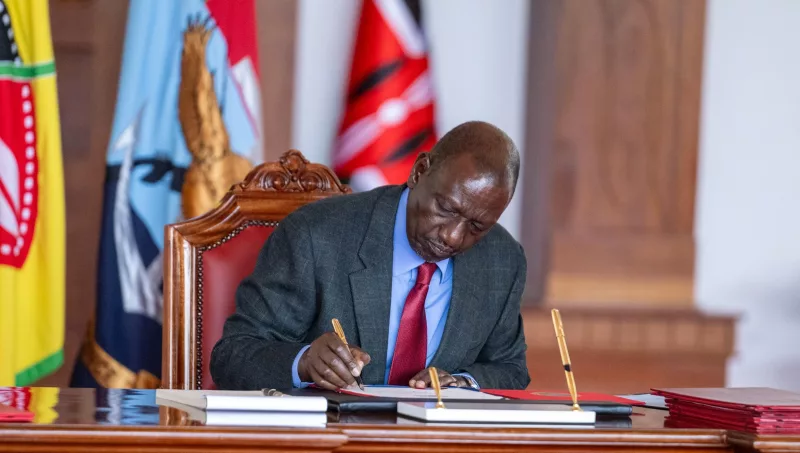
President William Ruto last month announced that private businessmen would be allowed to bring in at least 100,200 tonnes of sugar during a four-month importation window to bridge the deficit.
This was after Kenya failed to secure enough volumes from the COMESA market in the wake of the closure of local millers on shortage of cane, poaching and crushing of immature cane.
The country’s demand stands at 1.01 million metric tonnes against an output of 490,704 metric tonnes, leaving an annual deficit of 521,695 metric tonnes.
"We have been reluctant to import sugar to avoid working against our farmers, but now, in the next two weeks, you will see a difference as we have ordered imports from outside the COMESA market," Ruto said then.
It was anticipated that volumes to start hitting the local market within a two-week period.
However, availability of the product in the international market has remained a challenge, blamed on low production and countries holding on to their stocks to meet local demand.
According to Mello Commodity, a Brazilian agricultural commodities marketing and sales agency, the sugar industry faces a challenging scenario in the second half of 2023, with the imminent risk of a worldwide sugar shortage.
"Several factors, such as the sugar shortage crisis in Bangladesh and export restrictions in India, as well as other issues in the major sugar exporting countries, contribute to this worrying situation,” said Jacimara da Silva, sales lead at Mello Commodity.
Kenya has been unable to import from the COMESA due to a shortage or reluntance by some member states to sell, according to Agriculture Cabinet Secretary Mithika Linturi.
The Consumer Federation of Kenya (Cofek) has since warned of a severe shortage if adequate imports fail to arrive on time.
"Yes, we are headed into a sugar shortage crisis. All sugar millers were shut down. Imports were opened up with unclear import quotas and delivery timeframes,” Secretary General Stephen Mutoro told the Star.
He said there are also cases of deliberate hoarding of the commodity so as to keep sugar prices high and for longer periods.
This now leaves households at the mercy of importers and traders even as the war on “cartels” in the industry by the government continues, with President Ruto keen to revive the sector.
The shut mills are expected to resume crushing at the end of September.
Among privately owned-millers, only Kwale International Sugar Company (KISCOL) is in operation, supplying in bulk for repackaging by traders, as it is yet to venture into retailing.
“We have enough cane with eighty per cent ours and twenty per cent from outgrowers,” KISCOL general manager Pamela Ogada confirmed.
The firm is selling a 50-kg bag at Sh9,400, releasing between 5,000 and 6,000 tonnes per month, into the market.
The miller crushes for between eight and nine months annually.
There are nine private and five government-owned sugar manufacturers in the country.
Private millers are West Kenya, Kibos Sugar, Butali Sugar Mills, Transmara Sugar Company, Sukari Industries Limited, KISCOL, Kisii Sugar Factory and West Valley Sugar.
Mumias, Nzoia, Sony Sugar, Muhoroni and Chemelil Sugar are state owned.
President Ruto has in recent days taken sugar barons head-on, accusing them of causing the collapse of key state-owned companies in favour of their private ventures.