It is marked by statements of intolerance in our body politic. While we may sometimes dismiss such statements as incidental and “typical” of certain individual politicians, their consistency and regular occurrence soon creates a feeling that the ruling regime has an illiberal political culture that may soon eclipse the achievements of the 2010 Constitution.
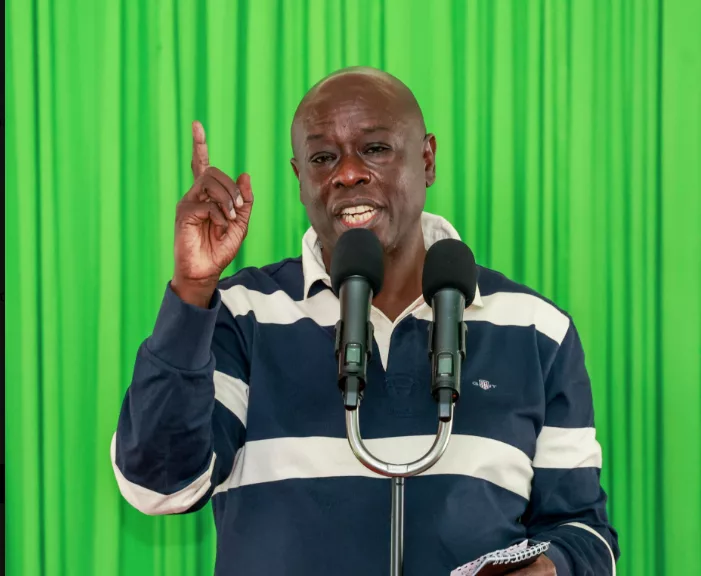
One statement from Deputy President Rigathi Gachagua described the Kenya Kwanza government as a company of shareholders. Presumably the members of the coalition, severally and individually, are the owners of the shares. The 50 per cent of other Kenyans who are not in Kenya Kwanza cannot partake of government service or goodies. This is illiberalism.
It is also reported that the Kenya Kwanza leadership would like to limit the freedom of movement of certain Kenyans due to their criticism of the regime. This is perfect illiberalism; it negates the essence of our democracy.
Much more devastating, however, is to ignore that the same regime is calling upon all Kenyans to pay their taxes irrespective of faith, belief or political affiliation. As it were, paying taxes, from the taxpayer’s point of view, is equivalent to being a shareholder in the government and the state.
But what is illiberalism?
Illiberalism refers to a governing system, presumably founded on democratic elections, where citizens are cut off from knowledge about the activities of those who exercise real—and raw—political power because of the lack of civil liberties.
And if civil liberties or its vestiges are there, the regime will seek to suppress or eliminate them altogether. Such a situation is the opposite, or the reverse side, of an open society.
Illiberalism becomes even worse when those who exercise political power, presumably because elections bestow on them dominance of the political space, begin to criminalize criticism and tread on civil liberties with abandon.
This they do in spite of the fact that they acknowledge “the sovereignty of the people who elected them” while denying the civil liberties of certain individuals who are part of the people presupposing their democratic right to freedom of thought, expression and political affiliation.
In this regard, the call on the western democracies to deny Raila Odinga freedom of movement into those countries needs to concern Kenyans who appreciate the spirit of our Constitution and who must resist its negation by growing illiberalism in our ruling regime.
Likewise, individuals in this same body politic who then repeat such illiberal statements by calling upon the state to deny somebody like Raila his passport must equally be condemned. Today it may be Raila and tomorrow it will be any Kariuki, Kosgey or Ole Laibuta. Just remember what happened to the Jews in Europe as fascism started to rear its ugly head before the Second World War. Just remember what happened in the thickness of Moi’s oppressive regime in the years 1980 to 1999.
Illiberal “democrats”, after they have benefited from carefully orchestrated “free and fair elections”, usually loath competitive politics. They are more at home with single party politics and will obviously drive the political steam engine towards that direction.
The 2010 Constitution was born out of the struggle for multiparty democracy. In other words, democracy based on competitive free and fair elections among political parties each of which strives to win majority votes so as to form a legitimate government. A so-called one-party democracy is a contradiction in terms, especially when it loathes competition of ideas and policies within itself.
In the political arena, therefore, it is legitimate for anybody to question the legitimacy of a ruling party on the basis of doubts regarding the manner in which it ascended to power. Such doubts can be based on questions regarding the sanctity of the electoral system. That is the cost of building a democratic society as opposed to an illiberal one.
When Jomo Kenyatta banned the Kenya People’s Union and detained its leaders in 1969, Kenya became a de facto one-party state. When Kanu eventually changed the Constitution by inserting the infamous Section 2A in 1982, Kenya became a one-party state de jure. That is why the struggle for multi-party democracy in Kenya after that became a struggle crystallized around abolishing Section 2A of the Constitution.
But soon the progressive forces understood that abolishing Section 2A was not enough to deal with illiberalism in the body politic. In fact throughout the 1990s, Moi behaved as if multi-partyism simply gave his autocracy and illiberalism another lease of life.
Establishing a democratic political culture, and not simply having a constitutional framework for democracy, is a much more profound insurance against political illiberalism in a competitive democratic system.
We have reached a stage in Kenya where we have seen the folly of our competitive political party system. It is no guarantee for reaping the dividends of democracy for the ordinary mwananchi.
It is becoming a perfect setting for elite circulation into, and out of, political power on purely individual basis. That is a perfect environment for breeding politics without principles and political parties without ideologies. Yet these two ideals are extremely important in the nurturing, thinking about and choosing policies that can make a difference to our development.
Rather than provide a liberal free market of ideas, individual politicians will shun ideas and pay more attention to loyalty which leads simply to individual personal gains rather than individual contribution to the public good due to choice of policies.
The herd mentality is rapidly coming back to our body politic at the detriment of our democratic development. The herd mentality is what nurtures possessive individualism which is quite at home with illiberalism since society’s needs becomes secondary to individual aspirations.
In January 2002 Kenya had made gigantic steps towards building a competitive political system with strong democratic and liberal values. We seem to be losing both fast if we allow the current regime to take us the direction it has indicated.