The ministry said Nakuru has the second highest number of people developing cancer, followed by Kiambu, Machakos and Nyeri in that order.
This order is based on the county of residence of patients at the time of diagnosis, which means patients who travel to the city for treatment are still counted under their home county.
In total, about 47,000 Kenyans were diagnosed with different types of cancer last year, and 22,000 of them died.
The ranking was reported by the National Cancer Institute, an independent agency under the Ministry of Health.
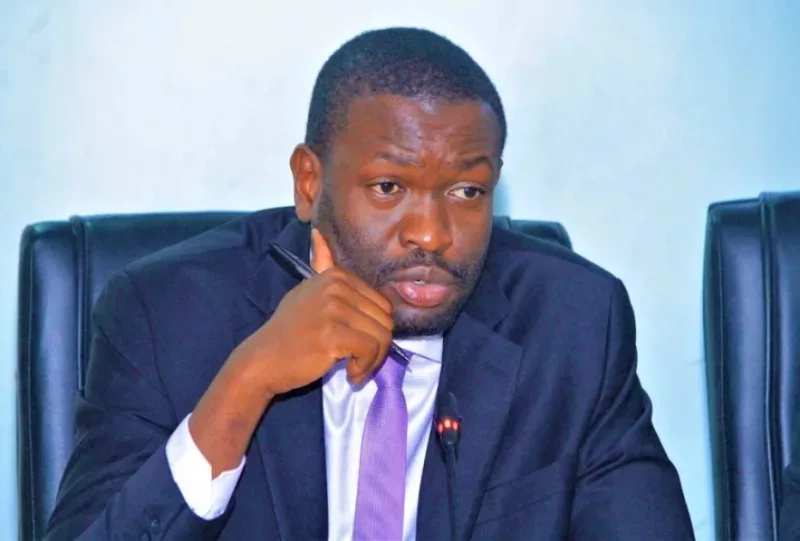
Institute chairman Dr Githinji Gitahi said lifestyle and environmental factors are mostly responsible for the high cancer cases in Nairobi.
“Kenya needs urgent commitment to cancer diagnosis treatment and care. We are losing 75 people daily and if nothing is done by 2030 we will be losing 150 people.
"We need renewed commitment in all sectors that present a risk,” he said on Thursday at the National Cancer Summit organised by NCI in Nairobi.
The sixth county in cancer burden is Murang’a followed by Kitui, Kirinyaga, Embu, Nyandarua and Nandi.
“The top 10 counties accounted for 63 per cent and 61 per cent total burden [of cancer] among female and male respectively,” the report says.
The distribution is based on cancer cases reported in the 42 cancer registries in Kenya between July 2021 and June 2022.
The top three cancers in Kenya were breast (15.9 per cent) followed by cervix (13.3 per cent) and oesophagus (11.8 per cent).
Prostate cancer accounts for a quarter of male cancers while half of the female cancers are cervical and breast cancers.
Most people being diagnosed with breast cancer live in Nairobi, followed by Nakuru, Nyeri, Machakos, Kiambu and Kakamega.
Nakuru leads in cases of cervical cancer followed by Machakos, Nairobi, Kiambu, Kakamega and Kitui.
The report shows counties in the tea-growing areas of Bomet, Kericho and Nandi do not have Kenya’s highest throat cancer burden as widely reported in the past.
For cancer, the leading throat cancer county is Kakamega followed by Nakuru, Nairobi, Machakos, Garissa and Kisumu.
“In Kenya, oesophageal cancer is the fourth most commonly reported and is associated with remarkably low survival,” the report shows.
Dr Gitahi blamed this on late diagnosis, saying most patients receive treatment when the cancer is already advanced.
“The work in tobacco reduction has been significant in reducing the risks of cancer. But there’s still a long way to go,” he said.
Last year, only 642 cases of prostate cancer were reported in Kenya and most of these men (64), live in Nairobi while 58 are in Machakos and Nakuru counties each. Most of the others are in Kiambu, Makueni and Kitui.
Nakuru also had the highest number of newly diagnosed colorectal cancer cases followed by Nairobi, Kiambu, Machakos, Nyeri and Kakamega counties.
Acting head of the Africa Centres for Disease Control Dr Ahmed Ogwell called on Kenya to reduce the high cost of cancer management.
He said this was mainly due to over reliance on imported diagnostics and medicine.
“Today everything we use for the management and diagnosis of cancer is imported. We need local manufacture so that we have the resources we need,” he said.
“We need to invest our own internal resources and then we wait for others to help.”
He also urged the country to train community health workers to help in the early diagnosis of cancers.
“We also need the right partnerships. We don’t have to do it alone. Let’s learn from those who have done cancer management elsewhere. Kenya has made good progress. But we need to protect the gains and do more,” he said.
Tharaka Nithi Governor Muthomi Njuki said although counties are making investments in cancer response, the burden is only growing.
He explained that he lost both parents to cancer.
“I lost my father when I was 19 years. He was a clinical officer and died of throat cancer, diagnosed at Stage 4.
“So I tried to take care of my mother, but 27 years after dad died, she developed stomach upsets. It took one radiologist at Nairobi Hospital to say this is cancer stage four. She took six months and died,” he said.
He said a gastroenterologist said there was no need to take her through chemotherapy but family members said they should still try the treatment.
“I wish we didn’t,” Njuki said. “I watched her die without hair, lost 30 per cent weight.”
He said counties are investing 30 per cent in health but lack medics specialised in cancer treatment and control.
“We haven’t cracked it because of lack of doctors who can treat it. They prefer to work in Nairobi, Mombasa, and Kisumu, so most counties only train and give out specialists. The only time they come home is to bury their mothers who died of cancer,” he said.
Prisca Githuka, a survivor from the Cancer Survivors Association, said many people who have recovered from the disease still face stigma.
“It is wrong to stigmatise people who are already facing stigma,” she said.
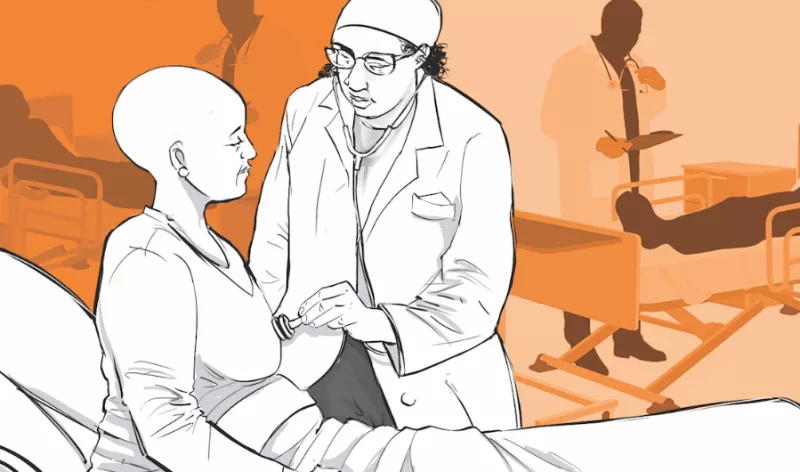
Dr Angela Mcligeyo, an oncologist, said patients should not be stigmatised because most cancers diagnosed early are often treated successfully.
“We are living in an era where cancer is not a death sentence and the many survivors we have are a testimony to that. It has gotten better,” she said.
Management of the disease also appears to be a moneymaker for health facilities.
Dr Gitahi said last year, the National Health Insurance Fund (NHIF) paid out Sh1.5 billion for the treatment of 50,000 Kenyans.
According to the National Cancer Institute, 105 health facilities in 24 counties last financial year applied for designation as cancer centres.
“Out of the 105,093 cancer centres inspected, 67 cancer centres have been designated,” NCI said.
However, 48 of the designated centres only offer basic cancer care, mainly chemotherapy, while 16 are designated as Middle-Level Cancer Centres and only five are categorised as a Comprehensive Cancer Centre.
(Edited by V.Graham)