Intergovernmental Authority on Development executive secretary Workneh Gebeyehu said the region is currently more stable compared to two years ago.
He said this has been through the tireless efforts of leaders, as well as the IGAD secretariat and partners in the region, who have been able to resolve, overcome and address the most significant national and transnational conflicts that threatened the stability of the region recently.
“We must however note that, just as we are recording progress in securing regional peace on one hand, we must on the other hand remain vigilant to the other related threats that are still waiting in ambush to undermine national and regional security,” Gebeyehu said.
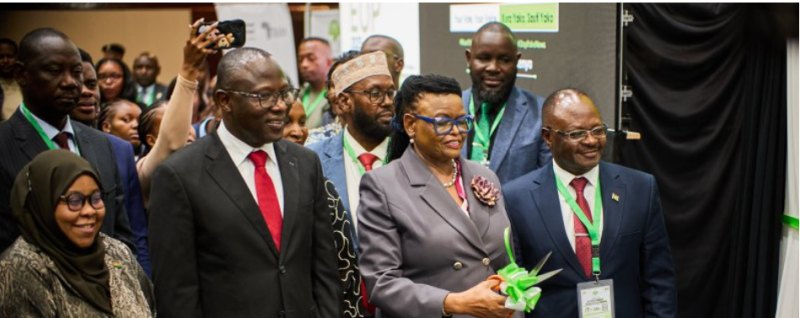
He was speaking in Mombasa on Monday after opening a two-day Security Sector Forum on Regional Cooperation and Coordination against Transnational Security Threats.
Transnational threats range from infiltration of state institutions by terrorist, insurgent and corrupt actors thereby undermining good governance and compromising the rule of law.
They also entail disruption and distortion of commerce through the establishment of illegitimate shadow economies and black markets, illicit flows that consist of trafficking and smuggling of narcotics, humans and weapons thereby threatening regional health, safety and security.
It also includes intellectual property theft through counterfeit goods and services as well as cybercrimes such as identity theft and money laundering which risks both lives and livelihoods in the region.
“We are working closely with member states through the various security, justice, law and order agencies and platforms, to gain a better understanding of the transnational security threats prevalent in our region. We are now working together to prescribe prevention and counter-strategies that would be most effective for our region,” he said.
In 2020, just before the Coronavirus pandemic slowed down the global economy, the estimated value of cross-border flows in illicit and illegal goods and services was estimated at between $1.6 to $2.2 trillion annually.
This translates to five or seven times the GDP of all IGAD member states combined whose GDP stand at $304 billion.
In 2018, illicit financial flows worldwide were estimated at $4.2 trillion, which is 14 times the size of the annual IGAD Economy.
Gebeyehu said from the figures, transnational security hazards represent a significant and growing threat to regional security, with serious consequences for public health and safety, good governance, and economic stability.
He added that as a consequence, localised security challenges take on a regionalised dimension and at the same time, regionalised security threats are making themselves felt in localised spaces.
“Perhaps the most worrying development is the mutation and infiltration of criminal actors into the political sphere. ‘State capture’ by criminal organisations has become a very real threat to vulnerable countries across the globe, compromising and eroding their capacity to respond effectively to transnational crimes,” Gebeyehu said.
He added that as the dark side of regional integration, transnational threats consequently demand shared solutions.
“By this very implication, multilateral approaches provide the most viable avenue for addressing shared security challenges through enhancing a common appreciation of the problem, as well cooperation and coordination on the most workable and effective solutions.”
“This is precisely what our ministerial meeting today is designed to achieve,” he said.
-Edited by SKanyara







![[PHOTOS] Calm prevails in Kisumu, Homa Bay](https://cdn.radioafrica.digital/image/2026/06/dff8923b-c99a-4f40-a4be-cc996653e4e0.jpg)