Kenyan, Ugandan scientists call for better access to vaccines
The researchers are interested in challenges affecting vulnerable communities in remote areas.
by The Star
Audio By Vocalize
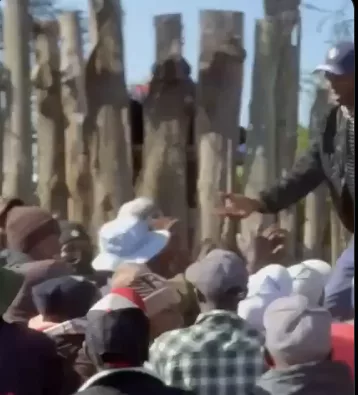
Kemri Wellcome Trust scientists in Kilifi during a conference with their Ugandan counterparts.
Scientists from Kenya and Uganda have entered a partnership to research on challenges affecting the vulnerable communities in the remote areas of the two countries in accessing vaccines.
According to the scientists who were meeting at the Kenya Medical Research Institute Wellcome Trust in Kilifi county and virtually with their Ugandan counterparts for three days, certain diseases can be contained if people in the villages have access to vaccines.
The National Institute for Health Care Research-funded programme, dubbed 'Global Research Health Groups on Vaccines' (Vanguard), targets vulnerable communities and seeks to answer the question of low uptake of vaccines, accessibility and effectiveness of vaccines.
Prof Sam Kinyanjui, who is the head of research training at Kemri Wellcome Trust Kilifi, said they were happy to have their first meeting between researchers from Kenya and Uganda Virus Research Institute and the London School of Tropical Medicine.
He said vaccines are key in preventing the spread of different diseases, which is more important than treatment.
Prof Kinyanjui also said there has been a challenge in ensuring there are vaccines among vulnerable communities that will help in preventing the diseases targeted because they were made from trials done for communities abroad.
“At times there are challenges in spreading the vaccines to the grassroots due to financial constraints or transport making it difficult for the communities to be vaccinated,” he said.
Kemri Wellcome Trust scientists in Kilifi during conference with their Ugandan counterparts.
The scientist said at times there could be a good vaccine but communities reject it because of misinformation or lack of proper understanding.
Prof Kinyanjui said the research also has social scientists who together will come up with answers that will help increase in vaccination drive in communities.
Normally, he said, during outbreaks of pandemics such as Covid-19, a lot of financial resources are usually channelled toward fighting against the disease, which affects the other services required in the health sector.
“In this Vanguard program we are seeking to find answers on whether if you are vaccinated against one disease it affects the prevention of another disease," Prof Kinyanjui said.
He said making vaccines or drugs is expensive but research on diseases helps in getting vaccines quickly, hence developed countries they invest more in research of diseases that make it easier to get vaccines.
Kemri programme special scientist and head of Health Systems and Research Ethics department Prof Dorcas Kamuya said in the current collaborative research programme, they are looking at social and structural factors that might affect vaccine uptake.
She said it encompasses the factors that may make families or communities take vaccines or hinder the uptake of the vaccine such as malnutrition.
“The way the child eats the kinds of foods they are eating and how that food builds up in their bodies can have an impact on whether the body will respond to the vaccine,” Prof Kamuya said.
The scientist said they are also looking at the economical factors such as the costs of food, livelihood and transport to reach health facilities which bring in the issue of priorities among families.
According to Prof Kamuya, for vaccines to be effective, there has to be a large number of people taking them.
So far, she said, they have extensive work, both in Kenya and Uganda, aimed at reaching out to 20 communities - 10 in Kenya and the remaining in Uganda for a long period of time to understand their livelihoods.
“We have PhD students as well as researchers who will be living in these communities to try and understand the daily lives of the local mwananchi to understand how they interact with the vaccine,” the scientist said.
Prof Kamuya said they are looking forward to seeing how the research will contribute to understanding vaccines.
Other institutions that are part of the programme include the University of Oxford, the Medical Research Council, London School of Hygiene and Tropical Medicine Makerere University.
(edited by Amol Awuor)
Kemri Wellcome Trust scientists in Kilifi during a virtual conference with their Ugandan counterparts during the conference.
This is premium content
Subscribe to Continue Reading
Help us continue bringing you unbiased news, in-depth investigations, and diverse perspectives. Your subscription keeps our mission alive and empowers us to provide high-quality, trustworthy journalism. Join us today to make a difference!




![[PHOTOS] Ol Kalou residents turn out in large numbers to vote](https://cdn.radioafrica.digital/image/2026/07/fe42d51c-7f79-466e-94e8-59561f77bbe7.webp)