The Star has established that requests from the national government agencies and counties amounting to Sh90.3 billion were unfunded by the close of the 2021-22 financial year on June 30.
They include Sh60.7 billion requests from the national government agencies and June allocation due to counties amounting to Sh29.6 billion.
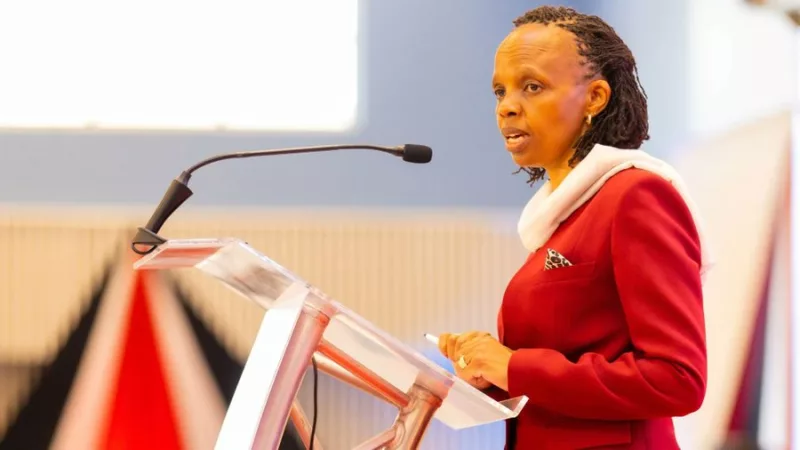
“This was due to underperformance of domestic and external borrowing,” Controller of Budget Margaret Nyakang’o said.
Early last month, Kenya canceled the sale of a $1 billion (about Sh115 billion) Eurobond that it had planned before the end of the current financial year to plug the budget deficit.
Treasury CS Ukur Yatani had cited the rising cost of financing the debt in the wake of the depreciating Kenyan currency against the dollar.
“Last year we borrowed at six per cent and now it stands over 12 per cent. This is no longer feasible,” Yatani said last month.
“That is why we are still exploring options to look at a number of banks that can advance us the money at a cheaper rate."
Instead, the CS held that the Treasury would borrow from commercial banks after the Russia-Ukraine war caused yields to surge in the international markets.
This caused yields on the country’s previous Eurobond to double from six to 12 per cent.
On Wednesday, Nyakang’o corroborated the CS’s assertions.
“The yield rates were too high. When we tried the World Bank, they promised to disburse after July 15,” the country’s budget controller said.
In the just-ended financial year, the Treasury borrowed Sh1.04 trillion out of a target of Sh1.47 trillion to plug the budget deficit.
Some Sh1.04 trillion went towards repayment of the debt.
The latest government expenditure reports by the CoB indicate that commercial loans constitute 14.4 per cent of the country’s Sh4.20 trillion external debt.
Domestic debt stands at Sh4.19 trillion with loans from commercial banks constituting 23.5 per cent of the total domestic debt.
“Public debt recorded a 14.6 per cent growth from Sh7.34 trillion reported as of March 31, 2021,” the budget implementation review report for the first nine months of 2021-22 financial year reads.
Nyakang'o noted that exchange rates may be contributing factor to the faster growth of public debt growth.
Some 49.9 per cent of the public debt is denominated in foreign currency.
“The exchange rate of the shilling to the US Dollar at the beginning of the financial year in July 2021 averaged at Sh108.04 compared to the exchange rate as of March 31, 2022, when the dollar averaged 114.61 per Kenya shilling," report reads.
“The depreciation of the Kenya shilling causes an increase in the stock of public debt in Kenya shilling terms and an increase in the debt cost (principal and interest)."
The growing foreign currency-denominated public debt in the background of a depreciating shilling necessitates an increase in the amount required for debt repayment provided for in the budge, she said.
Last year, Kenya raised $1 billion (108 billion) debt in a fourth Eurobond that was oversubscribed fivefold. The 12-year loan attracted interest of 6.3 per cent.
In May 2019, Kenya raised $2.1 billion from international capital markets to pay off other loans including a $750 million Eurobond that matured on June 24, 2019, and other debt obligations.
The bond was issued in two tranches of seven-year tenor and 12-year tenor priced at seven per cent and eight per cent respectively.
In 2014, Kenya issued a $2 billion Eurobond and tapped for a further $750 million, while the second Eurobond of $2 billion was issued in February 2018.
(Edited by Tabnacha O)
“WATCH: The latest videos from the Star”