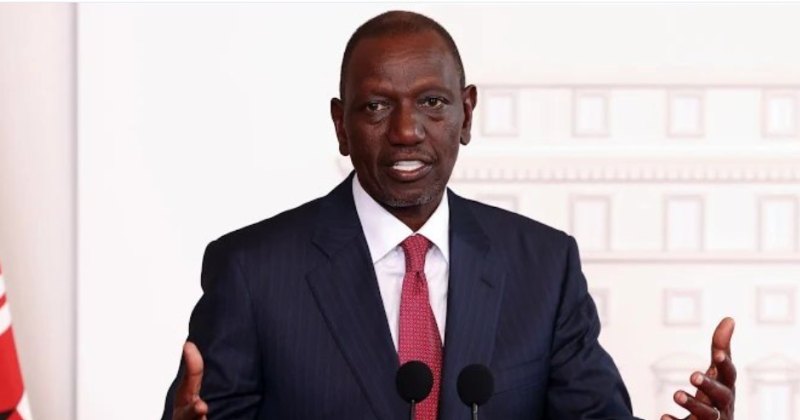
Ruto and his team will converge in Nairobi for the signing of a national charter and unveiling of the Kenya Kwanza’s manifesto.
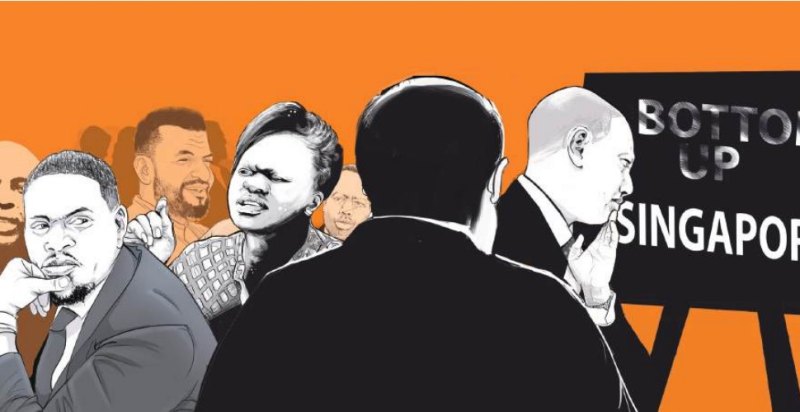
The manifesto is expected to depict the DP's bottom-up economic model, which he says targets to improve the lives of "hustlers".
Governor candidates in the alliance will be present to oversee the signing of the charters that capture priorities of their counties.
“We are going to reduce your suggestions, ideas and priorities into economic charters that will set out the priorities people expect because we want to keep our commitment and be held to account,” Ruto said during one of his economic forums.
Top on Ruto’s agenda for the nation is revitalising the economy through realisation of Jubilee’s Big Four agenda on job creation, improved health sector and food security through agriculture, which he said was bungled by the Handshake.
Ruto said they had planned to create four million jobs for Kenyan youth before it was interrupted.
Under his agenda for youth, Ruto says his administration will focus on the provision of funds to expand enterprises and investments in technical training to enhance their skills.
In the deal signed with the youth, it was agreed that 30 per cent of youth are going to be appointed to government positions and its agencies.
He promised that Sh50 billion will be allocated to fund Saccos to cushion small-medium enterprises from shylocks.
This, according to Ruto will spur growth and create jobs for the millions of jobless youths.
There are also plans to provide hands-on, market-ready skills to youth as part of addressing unemployment.
The DP has further pledged to allocate Sh100 billion to support youth as capital to start businesses and create jobs for themselves.
For small business traders like mama mboga, Ruto’s government will put up market stalls in every major trading centre and shades for the jua kali artisans.
On education, Ruto has vowed to increase the allocation of funds for research from 0.8 per cent to two per cent of the GDP while doubling the Higher Education Loans Board funding from Sh11 billion to Sh22 billion.
The signing of the agreement comes following a stakeholder engagement that will also see the administration introduce a paid internship programme for graduates and offer free education to children with special needs.
Also targeted are persons with disability, where free special needs schools are going to be set up.
The Kenya Kwanza government also has plans to establish a hustler healthcare programme where every woman in the country is going to be insured by the National Health Insurance Fund.
“We are going to give every woman NHIF card free of charge,” Ruto said during a meeting with the women.
On the soaring public debt, Ruto says his government intends to reduce borrowing appetite and subsequently stop it.
During the first term of President Uhuru Kenyatta, Sh2.7 trillion was borrowed for various infrastructural projects which include SGR and Sh4.2 trillion in the second term.
Ruto argues that while the Azimio coalition is planning to continue with massive borrowing of loans, Kenya Kwanza is focusing on exploiting available local options to generate income.
According to the Kenya Kwanza flagbearer, broadening the tax base is a sure way of collecting maximum proceeds to fund development projects.
“If we put more effort into digitising the tax-paying process, we can collect more compared to now and this will be a big win,” he said during separate meetings with the private sector and civil society groups.
The DP has also laid out an ambitious programme for housing which was part of the Big Four agenda.
He aims at establishing 5,000 affordable houses in Nairobi and across the major 47 counties; this he notes will make Kenyans own homes.
“There is no need for you to be paying rent forever. “We will help those that are building houses in Nairobi, instead of paying rent of Sh8,000 every day," he said.
"They will pay a mortgage of Sh8,000 and after 10 or 15 years, the house belongs to them."
To tackle the food security problem, he said his administration plans to set up funds to supply farmers with cheap farm inputs to increase production.
He said he will set aside a special fund for farmers to get fertiliser at Sh2,500 down from Sh6,000.
(Edited by Tabnacha O)
“WATCH: The latest videos from the Star”