

Fresh claims of backstabbing have rocked the Building Bridges Initiative amid reports of a silent push by President Uhuru Kenyatta's team to sidestep a referendum.
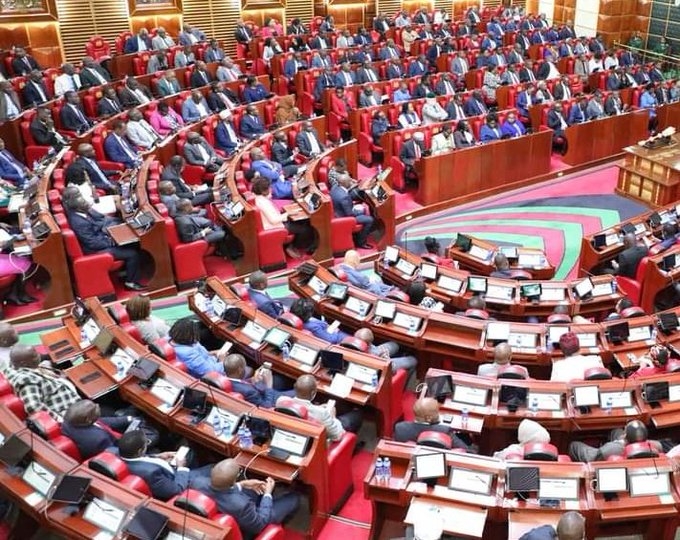
There are growing fears among ODM boss Raila Odinga's men that Uhuru might decide to kill the referendum by signing into law the Constitution of Kenya (Amendment) Bill, 2020, once approved by Parliament.
Also causing panic are reports that Uhuru could as well isolate issues that do not need a referendum, sign them into law and then have other proposals considered unpopular go to a public vote.
The deep-seated political interests aiming to dilute the BBI Bill have triggered suspicions of treachery among allies of the President and those of his handshake partner Raila Odinga.
The Star has established the President's camp is planning to only have unpopular issues in the BBI Bill subjected to a plebiscite, in what Raila's allies consider mischief to deny him a springboard for 2022.
Initially, both Uhuru and Raila had maintained the entire BBI Bill would be taken to a referendum as a package, with Kenyans required to either reject or approve it.
Why BBI may not escape referendum. Explainer By @OliverMathenge. pic.twitter.com/6nzjkr3LsM
— TheStarKenya (@TheStarKenya) March 17, 2021
The push was the reason why the handshake proponents rejected a suggestion by Deputy President William Ruto's Tangatanga brigade to have a multiple-choice referendum that would give Kenyans more options.
However, it has now emerged that the President's camp has developed cold feet for the referendum and wants clauses in the Bill that do not require a public vote enacted into law immediately Parliament approves it.
“We have all the cards. The economy is doing badly and the coronavirus is back with the third wave. A referendum would be the last option. For now we are flexible and looking our options,” a Jubilee official who sought anonymity said.
The reasons being advanced for rejecting a referendum are the ban on public rallies, the poor financial state of the country, Raila falling sick and ODM troops appearing to take a back seat following revelations the Office of the President had taken over the BBI campaigns.
Also cited are the numerous National Intelligence Service reports that still indicate that BBI is still unpopular among a huge section of Kenyans.
The thinking within Raila's team is that the President's allies are mainly keen on radical BBI proposals that only require policy, administrative and legislative interventions by the government.
Many of these—including the distribution of the 70 new constituencies in which Uhuru's Mt Kenya region got the lion's share—are contained in the schedules attached to the main BBI Bill.
DP Ruto and his allies have campaigned against BBI, saying it is not a priority as Kenyans are facing hard economic times.
At least two preparatory meetings bringing together Uhuru's allies have been held to scheme how to get their way in the BBI proposals.
On Tuesday, there were two parallel meetings in Nairobi – one at a venue along Thika Road and another one at a hotel within the CBD – to strategise on how to sidestep a referendum.
The Thika Road meeting was was attended by senior government officials and some select politicians from Uhuru's Mt Kenya turf. The CBD one was attended by professionals who generate narratives for the government.
Lawyer Kamotho Waiganjo, seen to be a close confidant of Uhuru, argued that many proposed changes to the 2010 Constitution do not necessarily need a plebiscite.
Speaking to the Star on the phone, the former member of the old Constitution Implementation Commission cited low political support for BBI and its financial implications.

“There about 75 amendments, if you take 75 and you see there is one or two that are even doubtful if they require a referendum, do we still go and spend some Sh20 billion to put the country on expensive and divisive political process?” asked Waiganjo.
“If you go through Article 255, the only issue one can argue that can be affected is the functions of Parliament. The only function of Parliament that has been affected is the approval of CSs and PSs and that does not go into the heart of functions of Parliament."
Waiganjo argued that no one will benefit from the plebiscite, warning that in a government which is divided politically along Uhuru on one side and Ruto on the other side, the country will be divided more.
Homa Bay Town MP Peter Kaluma said it will be an illegality for Parliament to forward the Bill for assent once it is passed.
The member of the Justice and Legal Affairs committee in the National Assembly said once Parliament is done with the Bill, it must be forwarded to the IEBC for a referendum.
Kaluma, a lawyer, said the argument that the proposals do not require a referendum has no basis in law.
“Under BBI, we are changing the face of devolution, increasing the minimum revenue from 15 to 35 per cent. There are also issues touching on Article 255, which must be decided in a referendum,” he told the Star on the phone.
He said in the popular initiative way of amending the Constitution, Parliament has a limited role.
“Let people prepare for a referendum. The people of Kenya will have the final say. The BBI Constitution (Amendment) Bill is a single bill and must be passed as a whole or rejected as a whole. The people who signed to support the popular initiative signed for the Bill with all its provisions,” he said.
National Assembly Majority leader Amos Kimunya said the passage of the BBI Bill cannot end in Parliament since it involves clauses that can only be changed through a referendum.
“Do they understand there are some issues that purely need a referendum? Let them read Article 255 very well. If a bill is not defeated, remember the Bill did not come in two parts. It was brought to Parliament as a composite bill. You cannot say you have passed some clauses,” he said.

The Kipipiri MP who spoke to the Star on the phone said since the Bill is omnibus, its fate must be decided in a plebiscite.
Lawyer Ahmednasir Abdullahi echoed Waiganjo's sentiments. “Of course, the BBI doesn't need a referendum to pass. I agree with the opinion expressed lucidly by Kamotho,” he tweeted.
In the BBI report, only 12 legislative proposals have been set aside as not requiring a referendum.
Among them are laws on prompt payment of contracts, public finance, bills on SMEs, ethics and integrity, management of elections, anti-corruption, harambees and charity contributions, devolution laws, public participation, establishment of a national economic and social council and health.
Narok Senator Ledama Olekina said he will marshal fellow senators to curtail any attempt to circumvent the Constitution, saying since some of the proposals touch on devolution and human rights, a referendum is inevitable.
“Let those planning on how to bypass a referendum continue dreaming, that notion does not hold water in law and we are ready to defend the Constitution to the letter,” he said.

(Edited by V. Graham)