Western’s succession puzzle as leaders split over poll strategy
Region torn between uniting behind one national strategy, pursuing competing ambitions
by HILTON OTENYO
Audio By Vocalize
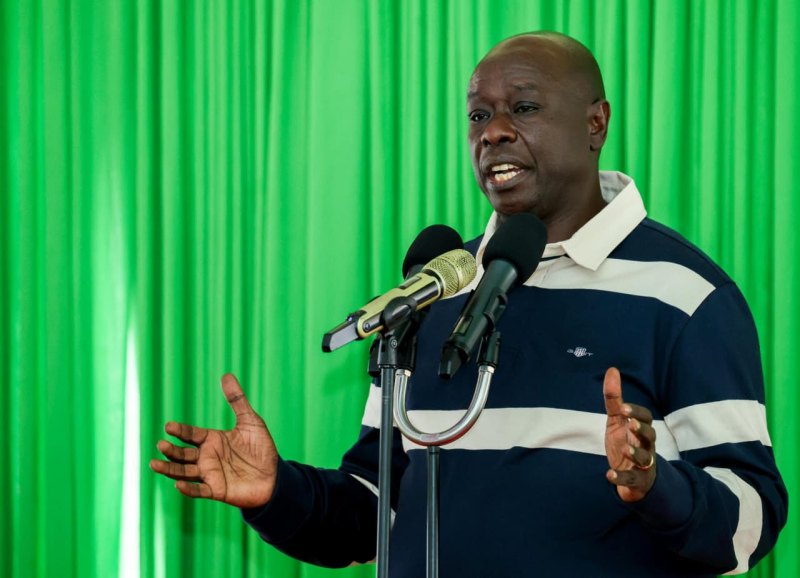
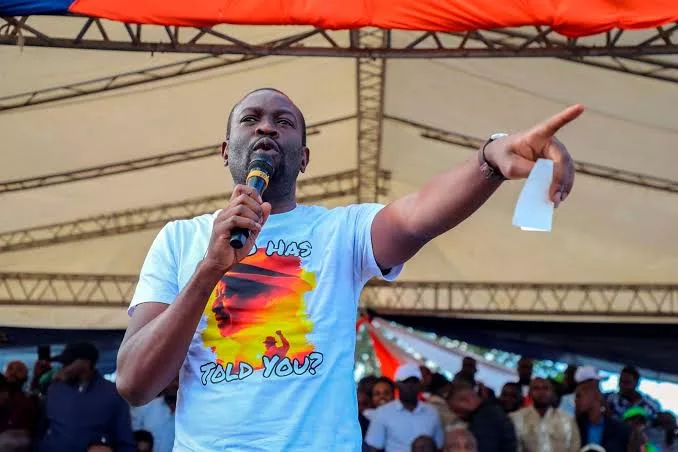
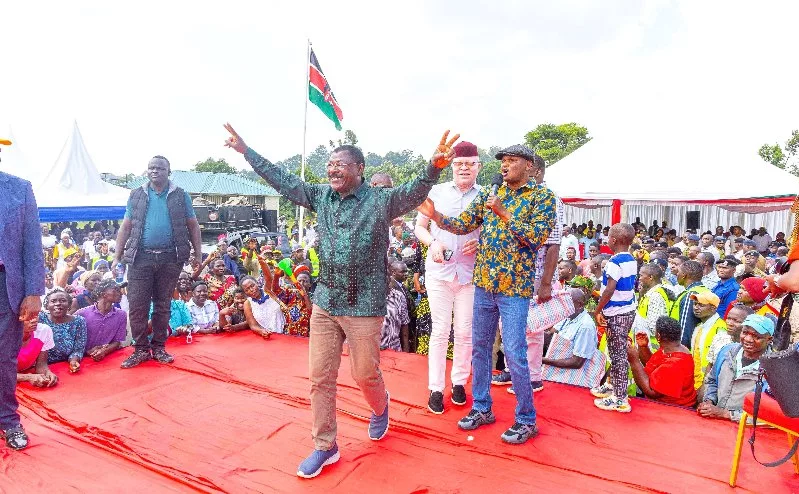
National Assembly Speaker Moses Wetang'ula arriving on the podium during a fundraiser in aid of Nangili ACK church in Matungu constituency on Sunday/IMAGE/HILTON OTENYO
As the race to the 2027 General Election gathers momentum,
Western Kenya finds itself confronting a familiar political dilemma.
The region is torn between uniting behind one national
strategy or pursuing competing ambitions that could once again leave the region
negotiating from a position of weakness.
The debate is no longer just about who should become
President William Ruto's running mate or whether Nairobi Senator Edwin Sifuna
should mount a presidential bid.
It is increasingly about whether the Luhya community can
rally around a single political direction before rival interests fragment its
influence.
The divisions have become more visible in recent months.
One camp of elected leaders is backing President Ruto's
re-election, arguing that supporting him in 2027 offers the clearest path to a
Luhya presidency in 2032.
Another group, largely aligned to Sifuna's Linda Mwananchi
movement, believes the region should stop waiting for future promises and
instead seek national leadership in the next election.
Even among those supporting Ruto, there is little agreement
on who should be rewarded with the Deputy President's position.
Supporters of National Assembly Speaker Moses Wetang'ula
argue he is best placed for the role.
Others have rallied behind Cooperatives Cabinet Secretary
Wycliffe Oparanya, while another faction believes Prime Cabinet Secretary
Musalia Mudavadi should be the preferred choice.
The competing endorsements have exposed a deeper contest for
political supremacy within Western Kenya, with each camp seeking to emerge as
the region's principal power broker ahead of 2027.
Wetang'ula has intensified political activity in Western
through economic empowerment programmes while campaigning for Ruto's second
term, although he has stopped short of publicly asking for the deputy
presidency.
Instead, his allies have taken up that campaign on his
behalf.
Mudavadi, who had largely focused on his foreign affairs
portfolio, recently returned to the region and signalled that he intends to
play a more active political role.
Speaking during a church service in Nairobi on Sunday, he
hinted at his long-term presidential ambitions.
"I am the one who opened the door for our region by
becoming the first Vice President from Luhya land. I want us to remain focused
and united so that I also become the first to open the door for a Luhya
presidency," Mudavadi said.
Political analysts say the renewed activity among senior
Western leaders reflects growing concern over Sifuna's rising influence,
particularly among younger voters.
Political analyst Martin Andati argues the contest for the
deputy presidency could ultimately weaken rather than strengthen the Kenya
Kwanza coalition in the region.
He said Mudavadi, Wetang'ula and Oparanya appear to be
positioning themselves on the assumption that Sifuna will ultimately settle for
a running mate position within the opposition.
"Whatever they do, that ticket will be weak because
many voters have already shifted away from President Ruto. The challenge is how
to rebuild that support and it will not be easy," Andati said.
He warned that once one leader is eventually preferred over
the others, the disappointed camps could undermine the eventual choice on the
ground.
Political scientist Prof Amukowa Anangwe views the unfolding
rivalry differently.
He argues the competing narratives risk reviving the
politics of division that has historically denied Western Kenya a united
national bargaining position.
"People are trying to scatter the Luhya vote through
competing interests. Instead of consolidating support, leaders are sending
mixed signals that could weaken the region politically," he said.
Political analyst Martin Oloo believes many leaders backing
Ruto are primarily seeking political relevance at a time when opposition
sentiment is steadily growing in the region.
Former Raila Odinga ally Isaac Omungo said some politicians
are beginning to realise that the promise of a Luhya presidency in 2032 is
failing to resonate with many voters, forcing them to recalibrate their
political messaging.
Whether Western Kenya ultimately rallies behind one strategy
or continues with multiple competing centres of influence may determine not
only its role in the 2027 election, but also its bargaining power in the
political realignments expected to follow.
INSTANT ANALYSIS
Western Kenya's politics is increasingly becoming a contest
over strategy rather than personalities. While one group of leaders believes
supporting President William Ruto secures the region a stronger claim to power
in 2032, another argues the time to seek national leadership is now. The
absence of a unified position risks diluting the Luhya community's bargaining
power, particularly if multiple leaders compete for the same political space.
At the same time, the growing visibility of figures such as Edwin Sifuna is
reshaping traditional political calculations and forcing established leaders to
reposition themselves. Whether Western unites or fragments could significantly
influence the 2027 presidential race.


 National Assembly Speaker Moses Wetang'ula arriving on the podium during a fundraiser in aid of Nangili ACK church in Matungu constituency on Sunday/IMAGE/HILTON OTENYO