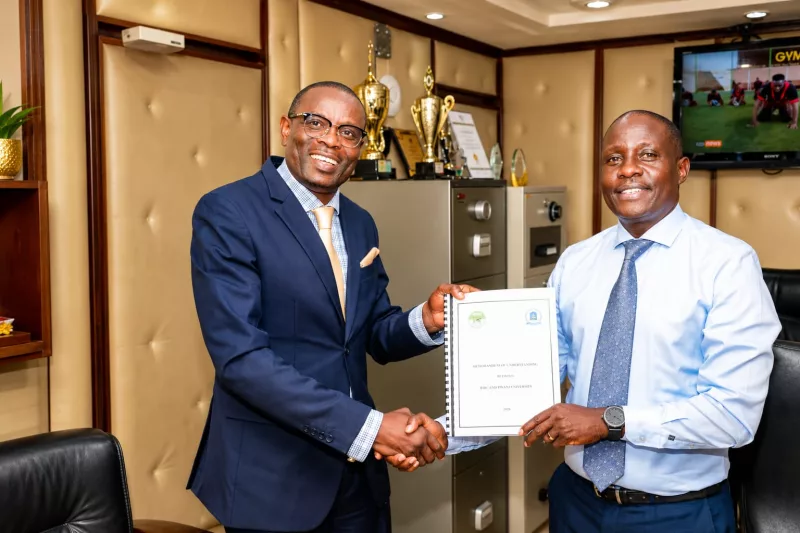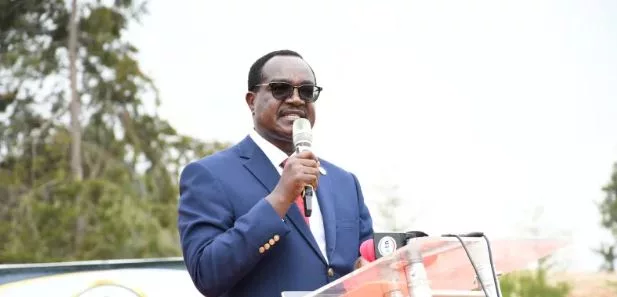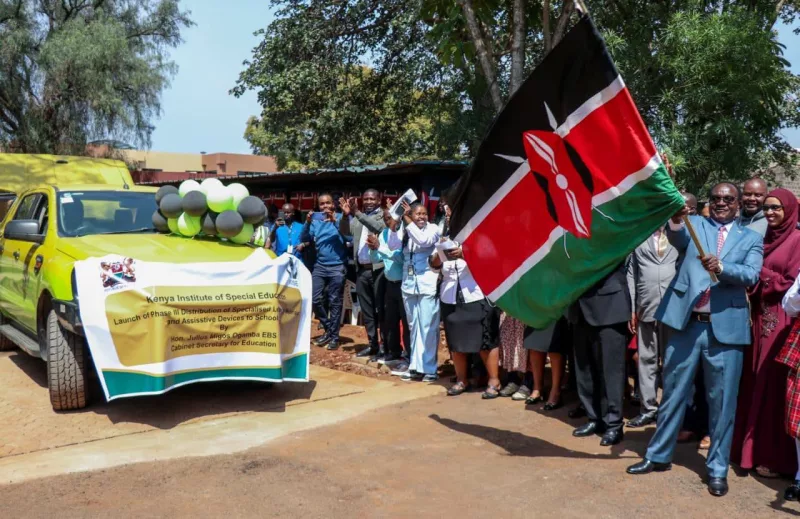
In a landmark move to enhance inclusive education, the Cabinet Secretary for Education Julius Migos Ogamba, has flagged off the third phase of the distribution of assistive devices and technologies at the Kenya Institute of Special Education (KISE) in Kasarani, Nairobi.
Under this phase, the Ministry of Education, through KISE, will distribute 11,139 assistive devices to 321 inclusive programmes and special schools serving learners with physical and visual impairments across all 47 counties.
Crucially, the government is extending this support to senior schools and tertiary institutions, including universities, ensuring a seamless transition and learning journey.
During the launch, Ogamba emphasised that the initiative directly aligns with the government's BETA agenda, noting that "disability is not inability, but a lack of access to the right tools can convert potential into frustration".
Reviewing the progress of the programme, the CS shared that phase I distributed 22,323 devices to 375 schools, and phase II delivered 29,424 devices to 500 special units.
To sustain this momentum, Ogamba directed KISE to work closely with special needs institutions to achieve a 1:1 learner-to-device ratio, following recommendations from the Presidential Taskforce.
He also recalled a recent visit to the Thika Comprehensive School for the Blind, noting that its resilient learners are among the beneficiaries of this new phase.
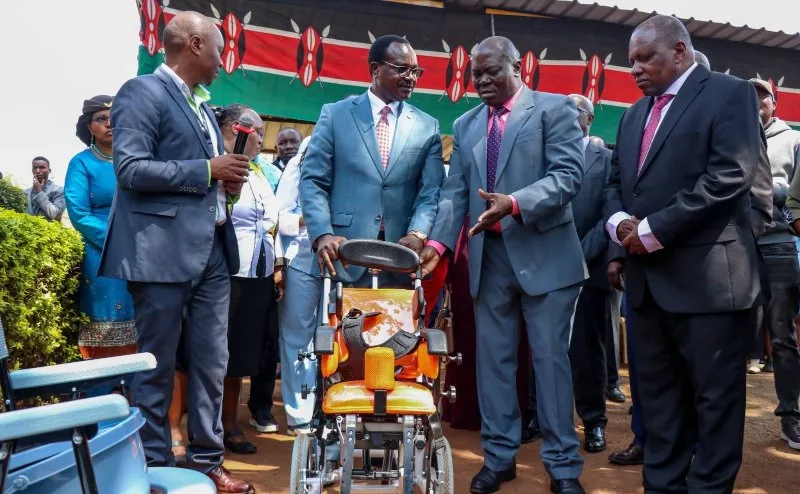 Education CS Julius Migos Ogamba, KISE Director Dr Norman Kiogora, and National Chairperson of the Special Schools Association of Kenya Aggrey Waliaro inspect a locally manufactured specialised wheelchair at the Kenya Institute of Special Education in Kasarani, Nairobi/HANDOUT
Welcoming the Cabinet Secretary, KISE Director Dr Norman Kiogora expressed immense pride in KISE's capacity to break down educational barriers.
“All 11,139 specialised devices flagged off were manufactured locally at KISE’s facilities,” he noted.
Kiogora urged school administrators to be diligent custodians, adding, "Please ensure these devices reach the ultimate beneficiary the child".
Representing educators, Aggrey Waliaro, National Chairperson of the Special Schools Association of Kenya, lauded the local manufacturing of these learning resources.
"We are going to place every headteacher who is conversant with the region so that they are able to reach every school and every learner," Waliaro stated, emphasising that the target remains the individual child.
Francis Manyala Principal of Dagoretti Special School and President of Special Needs Sports Kenya, echoed these sentiments. Manyala, whose school received a wheelchair, praised the ministry's intervention to help learner’s live independent lives.
He also commended the Ministry of Education
for fully funding the upcoming national special needs sports tournament in
Thika, proving that the commitment to these learners extends far beyond the
classroom