
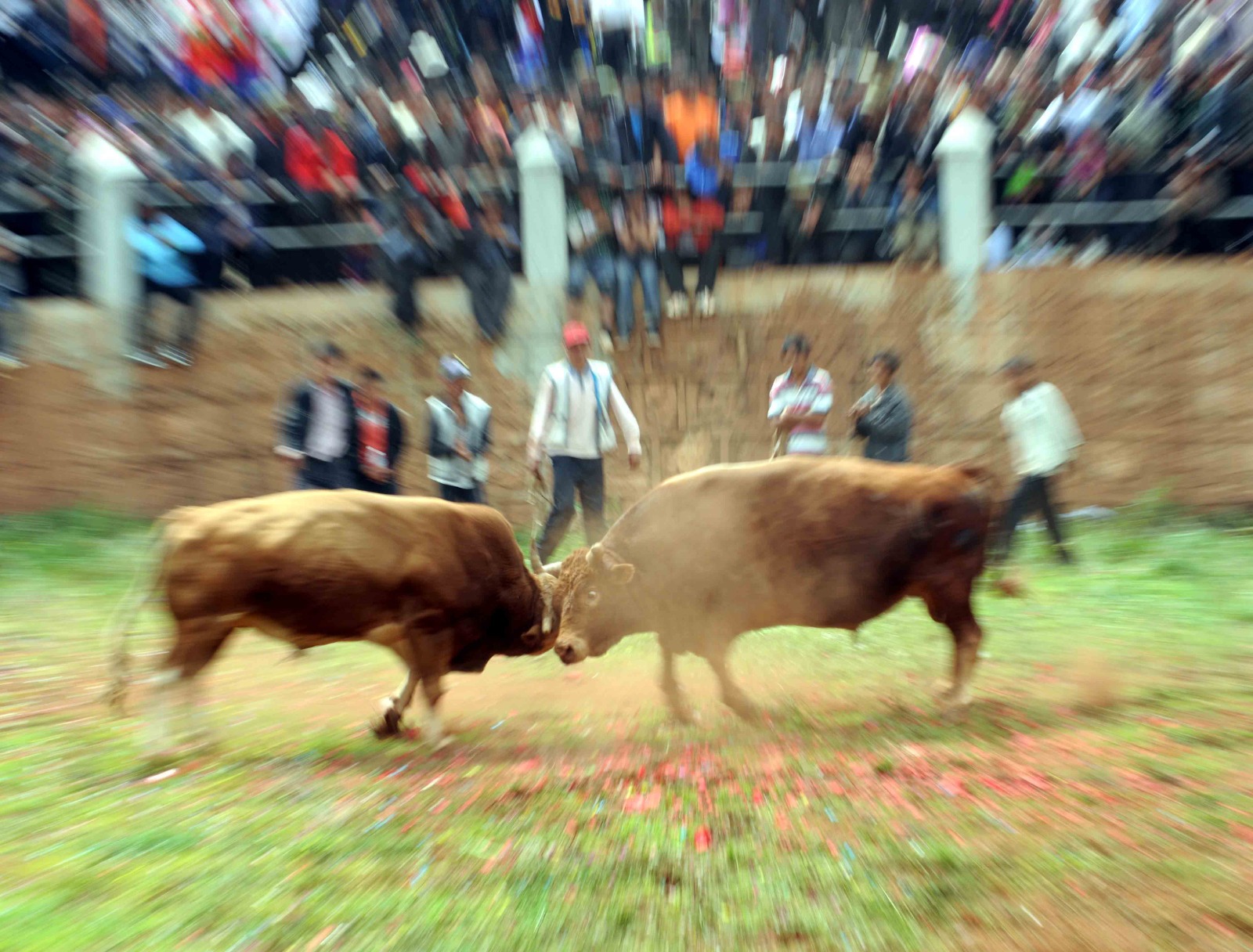
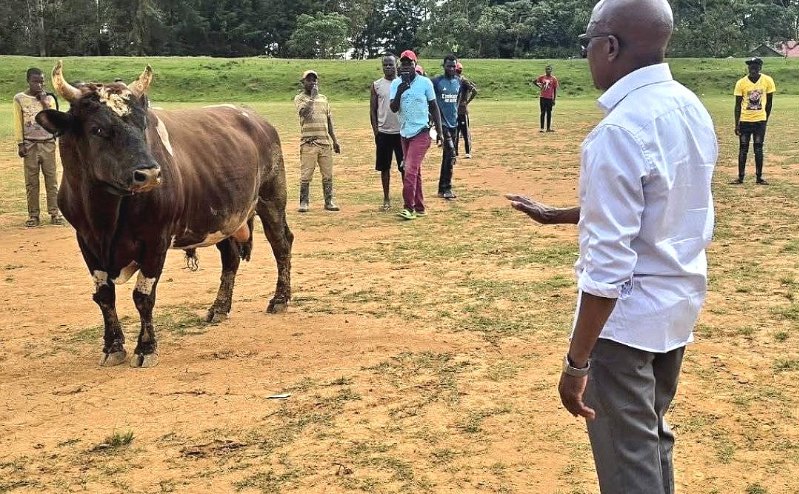
 Kakamega Senator Boni Khalwale with one of his fighter bulls, Machunje, at Malinya stadium /HILTON OTENYO
A debate has erupted within western Kenya's bullfighting fraternity over whether an ardent fan and bull owner, Josephat Bitute, should be accorded the highest traditional bullfighting honour, known as shirembe, following his death last week.
While a section of bullfighting enthusiasts believes Bitute deserves the honour because of his passion for the sport, its traditional custodians insist that performing the revered rite in his name would undermine its cultural significance.
"Shirembe is a clearly defined mourning ceremony for distinguished members of society, with clear dos and don'ts. The ritual is guided by the spirits of our forefathers and is not just another bullfighting contest," said Kakamega Senator Boni Khalwale, the long-serving patron of the sport.
He said shirembe is reserved for individuals whose lives and deaths meet specific cultural criteria.
There are two categories of the ceremony: sio and sele-butswa.
Sio, the highest honour, is accorded to a hero who dies while defending himself, his family or the community during a physical confrontation in which the opponent is also killed. The ceremony is also performed for renowned traditional circumcisers because of their association with blood.
Sele-butswa is a lower category of the honour and is reserved for distinguished members of society, including administrative and political leaders who have made outstanding contributions to the community.
Traditionally, the ceremony is conducted at the graveside of the deceased, where fighting bulls are allowed to dig into the fresh soil with their horns. Supporters dance around the grave, scatter foodstuffs and sing war songs in praise of the deceased.
Bitute was reportedly killed by a mob in the Ilesi area of Shinyalu constituency last week.
He was said to have been in the company of two other people who allegedly attempted to steal cattle from a homestead in the area. The two escaped.
Police say investigations into the circumstances surrounding his death are still ongoing.
"We are yet to establish the motive for his murder," Shinyalu subcounty police commander Daniel Mukumbu said.
Khalwale said according Bitute the shirembe honour would set the wrong precedent because of the circumstances surrounding his death.
"We perform the shirembe ceremony for people with good deeds and attributes because we want them to be reborn so that society continues to benefit from their contributions," he said.
Dennis Muhanda, a bull owner from Shitaho in Shinyalu, also opposed the proposal, saying Bitute did not qualify for the honour.
"Such a person should be buried quietly at night by his maternal uncles. If he is buried during the day, then a curse known as shilonda ng'ombe will hound his lineage," he said.
However, a section of mainly youthful bullfighting fans argues that Bitute was part of the bullfighting family and deserves a dignified send-off.
Kakamega Bullfighting director Boniface Munanga said Bitute does not qualify for the honour because of the nature of his death and his age.
"Shirembe goes with age and community attributes. We cannot, as officials, approve it for Bitute. However, the family has requested that fans be allowed to perform a mock ceremony involving bull contests at Khayega grounds after the burial and not at the graveside," he said.
"We are not allowing shirembe to be performed, but we have listened to the wishes of the younger generation and agreed to allow a mock exercise away from the home."
Munanga said the honour was traditionally reserved for people who fought in the Second World War and other distinguished members of society.
"People who fought in the war would come with spears, chanting war songs to the graveside of the deceased, where they would pierce the ground while boasting about how many people they had killed," he said.
"If you killed one person, you would plant one spear in the soil. If another person who had killed two or more people arrived, he would remove your spear and plant his own two. It was well organised because those who fought in the war knew each other, but generational changes are now presenting challenges."
Munanga said the sport has no written rules, relying instead on customs passed down from one generation to another. He noted that many young enthusiasts believe some of those traditions have been overtaken by changing times.
Instant analysis
The debate over Josephat Bitute's burial reflects a broader tension between preserving cultural traditions and responding to changing social attitudes. While younger bullfighting enthusiasts view the honour as recognition of his dedication to the sport, traditional leaders insist that shirembe is governed by strict cultural rules that define who qualifies. Their concern is that relaxing those standards could erode the ceremony's historical and spiritual significance. The compromise of allowing a mock bullfighting ceremony after the burial illustrates an attempt to balance respect for tradition with the expectations of a younger generation, highlighting how cultural practices continue to evolve while remaining deeply contested.