Kakamega water firm new CEO promises improved services
Tung’a, who has taken office with a promise of transformative leadership, succeeds Eng Michael Ogol, whose contract ended in June.
by HILTON OTENYO
Audio By Vocalize
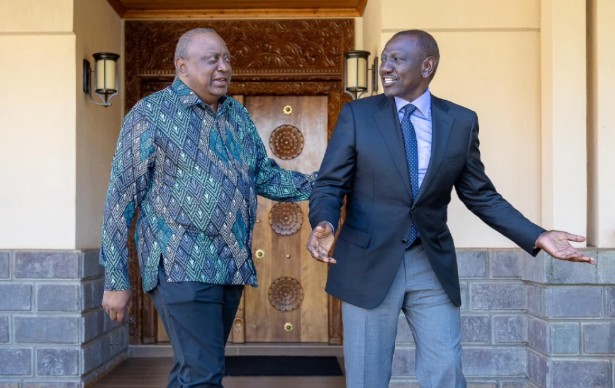
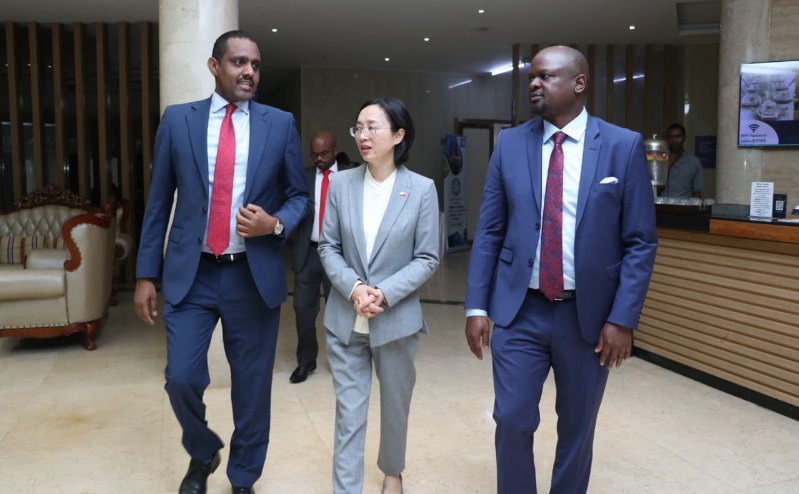
New Kakamega County Water and Sanitation Company CEO CPA Charles Tung’a receive the county Environmental, water and Climate Change CEC Peninah Mukabane at the company headquarters in Kakamega town/IMAGE /HILTON OTENYO
The Kakamega County Water and Sanitation Company (Kacwasco)
has appointed Charles Tung’a as its new CEO.
Tung’a, who has taken office with a promise of transformative
leadership, succeeds Eng Michael Ogol, whose contract ended in June.
He said his immediate focus would be to reduce non-revenue
water, increase production and improve efficiency in distribution. This, he
said, will ultimately increase revenue and reduce operational costs.
“We will achieve this through the recruitment of highly
skilled and competent staff who will help tame corruption and wastage of public
resources. We will not entertain laxity or be swayed by political infighting,”
he said.
Tung’a said the management is in the process of
rationalising staff to align roles with employees' competence, skills,
productivity and experience to enhance services.
“We will place those who are unable to deliver on a
performance improvement programme and build the capacity of those with
potential,” he said.
“Staff who may have found their way into the company using
fake papers should exit on their own or face disciplinary action and be
referred to relevant agencies for further action,” he added.
Tung’a said his administration will not tolerate internal
politics and cronyism. Instead, it will ensure a lean and motivated workforce,
strengthen system controls and ensure compliance with regulatory requirements.
He said the recruitment of a technical manager three months
ago—the first such position in the company’s history—will enhance service
delivery.
The company currently generates 20,000 cubic metres of water
daily against a demand of 35,000 cubic metres per day, leaving a deficit of
15,000 cubic metres.
According to Tung’a, unaccounted-for water currently stands
at 57 per cent of the total water generated daily.
He attributed the high level of non-revenue water to faulty
meters, ageing AC and PVC pipelines that frequently burst or leak, illegal
connections, meter tampering and data inaccuracies.
Tung’a said the amount of non-revenue water will reduce
significantly through the replacement of 4,500 faulty meters and the
establishment of District Metered Areas (DMAs) and ultrasonic water meters.
A DMA is a defined section of a water distribution network
where all water entering and leaving the area is measured using meters.
This helps detect leaks quickly, monitor water consumption,
reduce water losses and manage water pressure effectively.
Ultrasonic water meters use sound waves to measure the
velocity and volume of water flowing through a pipe. They calculate the flow
rate and the total volume of water passing through the system.

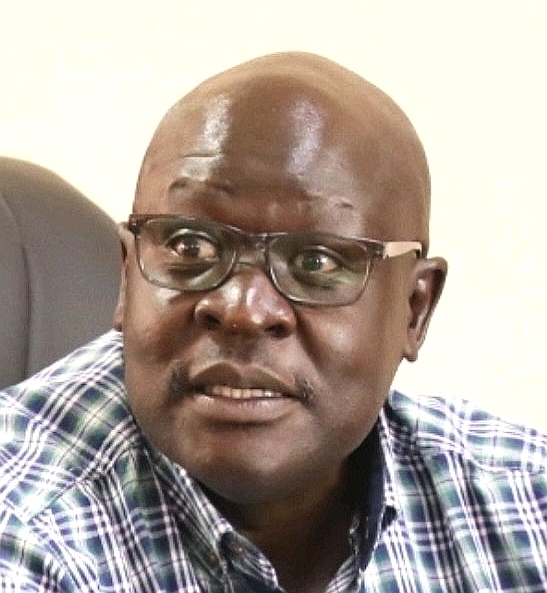

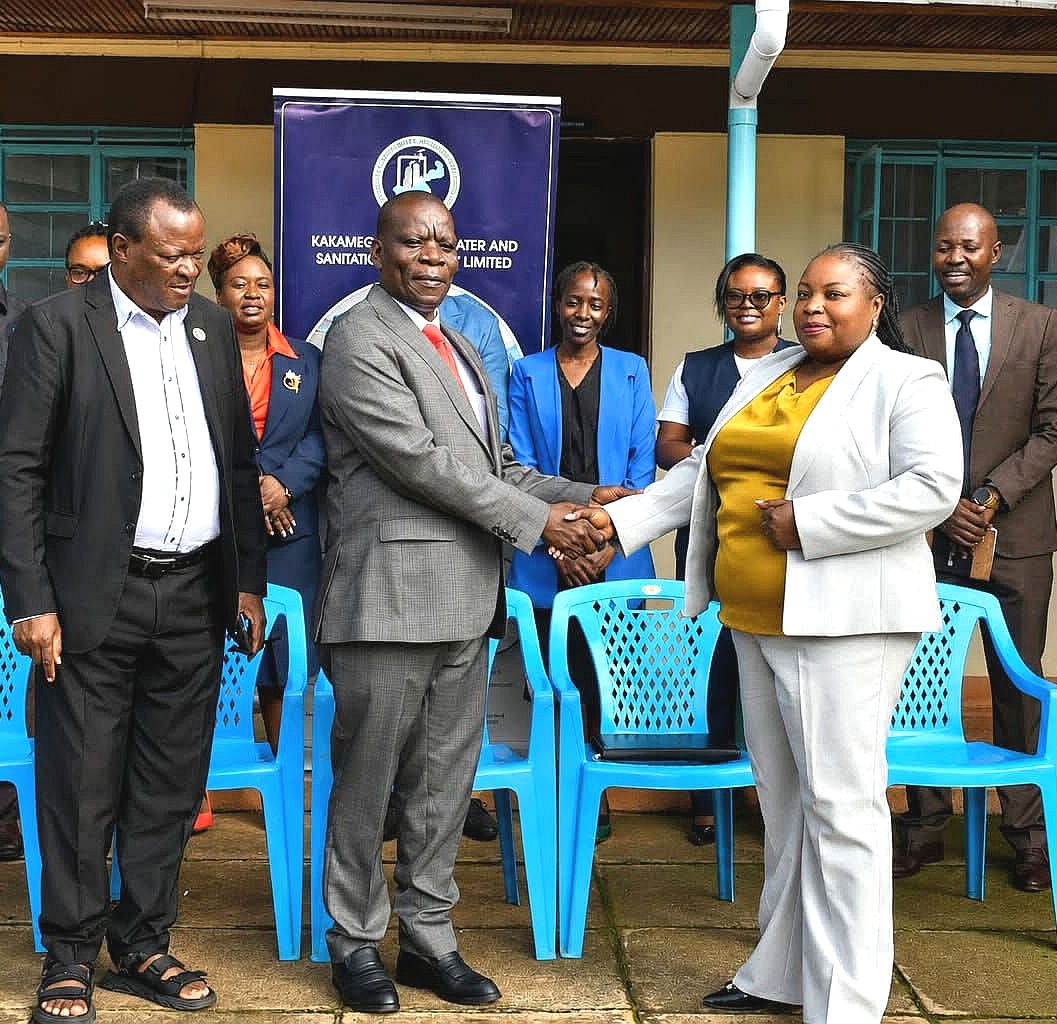 New Kakamega County Water and Sanitation Company CEO CPA Charles Tung’a receive the county Environmental, water and Climate Change CEC Peninah Mukabane at the company headquarters in Kakamega town/IMAGE /HILTON OTENYO