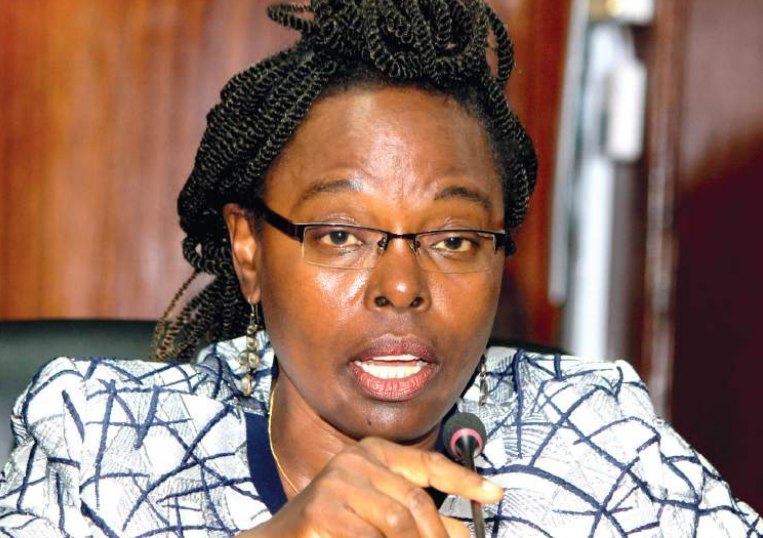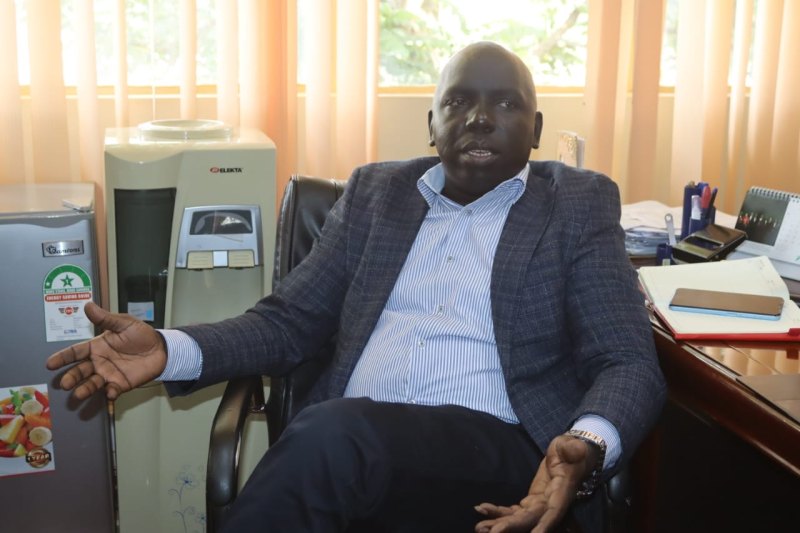
 Uasin Gishu executive for finance, Micah Rogony, and county assembly speaker Phillip Muigei, after presentation of the county budget estimates before MCAs
Uasin Gishu Governor Jonathan Bii’s administration has unveiled a Sh12.9 billion budget for the 2026–27 financial year, prioritising the completion of stalled and ongoing projects across the county.
Finance executive Micah Rogony tabled the budget before the county assembly, saying it will be financed through a combination of revenue sources, including Sh9.26 billion from the equitable share of national revenue.
The county also plans to raise Sh1.4 billion from Own Source Revenue (OSR), Sh530.65 million from conditional grants and Sh708.7 million from Appropriation-in-Aid (AIA).
Rogony said the 2026–27 budget places strong emphasis on completing ongoing Nguzo Kumi flagship projects while fast-tracking delayed multi-year projects inherited by the current administration.
“This approach reflects our commitment to prudent resource utilisation, continuity in development and the timely delivery of public investments that directly benefit the people of Uasin Gishu,” he said.
Among the key priorities are the completion and equipping of the Uasin Gishu County Hospital and Diagnostic Centre, upgrading at least one health facility in every ward into a model health centre and finalising ongoing health infrastructure projects, including the Moiben, Kesses, Turbo and Ziwa subcounty hospitals.
The county also plans to acquire additional ambulances, strengthen referral and emergency response systems, recruit and train health personnel, integrate digital health systems, ensure a continuous supply of drugs and expand maternal and child health programmes.
“These interventions will enhance access to quality healthcare and improve health outcomes in the county. These health infrastructure projects will be completed within the year and, therefore, the focus will shift to equipping and staffing,” Rogony said.
He said the budget seeks to strengthen fiscal discipline, enhance own-source revenue mobilisation, improve expenditure efficiency and ensure value for money in the utilisation of public resources.
“It further aims to stimulate economic growth, improve livelihoods, strengthen public service delivery and promote equitable and sustainable development across all wards of Uasin Gishu county,” he said.
Rogony said county resources have been strategically directed towards five key priority areas: agriculture and agribusiness, trade and cooperatives, infrastructure, health services, and education and training.
The sectors, he said, have been identified as critical pillars for accelerating economic transformation, improving service delivery, expanding opportunities and enhancing the overall welfare of residents.
Rogony said the County Finance Bill, 2026, does not propose new charges, levies or fees, except for revenue streams introduced through measures such as traffic light violation offences and asphalt charges, among others.
“This decision underscores our commitment to safeguarding residents from additional financial burdens while fostering an enabling environment for economic growth and development,” he said.
Rogony said the Uasin Gishu economy remains resilient, driven by agriculture, trade, manufacturing, education and the continued growth of Eldoret City as a regional economic hub.
However, he said increasing demand for public services, the effects of climate change, infrastructure needs and limited fiscal resources continue to pose challenges to the county’s development agenda.
“This budget, therefore, seeks to strengthen economic growth, improve service delivery and promote inclusive and sustainable development across the county,” Rogony said.
Instant Analysis
Uasin Gishu’s Sh12.9 billion budget signals a shift from launching new projects to delivering those already promised, a strategy likely aimed at addressing concerns over stalled developments and improving public confidence. The heavy focus on health infrastructure, including the completion of hospitals and the upgrading of facilities in every ward, suggests the county is prioritising service delivery ahead of ambitious expansion plans. By avoiding major new taxes and levies, the administration is also seeking to ease pressure on households and businesses. However, successful implementation will depend on the county’s ability to boost own-source revenue and manage limited fiscal resources amid growing demand for services.