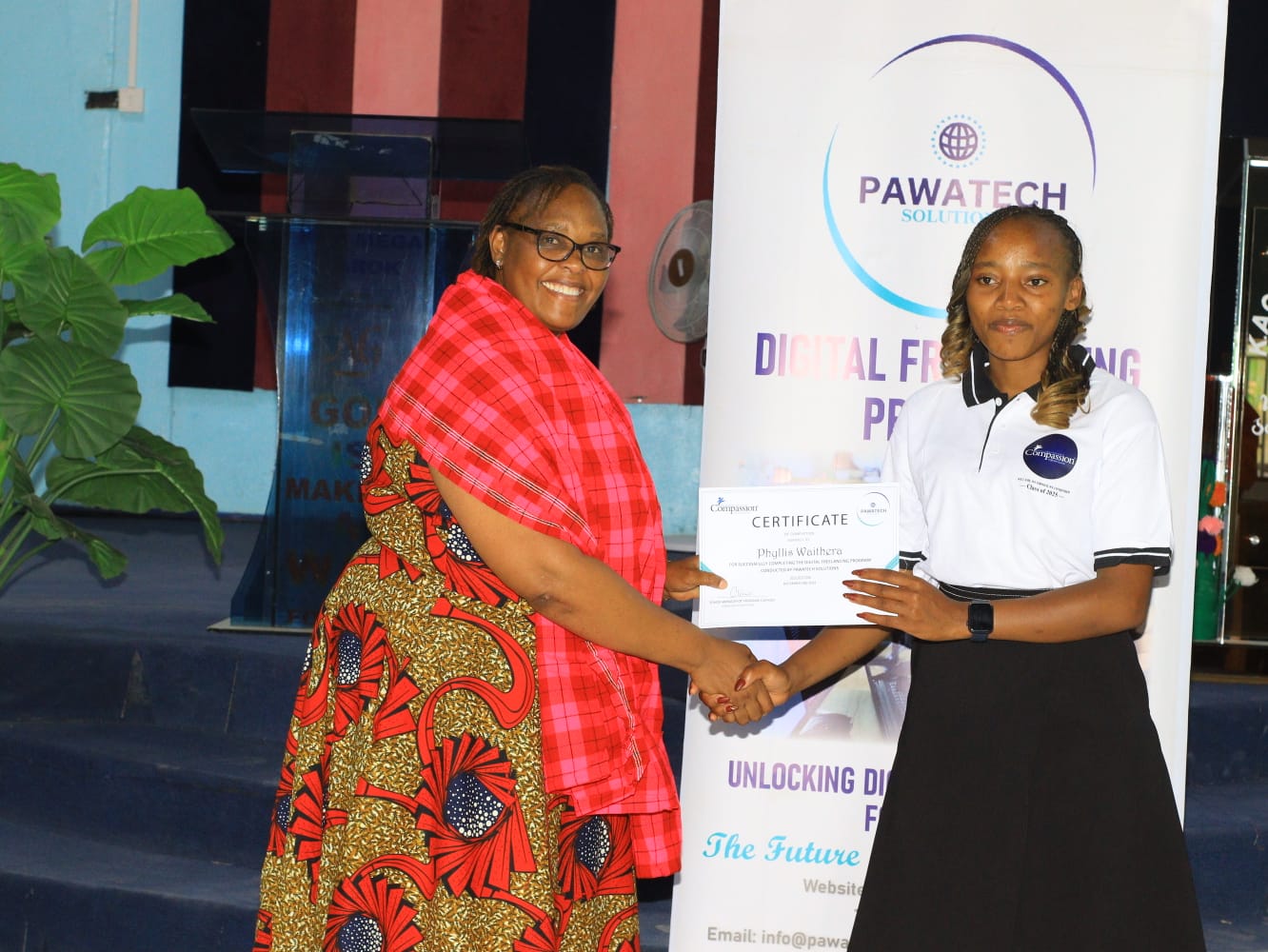
 Beatrice Ruiru hands a certificate to the highest earner
Phylis Waithera at Narok AIC Churchorty young people graduate after pursuing
Digital Freelancing Course in Narok. PHOTO/ STEPHEN ASTARIKO
Beatrice Ruiru hands a certificate to the highest earner
Phylis Waithera at Narok AIC Churchorty young people graduate after pursuing
Digital Freelancing Course in Narok. PHOTO/ STEPHEN ASTARIKO Phylis Waithera Kinyanjui the top earner with dressed in a
white T-shirt and black skirt testifying how she began earning even before
graduating.PHOTO/ STEPHEN ASTARIKO
Phylis Waithera Kinyanjui the top earner with dressed in a
white T-shirt and black skirt testifying how she began earning even before
graduating.PHOTO/ STEPHEN ASTARIKO Pawatech Solutions Digital Freelancing Program Trainer Rufinas Ngasi during the DFP
Graduation in Narok. PHOTO/ STEPHEN ASTARIKO
Pawatech Solutions Digital Freelancing Program Trainer Rufinas Ngasi during the DFP
Graduation in Narok. PHOTO/ STEPHEN ASTARIKOAt least 40 young people in Narok have earned a combined Sh1.2 million after completing a digital freelancing training program run by Pawatech Solutions Limited.
The
eight-week program, supported by Compassion International Kenya, trained needy
youth in digital marketing, graphic design and virtual assistance.
Within
five months of graduation, about 80 percent of the participants were actively
earning online, offering a new source of income in a region facing high youth
unemployment.
One of the
beneficiaries is 17-year-old Phylis Waithera Kinyanjui, who joined the program
while still in school.
She chose
digital marketing and became the top earner in her group, making more than Sh200,000 within a few months. She is now able to pay her university fees.
Veronicah
Wanjira, trained in graphic design said the income she earns online has helped
her become financially independent.
“I get my
own clean money. I can tell other youths they will never regret investing in
digital skills,” Veronica said.
“There is
a huge opportunity in the digital space that many young people are yet to
access,” he said.
Ngasi said
program focuses on practical skills that can be quickly monetized in the global
gig economy. In addition to technical training, participants are taught
financial literacy, client communication and work ethics.
Beatrice
Ruiru from Compassion International Kenya said the aim is to create sustainable
livelihoods, not just short-term jobs. “We want these young people to become
resilient professionals,” she said.
Data from
the program shows an 88 percent completion rate and an average household income
increase of 300 percent among participants. The earnings were verified through
surveys and payment records.
Kenya’s youth unemployment rate remains high, estimated at over 67 percent. While the country is seen as a regional technology hub, many young people lack access to skills, equipment and reliable internet.
To ensure
sustainability, Ngasi said Pawatech
plans to expand the program by using a portion of graduates’ earnings to
support future trainees.
The
organization he noted is also working on a model that can be replicated by
vocational institutions and NGOs across East Africa.
Organizers say the Narok project demonstrates how targeted digital skills training can help young people earn a living and support their families, while contributing to the local economy.