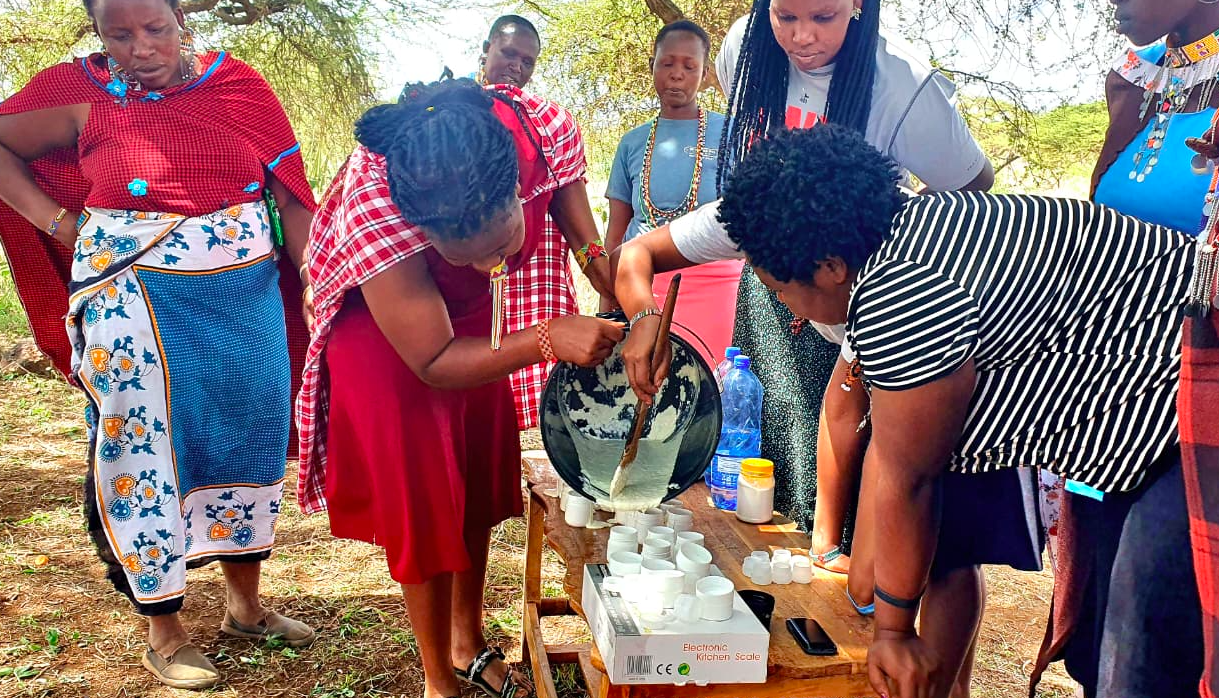


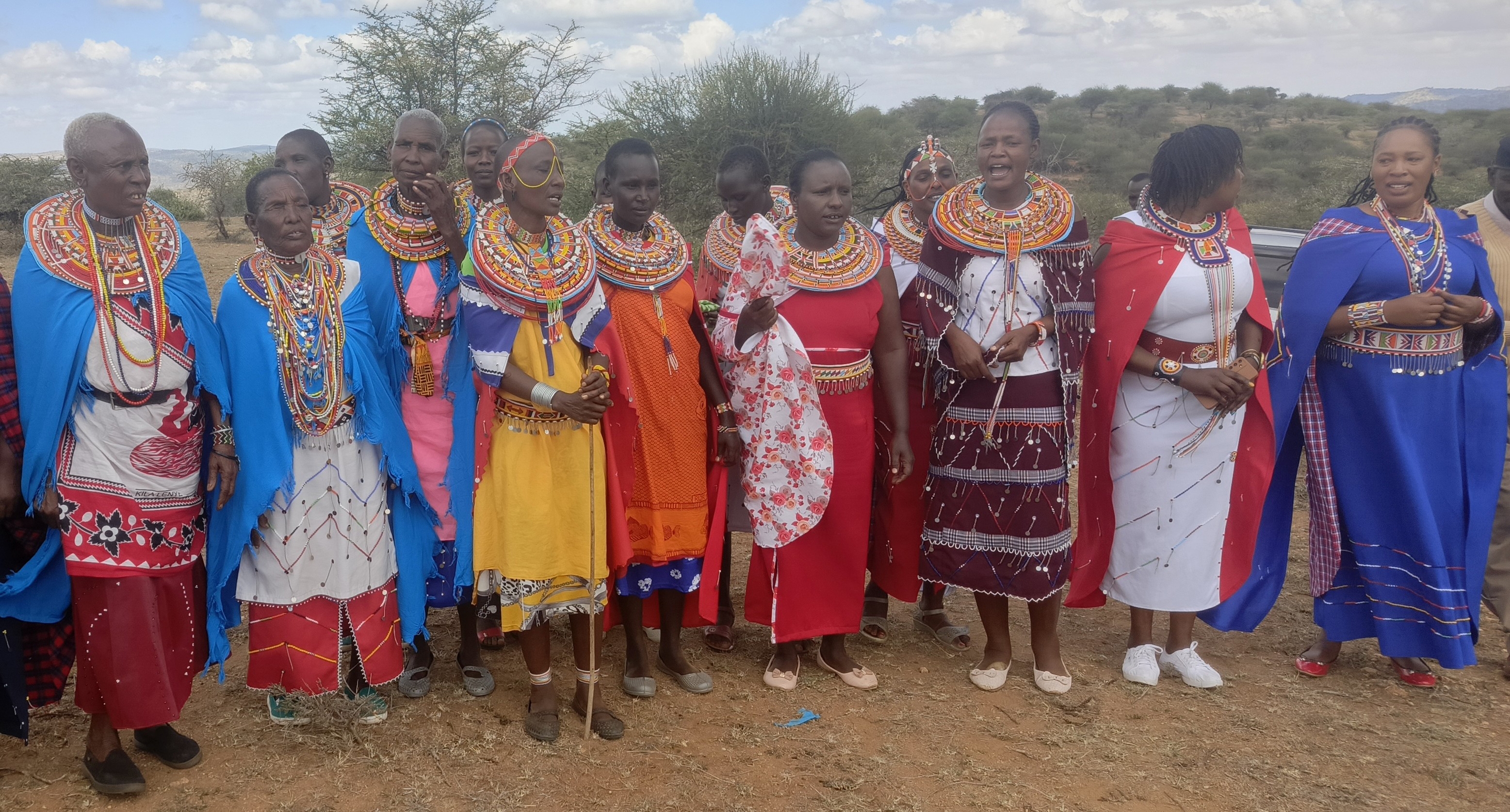
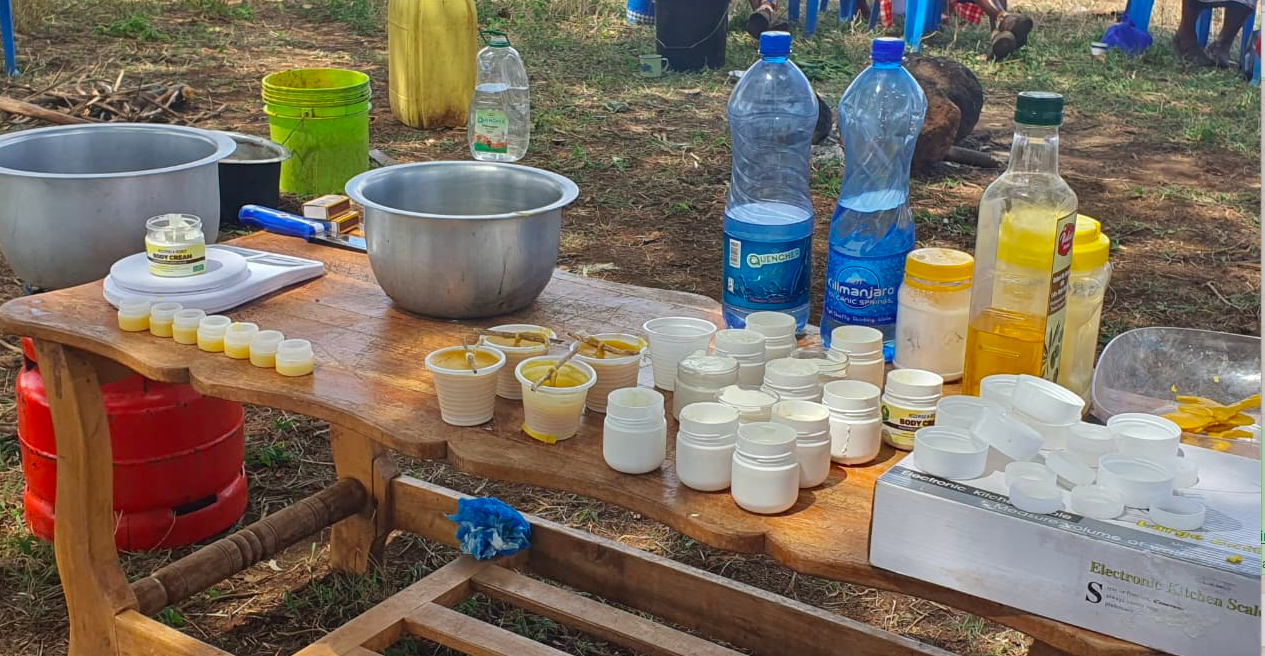
 Some of the products that the Ngaissi women's group prepares from beeswax/Gilbert Koech
At the foot of Kilimanjaro, a silent but transformational project is sweeping across the landscape.
At Noomayanata, Kimana ward in Kajiado South, Everlyne Kileken could not hide her joy.
“We have been producing honey all along and throwing away beeswax, as we did not know it could be processed to produce other products such as soaps, candles and even lip balms,” she says.
Kileken says that were it not for the training that partners such as the World Wide Fund for Nature Kenya, bee farmers and Care International provided, her women's group would still be wallowing in poverty.
“We have since been equipped with hands-on skills to diversify products from beeswax,” she says.
Kileken, who is the secretary of, Ngaissi women's group that has 40 members, says they have since been trained on practical lessons on propolis processing and beeswax product making.
Today, the training has refined their craftsmanship.
Kileken says women from the area are also involved in income-generating activities such as keeping livestock. However, the impacts of climate change have complicated matters, as men are compelled to move out with livestock in search of pasture and water. When men move out during the prolonged drought, women are exposed as they do not have anything to give to their children.
“When men go out there to look for water and pasture for livestock, we are left with bees, as they do not migrate, provided we give them water,” she says.
Ntetei Sankau says they can now reap big from the value addition of wax. The group’s chairlady, Esther Silanka, said they have also been provided with dairy goats, allowing them to have milk.
Silanka says they already have five dairy goats, further providing the group with an extra stream of revenue.
Apart from providing them with nutritious milk, the revenue they get from selling milk has helped them invest in other ventures such as making beadwork, which they also sell.
Bee farmers project manager Jeremiah Muema says about 13 groups across the Amboseli ecosystem have been supported with beekeeping enterprises. “We have done apiary setup and facilitated the training and women now have an alternative source of livelihood,” Muema says.
The women have also been supported not only through the provision of beehives but also market access for their products. The beneficiaries of the project now earn a living instead of depending on their husbands. He said the proceeds from the sale of livestock normally go to men.
“The women now know that even the tiny bees can earn them a livelihood just like other livestock. The women will add value as per the need of the customer,” Muema says.
World Wide Fund for nature Kenya manager for the southern Kenya landscape Martin Mulama said some of the projects they have rolled out aim to economically empower women through sustainable livelihoods and restoration of land and ensure gender equality.
“We are focusing mainly on the dairy goat rearing and the beekeeping side of the livelihood. To date, we have provided up to 120 dairy goats to 40 women’s groups,” Mulama says.
Mulama says some 89 beehives have also been provided across the ecosystem to 13 women's groups.
He says bees are good for nature, as they pollinate flowers and keep ecosystems balanced by providing food for other animals. Beehives can also be an excellent source of income.
Mulama says successful beekeeping requires proper tools and an understanding of how to properly manage a hive. To generate income, a market must exist for honey and other products, as well as knowledge of how to access those markets.
He says the dairy goats provided are also low cost in terms of startups, low maintenance and productive.
“In five months, the young ones are born, and the young ones, in many cases, would be between two and three, as opposed to livestock, which takes about nine or eight months, and you get only one calf out of it.”
The goats can withstand the impacts of climate change and can fetch good money.
Mulama adds, “In terms of the beekeeping, we also make sure that once they get honey, there are also other value additions they can get. I think for now, they get up to 120kg of honey, and when it's costed, they make up to Sh60,000.”
He says the groups have also been provided with fruit trees, a move that has enabled them to build resilience to the impacts of climate change.
Mulama says such an innovative approach can only be scaled up if resources to address the impacts of climate change were flowing to countries in the global south, such as Kenya, as required under international frameworks such as the Paris Agreement.
The Paris Agreement’s central aim is to strengthen the global response to the threat of climate change by keeping a global temperature rise this century well below 2 degrees Celsius above pre-industrial levels and to pursue efforts to limit the temperature increase even further to 1.5 degrees Celsius.
The agreement also aims to strengthen the ability of countries to deal with the impacts of climate change.