

 Women in Bomet fight against GVB /Faith Matete
Women working across Kenya’s tea belt continue to carry the burden of entrenched gender inequalities, rising digital harassment and persistent safeguarding failures.
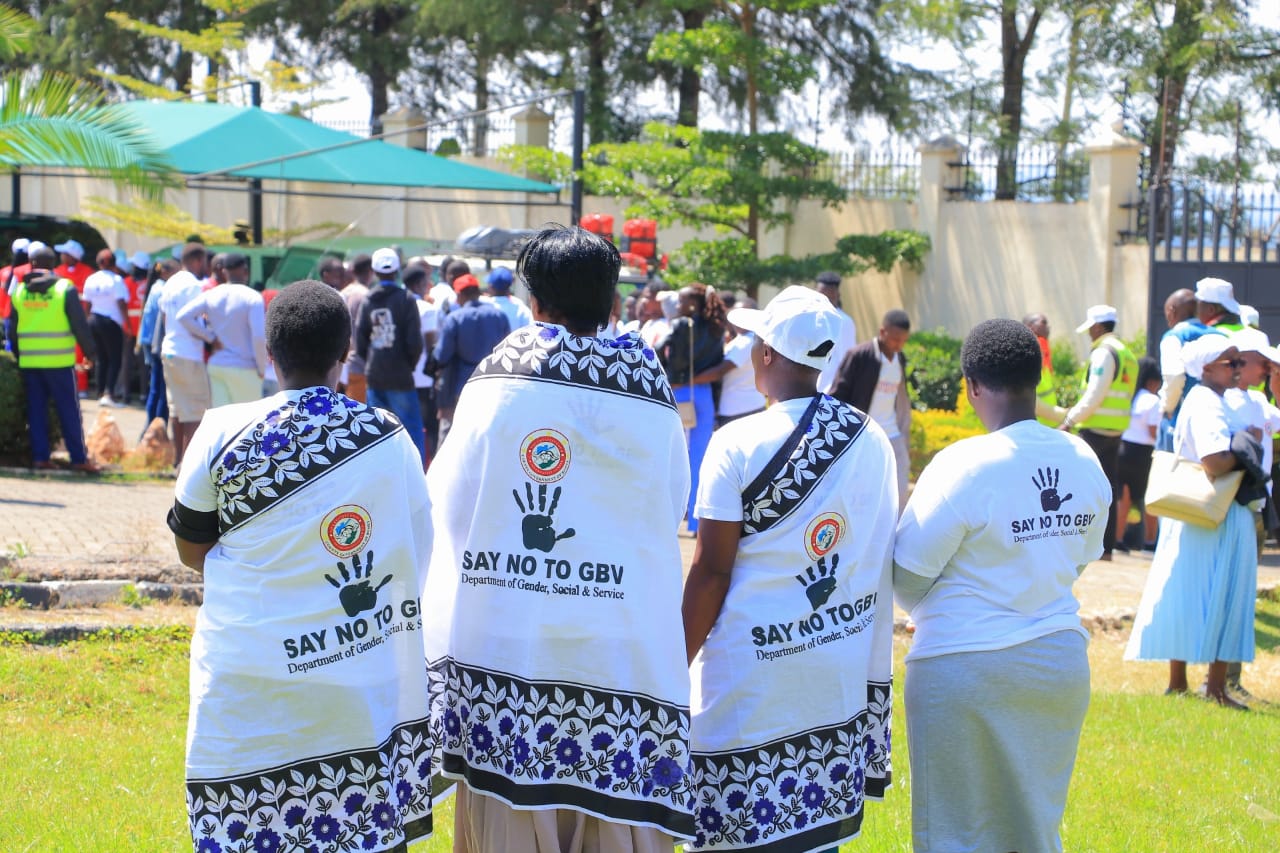
The concerns came into sharp focus during the launch of the 16 Days of Activism Against Gender-Based Violence in Bomet county.
The event, attended by county leadership, women’s rights groups, civil society organisations and community representatives, created a platform for examining the evolving threats facing women in tea-growing communities.
During the launch, the Women in Tea Value Chain Association (WiTEVA) voiced strong concerns over the growing forms of abuse that women are experiencing, especially as digital technologies become central to everyday work and communication within the tea sector.
WiTEVA chairperson Beatrice Kirui said the rapid spread of smartphones and online platforms has introduced new risks for rural women, who depend heavily on digital communication for market access, work coordination and social engagement.
She said women and girls are increasingly exposed to online harassment, cyberbullying, blackmail and the misuse of personal information, describing digital violence as a silent but deeply damaging form of abuse that affects mental wellbeing, productivity and personal confidence.
Kirui said global reports indicate more than 85 per cent of women experience some form of digital abuse, a trend now clearly emerging within tea-growing regions of Kenya.
She said online threats, inappropriate messages from supervisors and social-media harassment are rising alongside already prevalent workplace violations.
According to her, digital abuse often reinforces the same power imbalances that have historically silenced women on tea estates.
Bomet Governor Hillary Barchok acknowledged the seriousness of gender-based violence, calling it a persistent threat to families and communities.
The governor unveiled the new Bomet holding centre to support women survivors, a safe space where survivors of GBV will receive immediate protection, psychosocial support and referral services.
He said the county has allocated 12 acres for a comprehensive GBV response facility that will house a mini-hospital, counselling centre, safe spaces and rehabilitation services.
The governor urged residents to report violations without fear, saying silence has allowed abuse to thrive for years.
"We are committed to protecting vulnerable groups and ensuring justice for survivors. Bomet will not tolerate violence, whether physical, emotional or digital," Barchok said.
Although it was not released during the event, WiTEVA’s 2024–25 Impact Report paints a troubling picture of the scale of vulnerability among women working in Kericho, Bomet and neighbouring tea zones.
According to the impact report, women who form the backbone of tea plucking, sorting and processing continue to face widespread sexual harassment, gender-based violence, economic marginalisation, unsafe housing conditions, limited access to reproductive health services and chronic underfunding of schools that serve workers’ children.
The report documents WiTEVA’s interventions over the past year, including menstrual health support, school aid, survivor-centred safeguarding initiatives and income-generating projects for women.
It highlights activities such as distributing sanitary pads to more than 200 girls, donating textbooks worth Sh300,000 to schools in tea-growing areas, training women to produce reusable pads, conducting GBV awareness sessions and strengthening referral pathways in collaboration with county and national institutions.
The sector remains under intense scrutiny following multiple investigations referenced in the impact report.
A parliamentary inquiry in 2023 exposed extensive sexual harassment, poor living conditions, weak reporting mechanisms and widespread fear of retaliation among workers on major tea estates.
Internationally, a BBC Panorama investigation in 2023–24 documented allegations of supervisors coercing women into sexual relationships in exchange for work, revealing that up to 75 per cent of interviewed women reported experiencing some form of sexual misconduct.
Civil society organisations, including Oxfam, have also found that pervasive power imbalances and fear of job loss or eviction from company housing continue to suppress reporting and accountability.
Despite these challenges, community-level interventions are beginning to shift the landscape.
In Bomet and Kericho, WiTEVA has been holding grassroots sensitisation forums focusing on gender rights, workplace safety and the use of confidential reporting systems.
A major outreach in Teganda and Berekeiyat brought together more than 150 women, many of whom said they felt better equipped to identify and report harassment after the training.
WiTEVA’s partnerships with Fairtrade Africa, TrustAfrica, the East African Tea Trade Association, local schools, community health volunteers and county gender desks have strengthened informal and formal referral systems, creating safer spaces for survivors and community members to seek help.
During the event, Kirui said the fight against digital violence must now be considered as urgent as addressing physical forms of abuse.
She said digital harm in tea estates goes far beyond social media, often taking the form of inappropriate WhatsApp messages from supervisors, blackmail attempts, cyberbullying of young girls, and online scams that target women’s finances and dignity.
Kirui urged government agencies, tea companies, unions and civil society to expand cybersecurity awareness, build clear reporting channels, and enforce accountability mechanisms when online violations occur.
She said the campaign against gender-based violence must extend beyond the 16 Days of Activism, insisting that women must be protected online and offline every day of the year.
Kirui urged the tea industry, community leaders, and families to work collectively to ensure that digital tools become instruments of opportunity rather than avenues for abuse.
“Together, we can create a tea value chain where every woman and girl is safe, respected, and able to thrive,” she said.