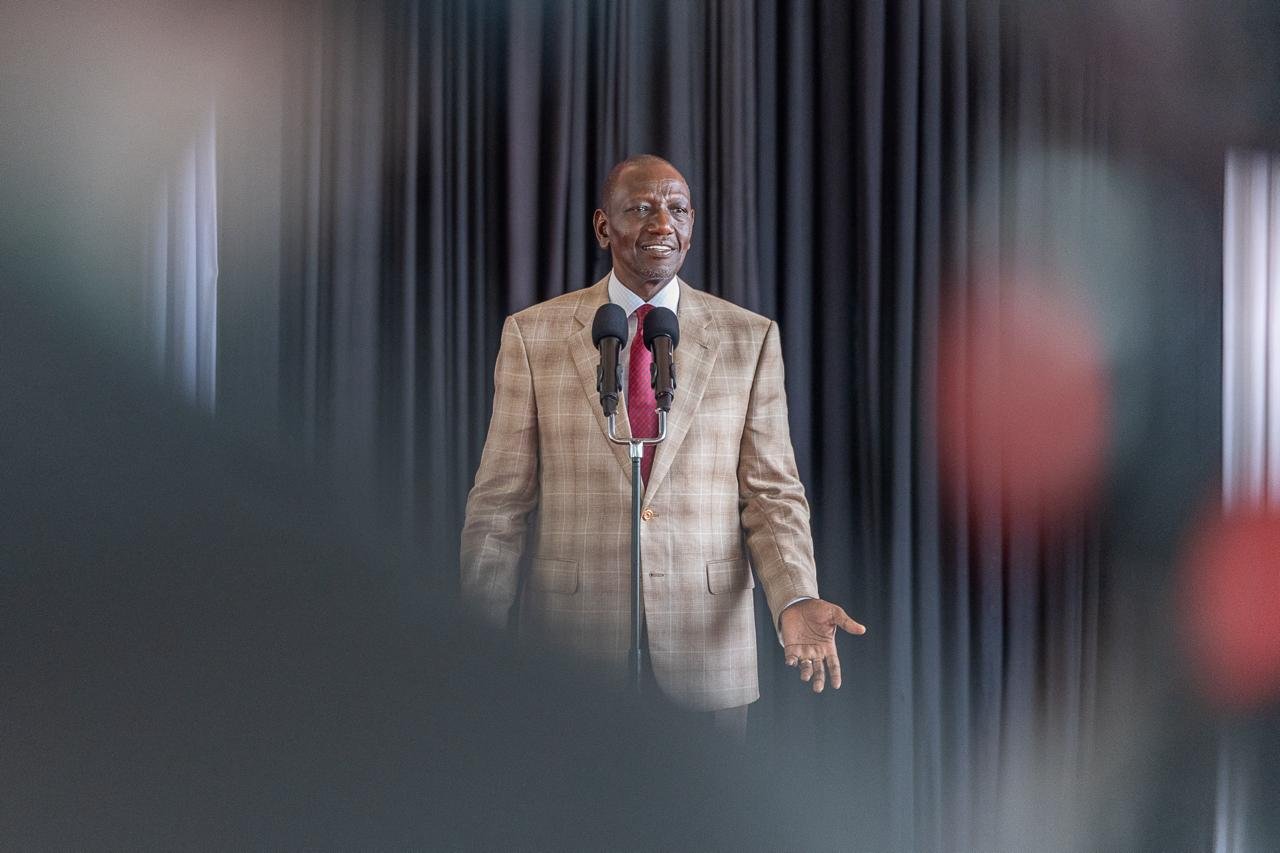
The three are Emily Waita, John Kioli and Prof George Outa. The three now await a formal appointment by the President.
The nomination of Umra Omar’s was however rejected by the National Assembly Departmental Committee on Environment, Forestry and Mining and the Senate Standing Committee on Land, Environment and Natural Resources.
“…the nominee did not demonstrate knowledge of topical, technical and administrative issues touching on the matters relating to indigenous knowledge pursuant to section 7(2) (h) of the Climate change Act and section 7 (c) of the Public Appointments (Parliamentary Approval) Act, 2011 during her approval hearing," the joint committee said in its report on Omar.
"Consequently, the nominee lacks the requisite abilities and experience to serve as a member of the National Climate Change Council."
Over the years, the country has been affected by extreme weather events such as severe droughts and floods.
Today, close to five million Kenyans are in dire need of humanitarian assistance.
There have been many other instances where drought has affected the country.
Between July 2011 and mid-2012, Kenya was among the countries ravaged by droughts.
In January 2014, the state declared an impending drought with an estimated 1.6 million people affected.
At the end of 2016, from around late November, going into early 2017 and extending into early 2018, Kenya was once again experiencing drought.
At the beginning of 2019, parts of the country again experienced drought conditions due to prolonged failure of rainfall, prominent among these cases were West Pokot, Turkana and Baringo counties.
In 2020, due to below-normal rainfall during the October-November-December season, some counties experienced drought.
By October 2020, Garissa, Mandera and Wajir counties were at the alert level of drought status.
To address the challenges brought about by extreme weather events, the state is in the process of forming the National Climate Change Council, in accordance with the Climate Change Act, 2016.
The council will provide overarching functions of the national climate change coordination mechanism and council.
It will approve and oversee the implementation of the National Climate Change Action Plan and advise national and county governments on legislative, policy and other measures necessary for climate change response.
The council has also been tasked with approving a national gender and intergenerational-responsive public education awareness strategy and implementation programme.
The Act tasks the council with providing guidance on the review, amendment and harmonisation of sectoral laws and policies and administering the Climate Change Fund established under the Act.
It also set targets for the regulation of greenhouse gas emissions.
The National Climate Change Council is comprised of not more than nine members who will be appointed by the President.
The Climate Change Act, 2016 states that the council will be chaired by the President, with the deputy helping him.
Environment CS Soipan Tuya will be the secretary to the council.
Other members of the council include National Treasury CS Njuguna Ndung'u, Energy CS Davis Chirchir and Council of Governors chairperson Anne Waiguru.
Other members of the council include a representative of the private sector nominated by the agency representing the largest number of institutions in the private sector and a representative of civil society.
Others are a representative of the marginalised community who has knowledge and experience in matters relating to indigenous knowledge, and a representative of academia nominated by the Commission for University Education.
Save for the CSs and the Council of Governors chairperson, other appointees must have expertise and experience in matters of climate change, economy, finance, law, environment and public administration and should be approved by Parliament.
In 2016 Kenya ratified the Paris Agreement.
The country has since submitted the Nationally Determined Contributions, with a commitment to reduce emissions by 32 per cent against a business-as-usual scenario by 2030.
The NDC also commits to enhancing resilience in all sectors of the economy.
The National Climate Change Action Plan 2018-22, is a five-year plan that helps Kenya adapt to climate change and reduce greenhouse gas emissions.
Kenya seeks to reduce emissions by 32 per cent by 2030.
Agriculture, energy, manufacturing, transport, waste and forestry are some of the sectors the government intends to use to curb emissions.
The country needs $62 billion (approximately Sh6.710 trillion) to mitigate and adapt to the impact of climate change between 2020 and 2030.
Aware that forests will play a key role, the government has pledged to increase its cover by growing 15 billion trees by 2032 at a cost of Sh500 billion.
The move seeks to restore 10.6 million hectares of degraded landscape.
Forests regulate ecosystems, protect biodiversity, play an integral part in the carbon cycle, support livelihoods and help drive sustainable growth.
Results generated from the recent National Forest Resources Assessment 2021 indicate that Kenya has 7,180,000.66 ha of tree cover, representing 12.13 per cent of the total area.