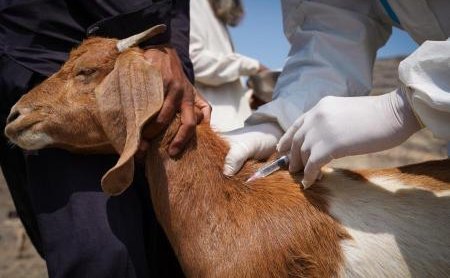
Suspected cases of Foot-and-Mouth Disease (FMD) have been reported in several counties, prompting vaccination campaigns as livestock disease outbreaks continue to threaten animal health and pastoral livelihoods.
The National Drought Management Authority (NDMA) has warned that Foot-and-Mouth Disease (FMD) remains a major threat to livestock production in several counties.
The authority warned in it's May bulletin that suspected FMD cases were reported in Baringo, Laikipia (Tigithi, Mutara and Maundu Miri), Makueni (Kibwezi East and West), Meru (Igembe North and Tigania West), Narok (Mara, Naikarra and Siana wards), Wajir, and West Pokot (Suam, Lelan, Lomut and Weiwei wards).
The report showed that Peste des Petits Ruminants (PPR), commonly known as sheep and goat plague, was reported in Isiolo, Mandera, Turkana, Wajir and West Pokot. Cases of Lumpy Skin Disease (LSD) were recorded in Baringo, Makueni, Narok, Turkana and West Pokot, particularly in Mnagei and Riwo wards.
According to the United Nations Food and Agriculture Organization (FAO), Foot-and-Mouth Disease is one of the most contagious viral diseases affecting cloven-hoofed animals, including cattle, sheep, goats and pigs. Although it rarely kills adult animals, the disease causes significant economic losses through reduced productivity, restrictions on livestock trade and threats to food security.
The disease is characterised by fever and painful fluid-filled blisters in the mouth, on the tongue, teats and between the hooves, often leading to excessive drooling and severe lameness.
PPR is a highly contagious viral disease that affects both domestic and wild small ruminants. It causes fever, respiratory complications and digestive disorders and is associated with high mortality rates, particularly among goats and sheep.
Lumpy Skin Disease, another viral infection for cattle and domestic water buffalo, is characterised by high fever, skin nodules, swollen lymph nodes and reduced productivity.
The bulletin identified Contagious Caprine Pleuropneumonia (CCPP) as the most frequently reported disease affecting goats. Cases were recorded in Baringo, Garissa, Isiolo, Mandera, Turkana, Wajir and West Pokot, with Pokot North and Pokot Central classified as high-risk areas.
According to FAO and the World Organisation for Animal Health (WOAH), CCPP is a severe respiratory disease that causes significant economic losses through high mortality rates, reduced productivity and trade disruptions.
"Equally, Sheep and Goat Pox (SGP) was reported in Garissa, Isiolo and Mandera, while anthrax affected Meru county, particularly Igembe North and Tigania West," the report stated.
Anthrax cases were also reported in West Pokot and confirmed in Suam and Kodich wards along the Kenya-Uganda border.
The authority further reported the occurrence of several vector-borne and endemic livestock diseases. Tick-borne diseases such as anaplasmosis and babesiosis were recorded in Baringo, Garissa and Laikipia, while trypanosomiasis and black quarter were reported in Mandera. Isiolo reported worm infestations linked to the consumption of fresh forage.
Despite the disease outbreaks, NDMA noted that livestock body conditions across the Arid and Semi-Arid Lands (ASALs) remained largely stable and had improved following the March-April-May rains.
Cattle body condition was rated good in about 86.9 per cent of the monitored areas and fair in the remaining areas. For sheep and goats, 87 per cent of counties reported good body condition, while the rest reported fair status.
According to NDMA, the improvement was driven by the regeneration of pasture and browse following the rains, availability of crop residues, supplementary feeding programmes, reduced trekking distances to water sources and ongoing livestock health interventions.
"The recovery was further supported by the presence of crop residues, supplementary feeding for vulnerable herds, reduced trekking distances to water, and ongoing health interventions such as vaccination campaigns, which were vital in supporting productivity and animal health following previous drought stress," NDMA said.