Access to clean and reliable water remains a major challenge in Marsabit county, where scarcity fuels conflict, disrupts livelihoods and undermines public health.
Limited access to quality education, inadequate healthcare, child labour and harmful cultural practices such as female genital mutilation (FGM) and early marriages continue to deprive young girls of their rights.
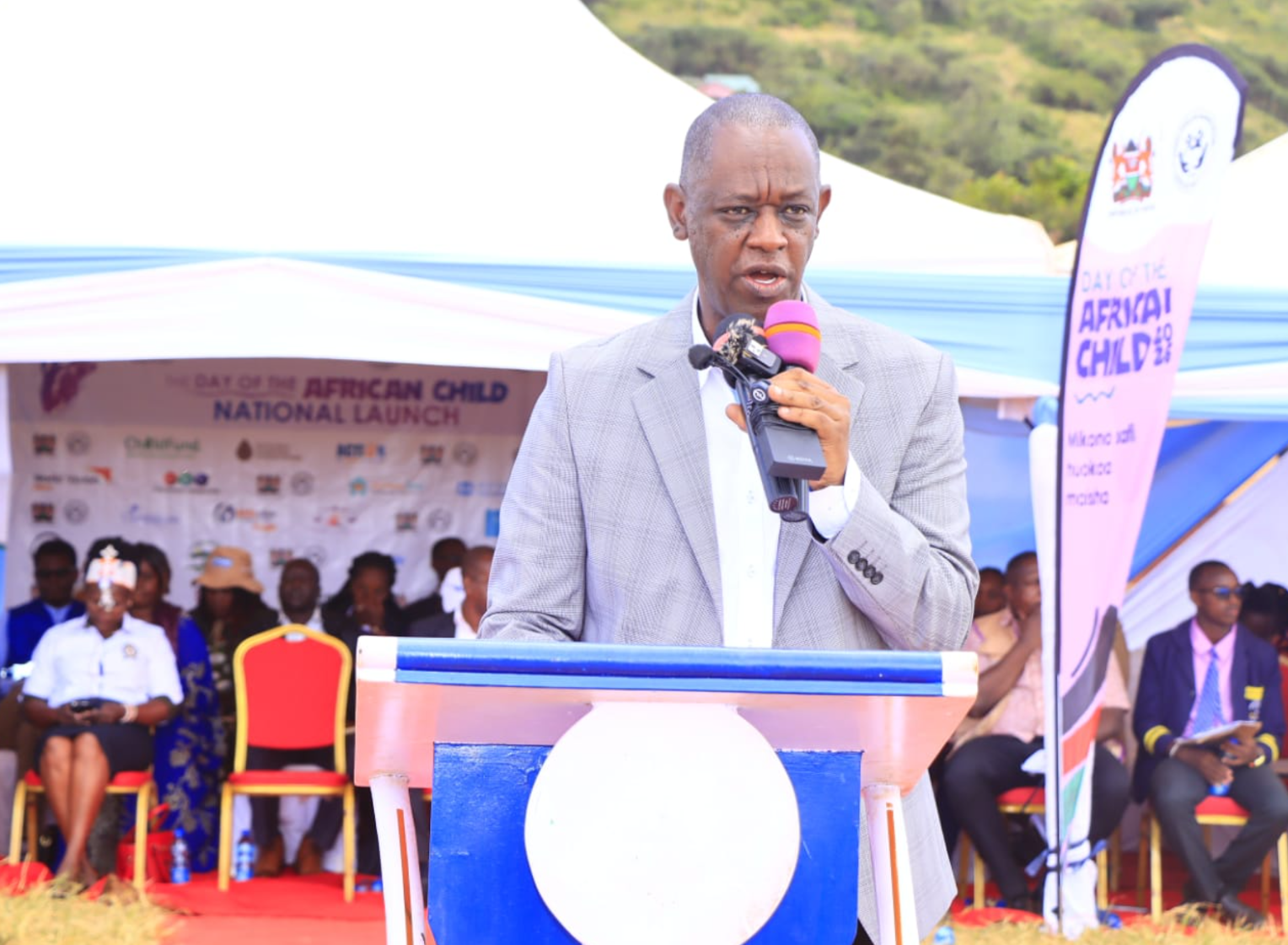
Speaking during the Day of the African Child celebrations at SKM Primary School in Marsabit, Deputy Governor Solomon Gubo said acute water scarcity in the county has been a recurring problem that the government has sought to end for decades.
“We are cognisant of the significance of sustainable water provision to the livelihoods and well-being of the people,” he said.
He said the devolved unit is committed to providing easy access to safe water and hygiene, underscoring that they are fundamental to human survival and the rights of residents.
The county’s main sources of water are boreholes, dams and water pans.
“Easy access to safe drinking water, sanitation and hygiene are fundamental to improving living standards in communities,” he said.
The deputy governor noted that although the government and stakeholders had made strides in eliminating harmful cultural practices, a multi-sectoral approach was still required.
“FGM is deeply rooted in culture, making it difficult to eradicate without concerted efforts from the government, community leaders and families. For us to completely end the practice, a multi-sectoral approach must be employed,” said Gubo.
He reiterated that the government will not tolerate perpetrators of early marriages, teenage pregnancies and female genital mutilation, saying such retrogressive cultural practices are holding society back.
“In order to compete with the modern world, education is a must. We cannot continue marrying off our girls at a teenage age and expect them to compete with girls from other counties,” he said.
Gubo warned parents involved in subjecting girls to the illegal cultural practices that they would be arrested and prosecuted.
He said the lack of a county rescue centre had created a gap in protecting victims of gender-based violence and vulnerable children, and called for support from the national government.
Board member of the National Council for Children’s Services Joseph Hiya affirmed the government’s commitment to strengthening climate resilience in Marsabit by fast-tracking flagship groundwater projects and community-led infrastructure initiatives designed to mitigate drought.
“The national government, in partnership with stakeholders, is committed to strengthening climate-resilient WASH services, expanding access to water and sanitation, and ensuring that no child is left behind in the face of climate shocks,” he said.
He emphasised the government’s commitment to expanding access to safe water and improved sanitation, particularly in underserved areas.
Hiya said the focus includes scaling up dam construction, investing in sanitation infrastructure to enhance service delivery, promoting sustainable water resource management and developing climate-resilient infrastructure.
“The government will focus on providing safe, clean water in arid areas,” he said.
He said improved hygiene would reduce the risk of disease, which in turn would improve school attendance, adding that WASH programmes enhance girls’ chances of continuing with their education.
Hiya said improving sanitation in schools would help achieve the Millennium Development Goals, particularly targets aimed at reducing child mortality and lowering the proportion of people without access to safe water and basic sanitation.
He assured the ministry’s commitment to upholding children’s rights by investing in a safer and better environment where every child can realise their potential.
Halkano Waqo, a Form 4 student at Saku High School, urged the government to prioritise safe, clean water and sanitation, saying access to clean water remains a major challenge in the county.