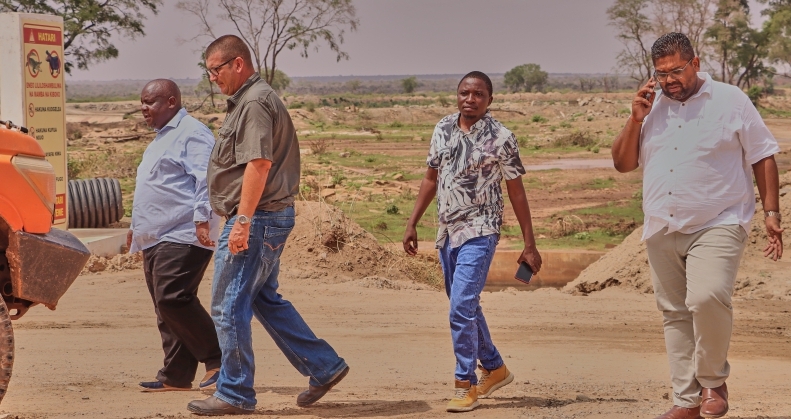


 Wajir governor Ahmed Abdullahi after assenting to the Wajir County
Climate Change Act.Photo/ STEPHEN ASTARIKO
Wajir governor Ahmed Abdullahi after assenting to the Wajir County
Climate Change Act.Photo/ STEPHEN ASTARIKO
Wajir Governor Ahmed Abdullahi has assents to the Wajir
County Climate Change Act, 2025, marking a major step in strengthening the county’s
climate resilience.
The new law among other things enhances climate governance,
increases climate financing to 3% of the
development budget, and ensures climate action is fully integrated into
the county’s planning and development.
Over the past decades, climate variability has intensified,
resulting in prolonged and severe droughts, erratic rainfall patterns,
recurrent flash floods, rising temperatures, increased wind intensity, and
widespread environmental degradation.
These climatic changes have severely disrupted the
pastoralist way of life and undermined livelihoods that are heavily dependent
on natural ecosystems.
Prolonged droughts—now more frequent and longer than in
previous years—have resulted in massive loss of livestock, reduced milk
production, diminished household incomes, and increased food insecurity.
Families that once relied on pastoralism as their primary
source of livelihood have been forced to migrate long distances in search of
pasture and water, exposing them to conflict, disease, and social instability.
Water scarcity has become a defining challenge, with many
communities traveling long distances to access water, often from depleted or
unsafe sources. Boreholes and shallow wells, already limited in numbers, have
been overstretched due to increased demand.
Governor Abdullahi said it is against this backdrop, that
the development of the Wajir County Climate Change Bill was both urgent and
necessary.
‘I want to sincerely thank the honorable members of the
County Assembly for passing this that now becomes an Act. It provides a
stronger legal foundation to protect livelihoods of our people and build a
climate-resilient future,” said Abdullahi.
Sahal Mugow, the chair water, Energy, Environment, Climate
Change and Natural Resources Committee said the Act will among other things create
a structured and coordinated response to climate change by establishing
governance mechanisms.
It will also help in strengthening adaptation measures,
promoting climate-resilient livelihoods, enhancing natural resource management,
and ensuring the equitable and transparent use of climate finance.
The legislation he noted also aims to integrate indigenous knowledge, enhance early warning systems, promote environmental conservation, and foster community-driven adaptation strategies.