

The government’s warning highlights the complex challenges facing border counties like Garissa, where porous frontiers, poverty and prolonged drought create fertile ground for illicit trade. While contraband goods offer short-term relief through cheaper prices, they expose residents to serious health and safety risks and deny the state crucial revenue. The renewed crackdown signals a tougher enforcement posture, but its success will depend heavily on community cooperation and sustained oversight. Equally significant is the linkage drawn between smuggling, misuse of relief food and human trafficking, underscoring how economic desperation can fuel multiple forms of exploitation if not addressed holistically.
Garissa county commissioner Mohamed Mwabudzo in one of the structures where the illegal petrol is sold in Burburis, Garissa /STEPHEN ASTARIKO
 Garissa county commissioner Mohamed Mwabudzo and
Garissa Governor Nathif Jama /STEPHEN ASTARIKO
Garissa county commissioner Mohamed Mwabudzo and
Garissa Governor Nathif Jama /STEPHEN ASTARIKO Residents of Bula Medina in Galbet ward /STEPHEN ASTARIKO
The government has sounded the alarm over a worrying surge in contraband goods
finding their way into Garissa, warning that those behind the illegal trade
will be met with the full force of the law.
Speaking
at Yathrib Primary School in Galbet ward, Garissa county commissioner Mohamed
Mwabudzo said the porous Kenya–Somalia border continues to be exploited by
unscrupulous traders to sneak in outlawed products, notably sugar and petrol,
which eventually end up in local markets. While often sold at lower prices, he
cautioned that the goods pose serious economic, health and safety risks to
residents.
Mwabudzo noted that much of the contraband entering the county has not been inspected by the Kenya Bureau of Standards, raising concerns about its suitability for consumption.
He revealed that Kebs officials recently took samples of seized sugar for analysis, with results indicating that the product failed to meet the required safety standards.
Beyond the health implications, he said the illegal
trade deprives the government of revenue through tax evasion, undermining
public services.
Warning traders involved in the vice, the county commissioner said enforcement agencies would not relent in their efforts to stamp out the illegal networks.
He urged residents to be cautious about cheap goods in the market, noting that affordability should not come at the expense of safety.
The sugar, he said, may
appear attractive to consumers but its quality and safety cannot be guaranteed.
The crackdown has also extended to illegal fuel, which Mwabudzo said has been circulating in parts of the region for the past three to six months.
He described the trade in contraband petrol as particularly dangerous, posing a serious threat to motorists and the wider public due to the risk of accidents and explosions.
According to him, government agencies will intensify operations
to dismantle the supply and distribution chains behind the illicit fuel
business.
He
appealed to the public to work closely with authorities by reporting suspected
cases of smuggling and illegal sales, saying community cooperation is critical
in curbing the vice.
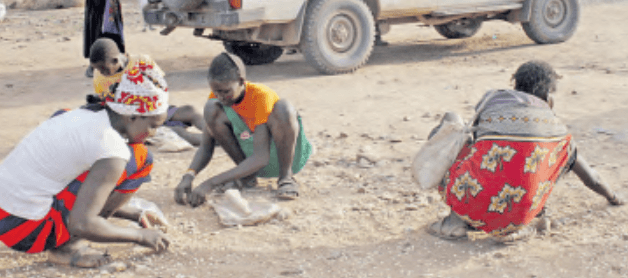
Beyond security and trade concerns, Mwabudzo turned his attention to the ongoing drought, urging residents to show solidarity by sharing scarce resources such as water with the most vulnerable households.
He expressed outrage over reports
that relief food meant for drought-affected families is being diverted and sold
in markets, terming the practice unethical and unacceptable.
“It is
unfortunate that government relief food ends up in the market while genuinely
needy families go hungry,” he said, adding that it was wrong for able
households to scramble for aid at the expense of those who have no means to
fend for themselves.
To
address the problem, Mwabudzo announced that his office, working alongside the
county government and the Kenya Red Cross, will adopt a more targeted approach
to food distribution to ensure assistance reaches only deserving families.
He also raised concern over reported cases of human trafficking in the county, calling on all stakeholders to unite in fighting the crime. Those found engaging in the practice, he warned, will face severe consequences as the government tightens its grip on criminal activities in the region.