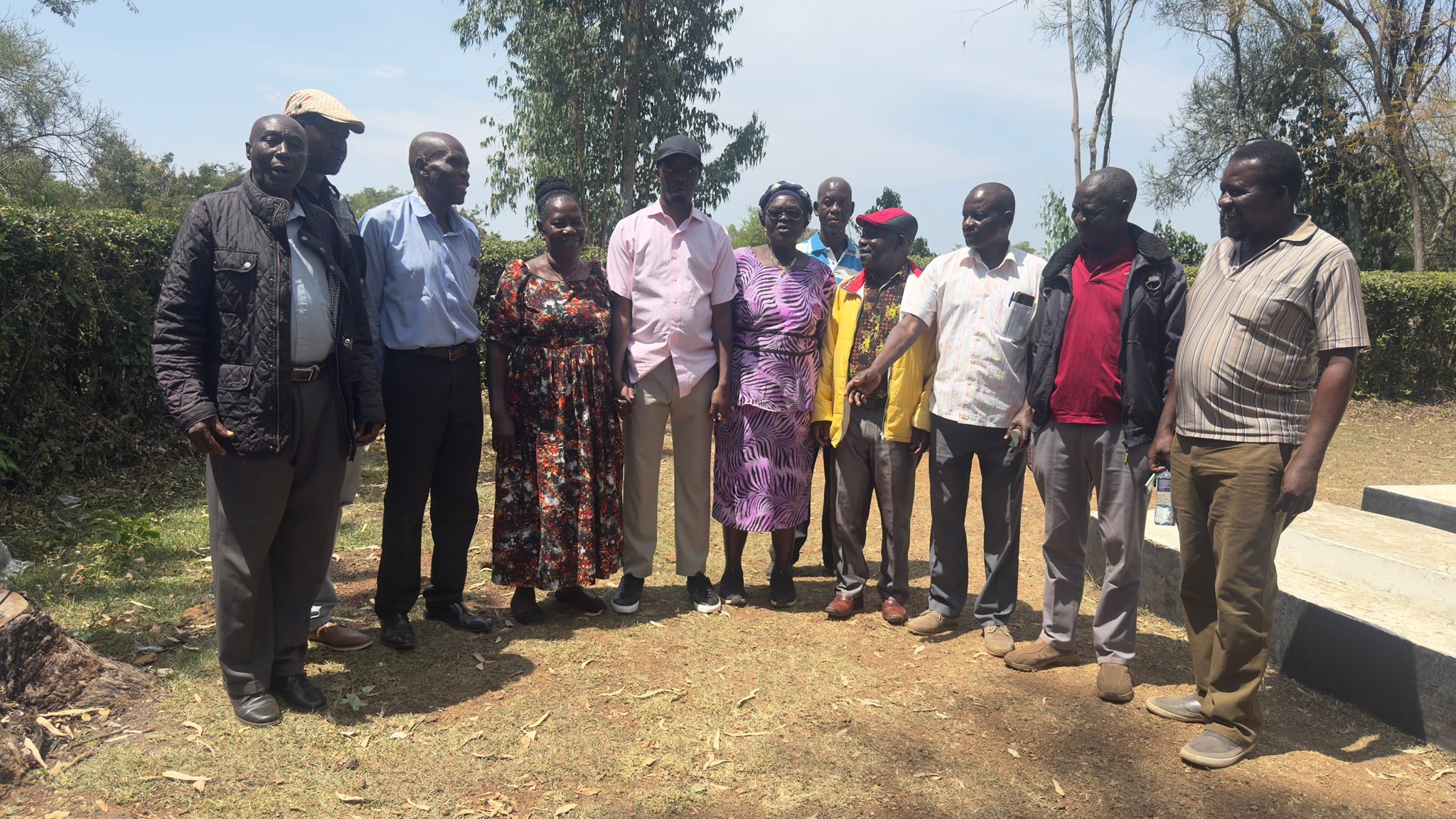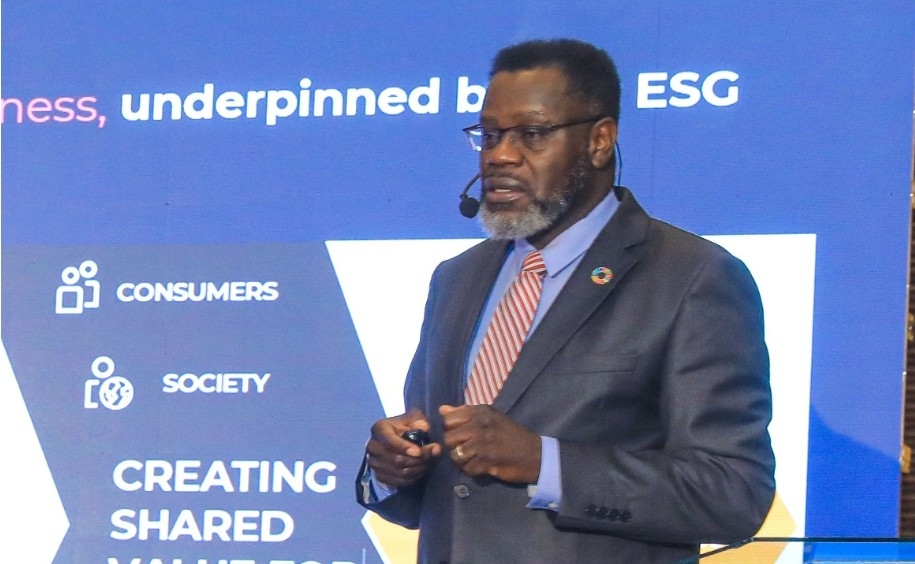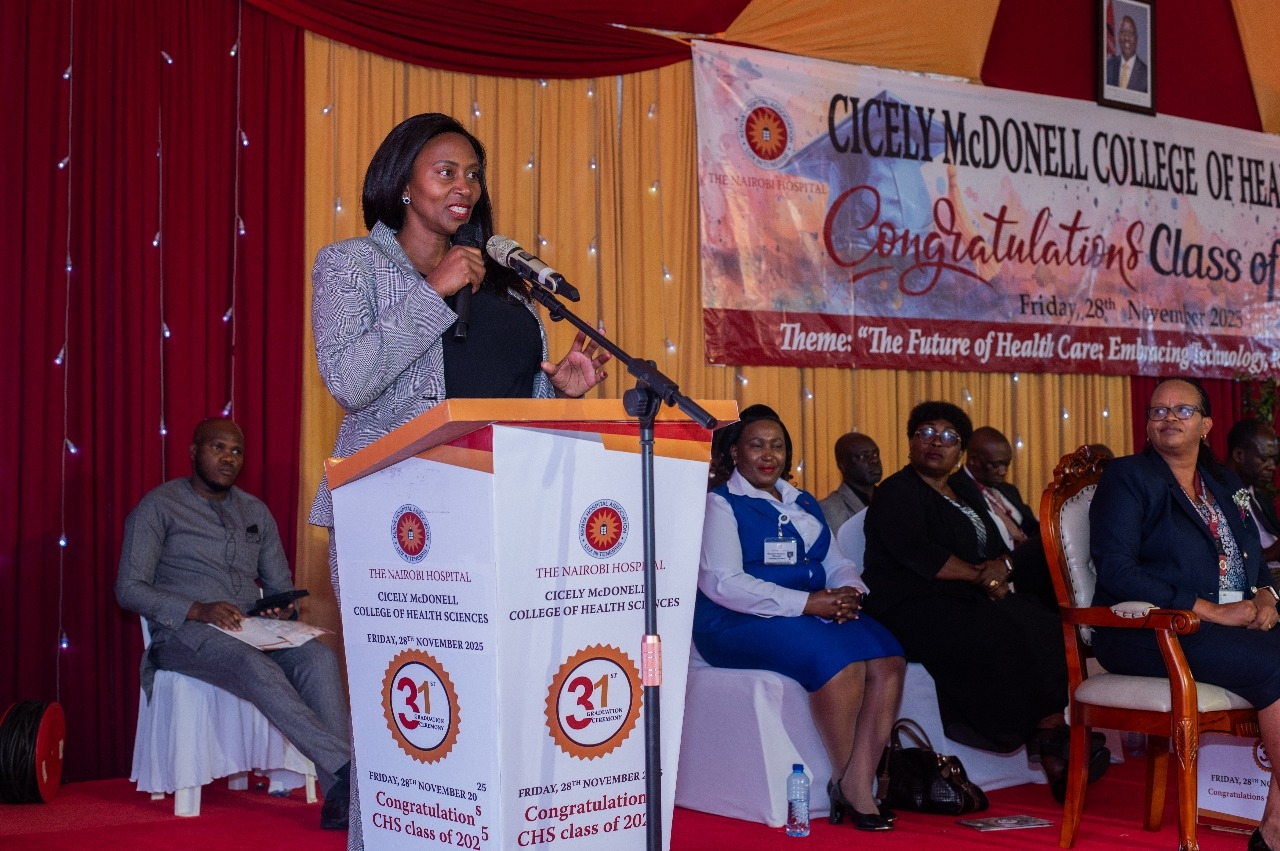



African Inland Church Bishop Yussuf Lesute

Facilitator Meshack Omari with learners at Chemolingot AIC Primary School
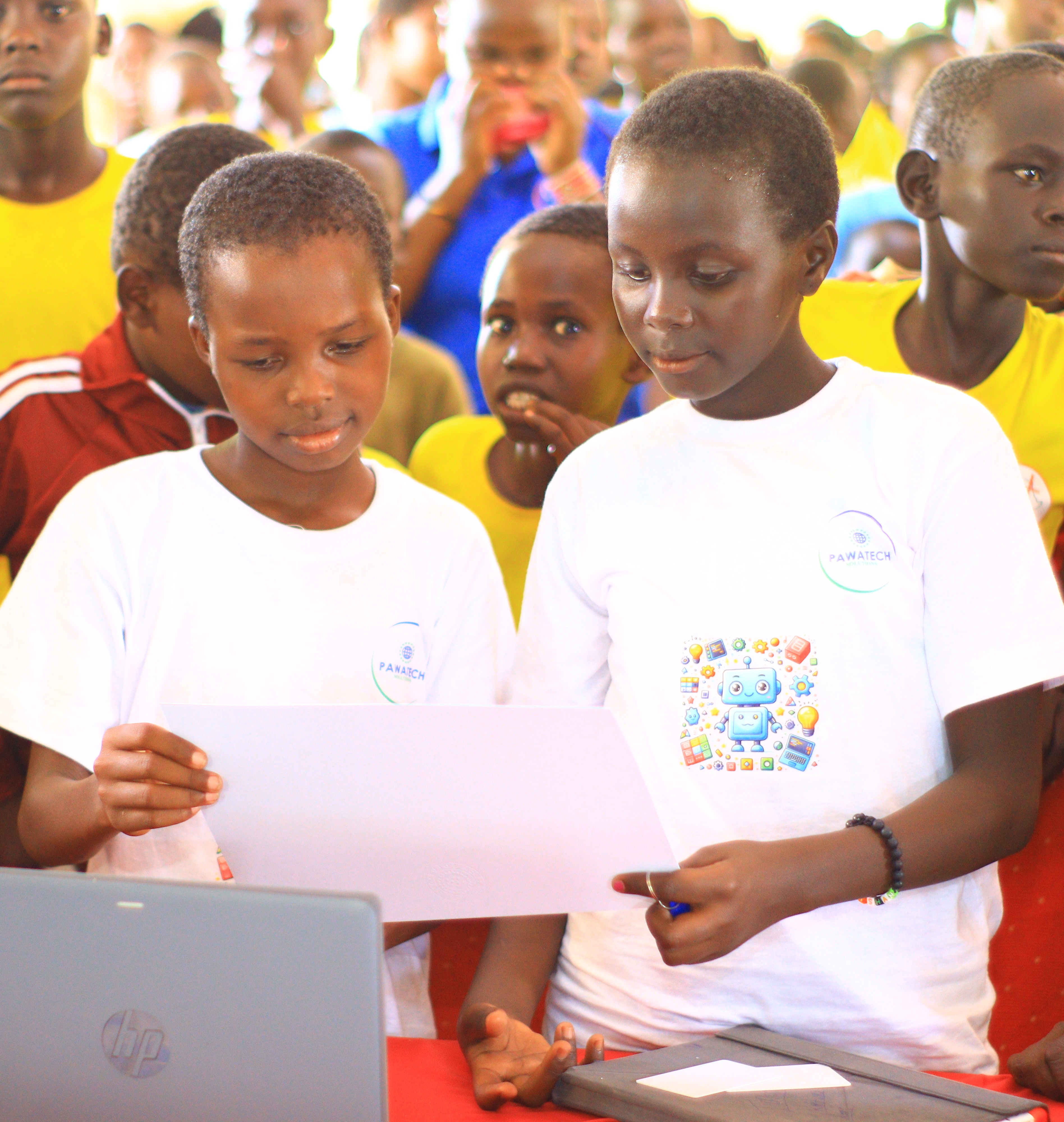
Faith Thomo and her colleague Mathias Abura explain how their RFD community-based livestock registry works during the coding and robotics exhibition at AIC Chemolingot Church
EDUCATION in Kenya’s remote northern frontier has for decades been a
privilege for a few.
The
pastoralist belt spanning Baringo, Samburu, Turkana, Pokot, Elgeyo-Marakwet,
and Marsabit was once labeled “uneducatable,” a colonial stigma that hardened
into policy, then into fate.
Generations
were denied access to learning, and the idea of formal schooling seemed
impossible for children in these remote areas.
Today,
that narrative is being rewritten — by children barely past ten wielding
robots, microchips, and code.
Since
2016, African Inland Church has sponsored 1,168 children, many fleeing
early marriages, harmful cultural practices, or the violence of cattle raids
that have long stolen the futures of boys and girls alike.
Bishop
Yussuf Lesute of AIC recalls seeing the consequences of historic
marginalisation: illiteracy rates in these communities remain above 98 per cent.
But as
peace returns following government's disarmament initiatives, families are daring
to imagine new possibilities for their children.
The AIC’s
Childhood Development Programme, launched in 2016, began modestly. By July
2025, it witnessed a breakthrough: at least 180 children aged 7–12 signed up
for coding and robotics lessons.
At
Chemolingot AIC Primary School alone, the number of sponsored learners has
risen to 368, with interest growing each month.
Wilberforce
Tomena, the AIC programmes manager, says the change feels historic.
“Forty of
our learners took to robotics like fish to water. They are rewriting the
narrative of our community,” he says.
Trainers
from Pawatech Solutions introduced students to digital literacy, artificial
intelligence concepts, and basic engineering. The results stunned even the
instructors.
Twelve-year-old
Faith Thumu designed a community livestock registry system using RFID tags,
enabling herders to track their animals remotely, receive alerts on stray
livestock, and prevent theft.
Her
classmate Mathias Abura explains the motivation behind their innovation:
“We were
tired of seeing boys our age kept from school to look after animals. We wanted
a solution that frees them too.”
At
Mosorion AIC Primary School, teacher Emilly Chesang proudly watches her pupils
build a smart home security system using RFID-powered sensors that alert neighbours
during attacks, a digital response to decades of insecurity. Despite poor
networks, lack of electricity, and rough terrain, the children’s ideas are
taking flight.
Pawatech’s
trainer Enock Nzioka says the solutions mirror global trends.
“The
smart home curtain actuator developed by one of our students is already
attracting attention from developers in Nairobi,” he says.
Pawatech director Cliff Otieno emphasises that talent was never the problem — access
was.
“Marginalised
communities deserve digital tools tailored for their realities. When local
problems are solved locally, the impact is immediate, powerful, and
profitable,” he says.
Compassion
International Kenya supports AIC’s digital push, noting that early exposure to
AI, coding, and robotics aligns with the CBC syllabus and positions children to
break generational poverty. Partnership facilitator Meshack Omari says the
programme is helping households escape cycles of marginalisation.
“These
children are being positioned to become the generation that transforms Kenya
into the ‘Singapore of Africa,’ as envisioned by President William Ruto,” he
says.
The story
unfolding in Baringo and neighbouring counties is not just about technology —
it is also about justice. It is about children who were never meant to enter a
classroom now building solutions worthy of global attention. Communities once
defined by banditry are raising engineers, coders, and problem-solvers.
For decades, education in Kenya’s most forgotten places was artificially scarce.
Today, children are proving that the demand, the curiosity, and the brilliance
were always there. They just needed a chance. And now, they are taking it.
INSTANT
ANALYSIS
The digital revolution unfolding in Kenya’s Northern frontier highlights the
transformative power of access to education. Historically marginalised and
labeled “uneducatable,” children in Baringo, Samburu, Turkana, Pokot, and
neighbouring counties are now leveraging coding, robotics, and AI to address
local challenges such as livestock theft and home security. Programmes like AIC’s
Childhood Development Programme, supported by Pawatech and Compassion
International Kenya, demonstrate that talent exists even in the most remote
communities; the barrier was opportunity. Early exposure to technology not only
enhances critical thinking and creativity but also positions these children to
break generational cycles of poverty, proving that inclusion drives innovation
and social justice.