In effect, the court orders issued Tuesday mean as government puts its house in order and lodges an appeal, Kenyans will still continue paying the housing tax.
A three-judge bench of Justices David Majanja (presiding), Christine Meoli and Lawrence Mugambi had earlier in their judgment on consolidated petitions against the Finance Act 2023 declared the housing levy unconstitutional, saying it lacked a legal basis and was discriminatory.
"That levy against persons in formal employment with the exclusion of other non-formal sector workers without justification is discriminatory, irrational, arbitrary and in violation of Articles 27, 201 of the Constitution," the judges said.
But lawyer George Murugara representing the state immediately sought stay orders (suspending implementation) against the decision, arguing the judgment would leave the government in an awkward position.
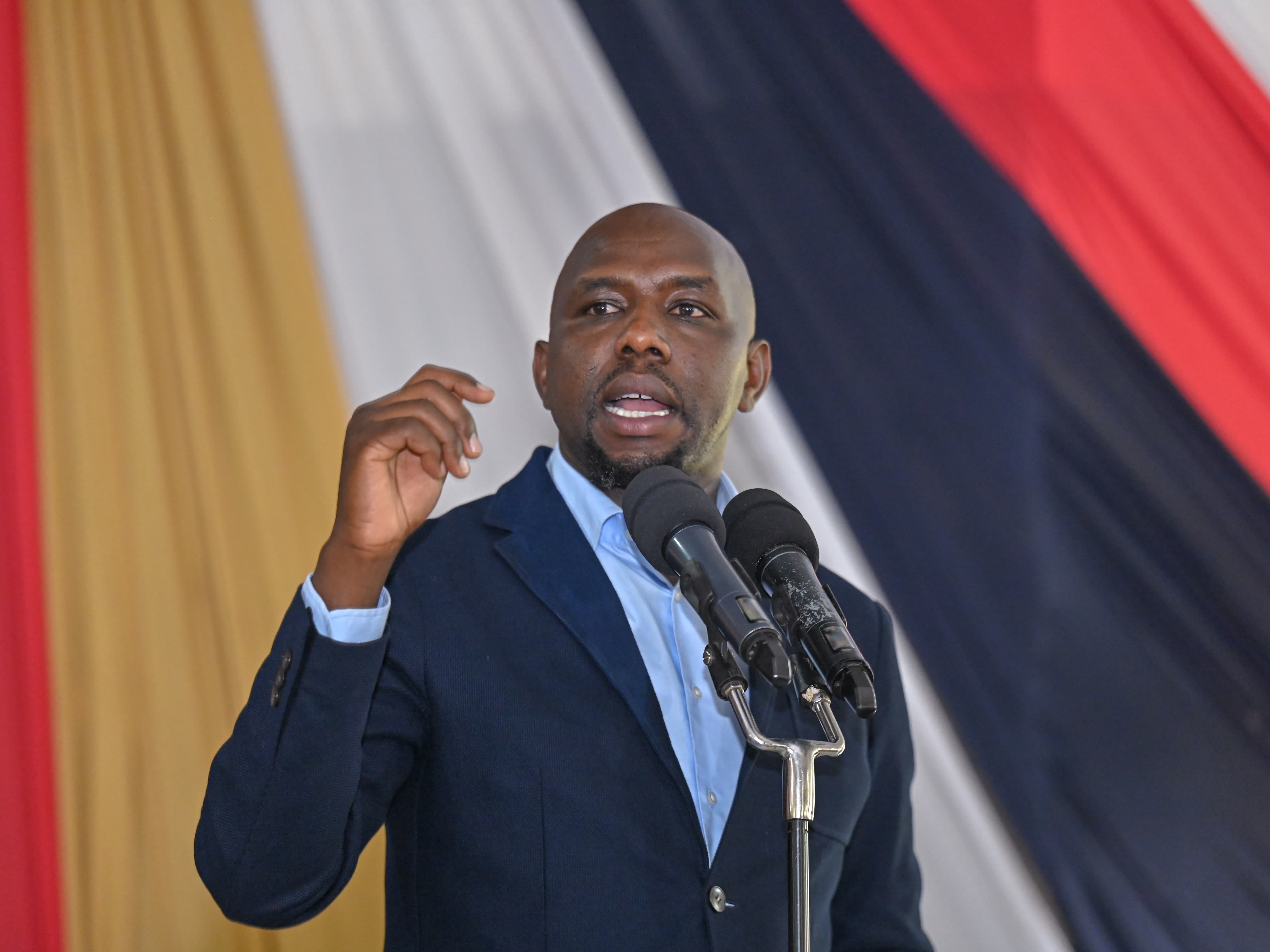
Murugara, who is the MP for Tharaka, said the decision would open the door for a plethora of claims for reimbursement against the government. He said demands for refunds would be made by those whose incomes have been reduced by the automatic housing deduction to pay the levy.
"We are aggrieved as regards Section 84 of the Finance Act, in which the housing levy has been declared unconstitutional, and declaratory orders have been made to stop the respondents from collecting the levies," he said, applying for conservatory orders.
He said there may be irreversible loss if, on appeal, the section is upheld. The MP told the court Kenyans will not be prejudiced if the orders he is seeking are granted.
"This is because as the Court of Appeal observed in its ruling, a party aggrieved by payment of these levies can actually get rebates for overpaid taxes and levies. So those applications can be made and monies possibly can be reversed," Murugara said.
Kenya Revenue Authority lawyer Ochieng Gaya also sought a stay of the declarations on the unconstitutionality of the housing fund.
He argued the judgment would result in suits against the tax agency for illegally collected funds.
"We need a stay order to prevent refund claims, which shall be made," he said.
Murugara also said the government had already entered contractual arguments with contractors in the affordable housing programme and that failure to issue conservatory orders against the judgment would jeopardise operations.
"The government works with regulations and that is why we are asking for stay orders for 45 days so that necessary frameworks can be put in place because this is definitely going to the Court of Appeal," Murugara said.
Lawyer Mahat Somane representing the Attorney General said they needed the stay orders to save judicial time because they would appeal the judgment.
"We need time to advise our clients and we are seeking those 45 days to sort those issues out," Somane said.
That application was however opposed by the petitioners who urged the court to dismiss it.
"A decision of unconstitutionality cannot benefit from a stay order. The respondents are seeking an option that is not available to this court," lawyer Evans Ogada said.
Law Society of Kenya president Eric Theuri also opposed the state application, saying the application was akin to asking the court to allow an illegality to persist.
"The respondents are asking this bench to extend an illegality. The 45 days sought are not enough to regularise the law. The only way for them is to abandon the illegality," Theuri said.
He argued the court cannot reverse its own judgment and that the respondents were trying to mislead the bench.
During the hearing of the case in September, senior counsel Kimani Kiragu representing the state had argued against the request by the petitioners for conservatory orders against collection of the housing tax.
He told the bench the government was open and would be very ready to refund the monies if the levy were to be found unconstitutional.
"The respondents were very firm that they would be making refunds but here they are now saying they will find difficulties. That is speaking from both sides of the mouth," Theuri added.
He said the housing levy is deducted by the employer and that there won’t be any difficulties for them to stop doing so. He thus urged the court to issue orders directing reimbursement of the levies so far deducted be reimbursed.
When the judges returned to deliver their ruling on the application after two hours, Justice Majanja said they had no doubt that the court had jurisdiction to grant orders of stay, pending appeal.
"We are also cognisant of the fact that the order of unconstitutionality has far-reaching effects upon the public. In order to enable the respondents review their position in light of the judgment we have rendered, we are inclined to grant a stay for a limited period," Majanja said.
"An order of stay be and is hereby issued, staying the effect of this judgment issued today November 28, 2023, pending the filing of a formal application for conservatory and stay orders in the Court of Appeal. This order of stay shall remain in force until January 10, 2024."
The quashing of the housing levy brought temporary relief to many salaried workers whose payslips were reduced for the deduction of the 1.5 per cent tax.
But the stay orders mean the state is free to continue collecting the tax until January 10, pending any other orders from the appellate court.
In their judgment, the court singled out four issues, which they said make the housing levy unconstitutional.
The judges said the levy violates the principle of taxation as contained in the Finance Act 2023, given that it was making a distinction between formal and informal sector workers, thus creating unequal and inequitable principles.
They also found that by directing Kenya Revenue Authority to collect the tax on behalf of the government, the Cabinet Secretary for Lands and Housing Development usurped the powers of his Treasury counterpart who solely can direct KRA to collect tax.
The provisions upon which the levy was anchored were also found to have no legal basis.
"The introduction of the housing levy, which caused an amendment to Section 84, lacked a comprehensive legal framework and is in violation of Article 10, 201 of the Constitution," Majanja said.
Article 10 deals with national values and principles of governance while Article 201 outlines the principles of public finance.
The three-judge bench also declared that Sections 76, 77 and 78 of the Finance Act are unconstitutional and void. Those sections amend Section 7 of the Roads Board Act, Section 87 amends Section 28 of the Unclaimed Assets Act, 88 and 89.